
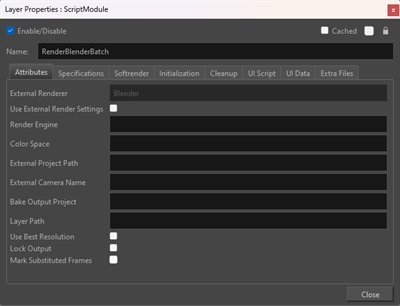
Finding the best external renderer for Blender depends on your hardware and your need for mobility versus pure power. Choosing the right unit comes down to whether you prioritize a pre-built solution with an integrated GPU, or an empty enclosure that allows you to swap in your own professional-grade graphics card.
1. Khadas Mind Graphics 2 eGPU External Graphics Card with NVIDIA

Best for: Creators who need a seamless, all-in-one desktop transition.
This unit is designed for users who want to turn a compact laptop into a powerful workstation without managing separate components. It features an integrated NVIDIA RTX 5060 Ti, which handles complex 3D renders and 4K edits directly out of the box. The integration of dual-speaker audio and a fingerprint login makes it a true productivity hub for your desk.
The trade-off is the closed nature of the system, as you can’t upgrade the GPU later. You must ensure your laptop is compatible with the Khadas Mind docking system to take advantage of the performance.
Good if:
- You want a simple, single-cable connection for your desk.
- You need integrated I/O ports like an SD card slot.
- You prioritize a quiet, multi-channel cooling system.
Skip it if:
- You want to choose or upgrade your own GPU.
- You don’t own a Khadas Mind host device.
2. ONE XPLAYER OneXGPU 2 eGPU with AMD RX 7800M 12GB

Best for: Handheld gamers and laptop users wanting maximum portability.
This unit offers a balance of power and extreme portability, weighing only 1.59kg. It uses the AMD RX 7800M and provides multiple connectivity options including OCuLink, which is crucial for reducing latency in heavy rendering tasks. The ability to switch between 130W and 180W TDP modes allows you to balance heat and power based on your current project.
Because it’s built for mobility, the thermal footprint is smaller than a full-size desktop enclosure. It isn’t suitable for users looking to install ultra-long, triple-slot flagship GPUs, as the internal space is optimized for the pre-installed hardware.
Good if:
- You need a highly portable solution for rendering on the go.
- You use a handheld PC or a laptop with OCuLink.
- You want an integrated SSD expansion slot for extra storage.
Skip it if:
- You require the absolute maximum power of a desktop-sized GPU.
- You use a MacBook, as this unit isn’t compatible.
3. AOOSTAR AG01 External GPU Docking Station

Best for: Professionals building a custom, high-performance rendering rig.
The AOOSTAR AG01 is an open-frame dock built for those who know exactly which GPU they need. With a massive 800W power supply, it supports almost any modern graphics card, regardless of its length. Its metal frame design ensures maximum airflow, which is ideal for long rendering sessions where heat management is the main priority.
The open design means your GPU components are exposed, which requires a cleaner environment to prevent dust buildup. It isn’t for users who want a “plug-and-play” device that includes a GPU, as this is strictly a docking station that requires you to provide the graphics card yourself.
Good if:
- You already own a powerful desktop GPU.
- You need high power delivery for flagship cards.
- You prefer an open-frame design for better cooling.
Skip it if:
- You want a pre-built GPU solution.
- You aren’t comfortable installing and securing your own hardware.
4. Sonnet Breakaway Box 850 T5 Thunderbolt 5 USB4 eGPU Enclosure
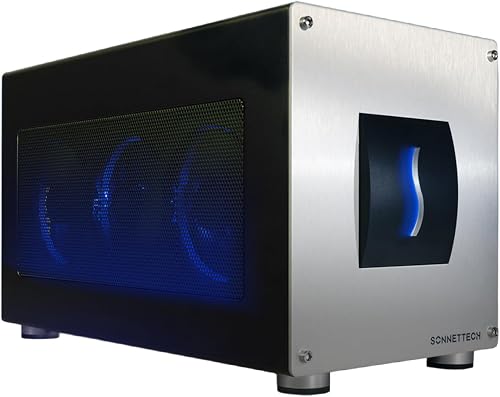
Best for: Users needing a future-proof enclosure for high-power cards.
The Breakaway Box 850 is a serious tool for demanding visual effects and 3D animation. It provides a massive 850W power supply, ensuring that even the most power-hungry cards can run at full capacity. The inclusion of a Thunderbolt 5 dock adds significant value by providing extra USB and Ethernet ports for your peripherals.
This unit is quite large, which is necessary to accommodate triple-wide GPUs. It isn’t the right choice for someone looking to save desk space, as the enclosure is designed primarily for maximum internal capacity and cooling efficiency.
Good if:
- You’re using high-end, power-hungry desktop graphics cards.
- You need a reliable Thunderbolt 5 connection.
- You want a quiet, temperature-controlled cooling fan.
Skip it if:
- You have a very limited amount of desk space.
- You don’t need the extra connectivity of a built-in dock.
5. GMKtec AD-GP1 External GPU Docking Station

Best for: Mini PC users who need a compact graphics boost.
The AD-GP1 provides a clean, integrated experience with the AMD Radeon 7600M XT. Its small footprint makes it easy to integrate into a tight workspace, and the OCuLink port ensures the bandwidth remains high enough for efficient rendering. It supports multiple 8K displays, making it a strong choice for those who need a multi-monitor creative setup.
Because of its compact size, the cooling vents are sensitive to positioning. It isn’t for users who want to place the unit vertically, as doing so will block the vents and likely cause performance throttling during long renders.
Good if:
- You have a small workspace or a mini PC.
- You need to drive multiple high-resolution monitors.
- You want a simple, pre-assembled eGPU solution.
Skip it if:
- You need to stand your eGPU vertically.
- You have a very large GPU card you need to install yourself.
6. Razer Core X Aluminum External GPU Enclosure (eGPU)

Best for: Users who want a reliable, universal Thunderbolt 3 enclosure.
The Razer Core X is a classic choice known for its sturdy aluminum build and broad compatibility with both NVIDIA and AMD cards. It’s a “workhorse” enclosure that fits full-sized, three-slot cards easily. The internal 650W power supply is sufficient for most standard consumer graphics cards used in Blender workflows.
The design is strictly for expansion and doesn’t include extra USB or Ethernet ports, keeping it simple but limited in connectivity. It isn’t for users who specifically need a built-in docking station for their keyboard, mouse, or external drives.
Good if:
- You want a simple, durable enclosure for your own GPU.
- You need broad support for different card brands.
- You prefer a proven, standard design.
Skip it if:
- You need extra USB ports or Ethernet on the box.
- You’re looking for a complete, all-in-one GPU package.
7. GIGABYTE AORUS RTX 5060 Ti AI Box Graphics Card (16GB
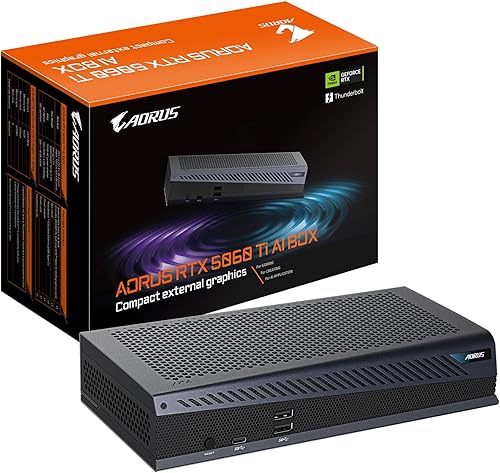
Best for: High-end users needing a premium, all-in-one performance box.
This unit combines the performance of the RTX 5060 Ti with the latest Thunderbolt 5 standard. It’s designed for those who want a high-performance, plug-and-play solution that includes server-grade thermal management. The magnetic stand allows for flexible placement, which helps manage desk space effectively.
The listing doesn’t mention if the GPU is modular or user-replaceable. It isn’t for the user who enjoys the DIY process of selecting and swapping their own graphics cards, as the GPU is permanently integrated into the AORUS design.
Good if:
- You want the latest generation of high-speed Thunderbolt bandwidth.
- You need an integrated, high-performance GPU solution.
- You have limited space and need flexible placement options.
Skip it if:
- You want to upgrade your GPU in the future.
- You already own a desktop GPU you want to use.
8. Sonnet eGFX Breakaway Box 650

Best for: Users needing a basic, reliable enclosure.
This is a straightforward PCIe card expansion system designed for those who have a card and just need a place to put it. It focuses on the essentials: providing a stable power supply and a secure housing for your GPU.
Because this listing provides minimal feature information, you should verify that your specific GPU model fits the power and size requirements before purchasing. It isn’t for users who need extra bells and whistles like integrated USB hubs or advanced cooling controls.
Good if:
- You need a simple, no-frills housing for your GPU.
- You’re comfortable with basic hardware installation.
Skip it if:
- You need advanced connectivity options like extra USB ports.
- You require specific software-controlled cooling features.
9. MINISFORUM DEG1 External GPU Dock Station

Best for: Enthusiasts who want an open-frame OCuLink setup.
The DEG1 is an open-frame dock that supports standard ATX or SFX power supplies, giving you total control over the power delivery to your GPU. It’s specifically designed for the OCuLink interface, which is excellent for minimizing data lag. It’s a very flexible platform for those who enjoy customizing their hardware.
The lack of an enclosure means the components are exposed to dust and accidental damage. It isn’t for users who want a sleek, finished-looking product that protects the internal hardware from the surrounding environment.
Good if:
- You want to use your own standard ATX/SFX power supply.
- You prioritize the OCuLink interface for the lowest possible latency.
- You enjoy an open-frame, modular design.
Skip it if:
- You want a protective case for your GPU.
- You need a plug-and-play solution with a pre-installed GPU.
10. MK-L19 Thunderbolt 3/4 eGPU Enclosure

Best for: Users needing a versatile Thunderbolt 4 enclosure with AI support.
This enclosure is built for modern workflows, supporting high-end cards like the RTX 50 series. Its anodized aluminum design is durable, and the open-frame nature ensures that even the largest cards can fit without restriction. It also includes useful connectivity like Thunderbolt 4 ports, making it a functional desk hub.
The open-frame design means it isn’t as quiet or protected as a closed-box system. It isn’t for users who work in environments where dust or debris is a problem, as the exposed GPU will require more frequent cleaning than a sealed enclosure.
Good if:
- You want a modern enclosure for the latest GPU series.
- You need extra connectivity via Thunderbolt 4 ports.
- You prefer an open-frame design for maximum cooling.
Skip it if:
- You need a completely sealed, dust-proof enclosure.
- You’re looking for an all-in-one unit with a pre-installed GPU.
Choosing the Best External Renderer for Blender
Most of these enclosures and docks perform the same core job: providing a PCIe connection to an external GPU. If you’re comparing the Sonnet Breakaway Box 850 and the Razer Core X, you’re looking at two highly capable, closed-box enclosures that serve the same type of user. The choice between them often comes down to the specific power needs of your GPU and whether you need the extra connectivity ports found on the Sonnet. Conversely, units like the AOOSTAR AG01 and the MINISFORUM DEG1 are fundamentally different because they’re open-frame docks. They prioritize airflow and modularity over the protection and quiet operation offered by the closed-box enclosures.
Still Not Sure?
How often will I really use it?
If you’re a professional who renders 3D scenes daily, you should look for a robust, high-wattage enclosure like the Sonnet Breakaway Box 850. If you only render occasionally, a more compact solution like the GMKtec AD-GP1 might be sufficient to handle your workflow without taking up your entire desk.
What do I already own that this has to work with?
If you already own a powerful desktop graphics card, look at the AOOSTAR AG01 or the Razer Core X, as they allow you to use your existing hardware. If you don’t own a GPU, you’ll save yourself the trouble of compatibility research by choosing an all-in-one solution like the Khadas Mind Graphics 2.
What am I most likely to regret choosing?
You’ll most likely regret choosing a closed system if you plan to upgrade your GPU in the future, as those units are fixed. The MK-L19 supports NVIDIA RTX 50 Series and AMD RX 9000 Series GPUs. Before purchasing, verify your laptop’s port standards against the PCIe external graphics standards to ensure your connection will support the required bandwidth.
Related guides
- 10 Best Blender Addons for Modeling: Our Expert Picks
- 10 Best Ways to Learn Blender for Free: Our Expert Picks
- 10 Best Blenders for Onions: Our Top Picks for Easy Prep
Frequently Asked Questions
What does it take to keep these units running week to week?
Most enclosures require little maintenance, but you should ensure the fans remain clear of dust. For open-frame docks like the MINISFORUM DEG1, you should periodically inspect the connections to ensure they remain secure. Since these are high-performance devices, consistent airflow is the most important factor in keeping them functional long-term.
What has to be replaced or renewed to keep them working?
Generally, there are no parts that require regular replacement. If you use a high-wattage unit like the Sonnet Breakaway Box 850, the primary concern is ensuring your power supply remains stable. If your GPU fails, you can replace the card in an enclosure, but all-in-one units like the Khadas Mind Graphics 2 can’t be serviced in this way.
What happens when the unit is outgrown?
If you outgrow an all-in-one unit, you’ll need to purchase a new enclosure and a new GPU. If you use a modular enclosure like the Razer Core X, you can simply upgrade the graphics card inside the existing box. Modular systems allow you to replace the GPU as your rendering demands increase.
Would a more capable unit have suited me better?
A more capable unit is usually one that offers higher power delivery or faster bandwidth like Thunderbolt 5. Always choose based on the power requirements of your specific GPU.
As an Amazon Associate, we earn from qualifying purchases. This post contains affiliate links – if you buy through them, we may earn a commission at no extra cost to you.
Conclusion
Before you commit to a purchase, check your laptop’s port specifications to ensure it supports the necessary data speeds. You’ll find that testing your specific project files on a friend’s setup can save you a lot of frustration. It’s worth taking your time, as the right choice won’t just speed up your renders—it’ll transform your workflow.