
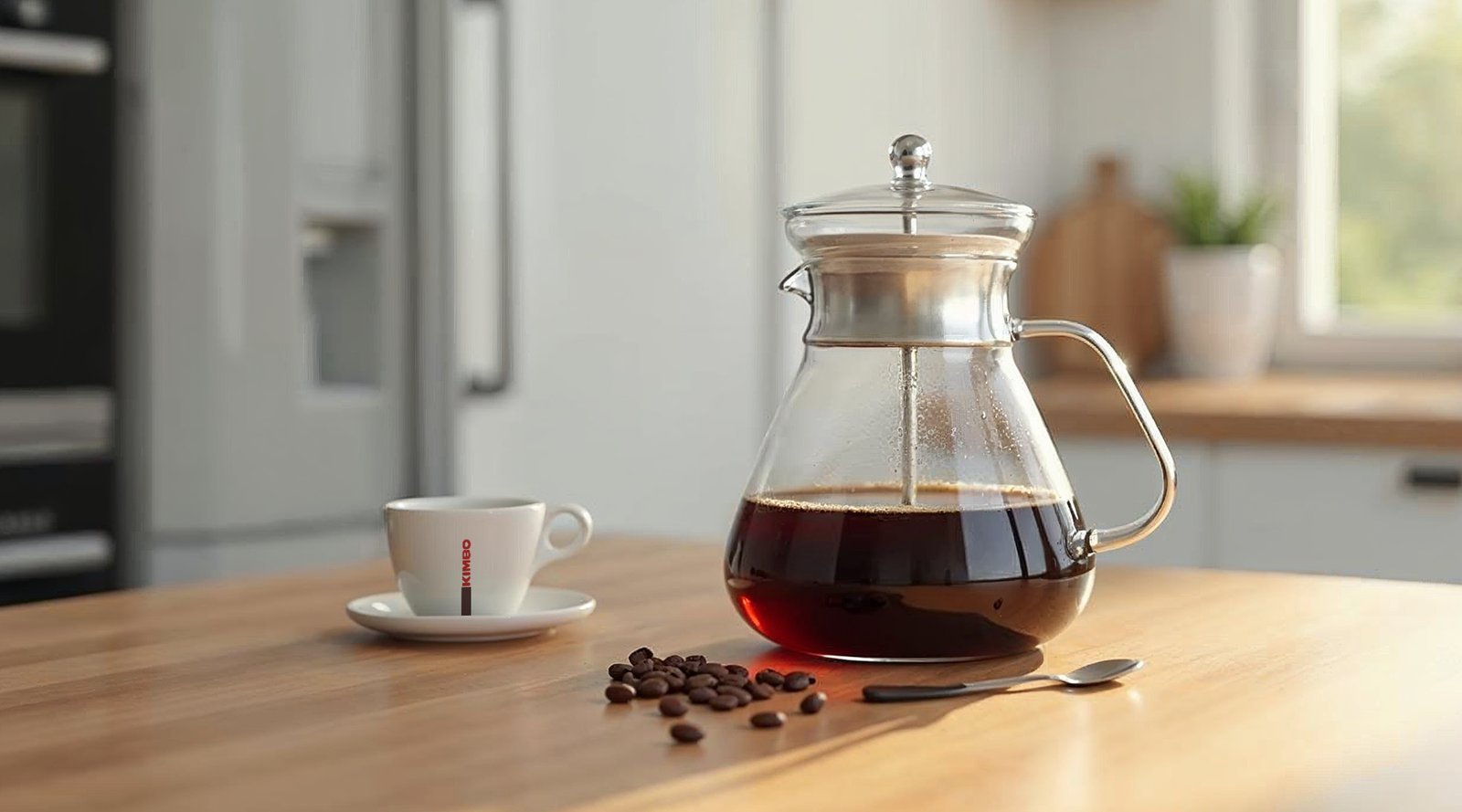
Yes, you can put brewed coffee in the fridge. Leaving it open lets it absorb food smells within hours. Pour it into a sealed container right now if you have leftover hot coffee sitting out.
When refrigerating brewed coffee works
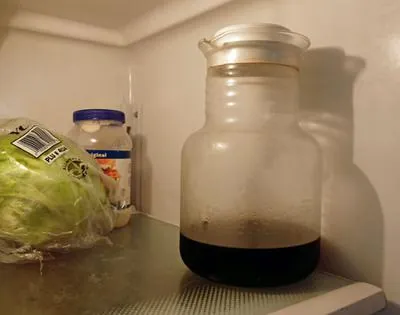
The choice depends on what you plan to do with that cold coffee later. Hot coffee cools slowly in a deep pot, so the vessel matters just as much as the lid. Here is how different situations turn out when you chill your batch.
| Your situation | Answer | Why |
|---|---|---|
| Making iced coffee tomorrow | Yes | Keeps flavor for 3 to 4 days |
| Storing in an open mug | No | Absorbs fridge odors quickly |
| Left out over 2 hours | No | Bacteria grow at room temperature |
| Reheating for hot coffee | Yes, but | Tastes noticeably more bitter |
| Adding milk before storing | Yes | Treat it like dairy; use 2 days |
| Freezing in ice cube trays | Yes | Great for drinks without dilution |
What actually changes in chilled coffee
Heat drives the chemical reactions that make fresh coffee taste bright and sweet. Cooling it down slows those reactions, but doesn’t stop them entirely. Oxygen still touches the liquid even inside a closed jar, breaking down the compounds that carry the good flavors.
If you add milk or cream, you’re following dairy safety rules instead of coffee ones. Milk spoils faster than black coffee, pulling your safe window down to two days maximum. Black coffee stored in a sealed glass container generally stays safe to drink for three to four days. You’ll read your own brew’s limit by smelling it; once it loses its roasted scent and smells flat or slightly sour, the flavor is gone.
If you want iced coffee, chill it fast in a sealed glass jar; if you want hot coffee tomorrow, brew a fresh cup instead.
Steps for chilling your leftover coffee
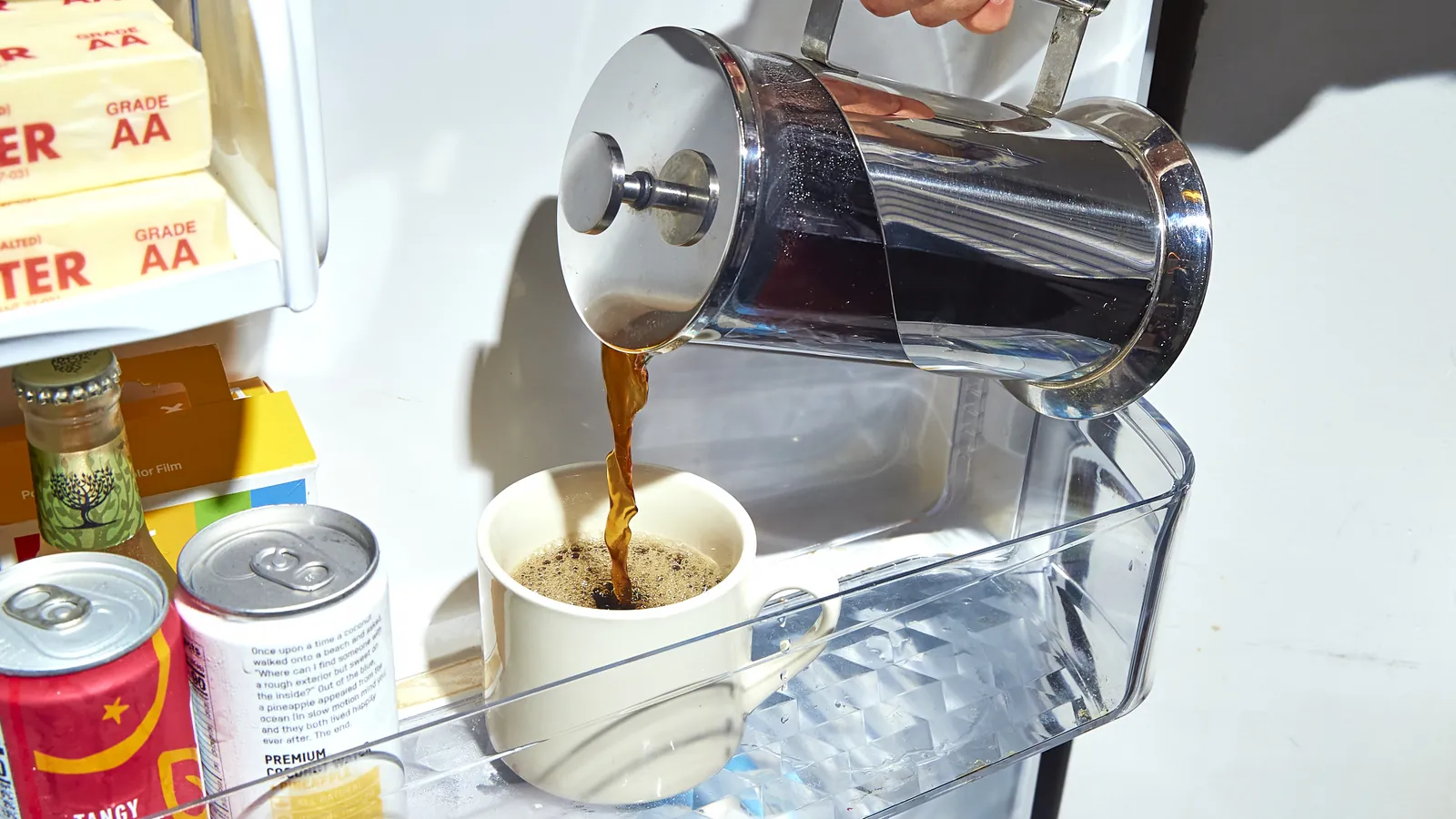
Follow these steps to keep the flavor as close to fresh as possible. They assume you’re starting with black coffee in a standard 1-liter glass jar. If you’re using a smaller container, it cools faster; for a larger pot, divide it into two jars first.
- Pour it into a glass jar. Don’t leave it in the brewing pot, because thick pots hold heat too long. A clean glass jar with a tight lid works best.
- Let it cool on the counter. Wait about 30 minutes until the steam stops rising. Putting boiling liquid directly into a cold fridge raises the temperature around your other food.
- Seal the lid tightly. Make sure the rubber gasket sits flat. This single step stops your coffee from tasting like yesterday’s garlic dinner.
- Place it on a middle shelf. Keep it away from raw meat or strong-smelling cheeses. The back of the fridge holds the coldest, most stable temperature.
- Pour over ice when ready. Use it within 3 to 4 days. The sign it worked is a clean, roasted smell when you pop the lid off.
If you added milk already, skip this method and drink it within 2 days.
Why reheating chilled coffee turns bitter
Reheating cold coffee drives off volatile aromatics and accelerates oxidation, concentrating the bitter compounds already in the cup. That extra acid gives the cup a harsh, metallic bitterness that sugar won’t hide. People often dump reheated coffee after one sip.
When to throw out stored coffee

Chilled coffee rarely becomes dangerous overnight, but it does spoil eventually. Stop drinking it and ask a professional if you notice any of these signs:
- It smells sour or rotten, because bacteria have started feeding on the liquid.
- You see fuzzy spots or a film on the surface, which means mold is growing inside the jar.
- Raw meat juices dripped or splashed into it, introducing dangerous bacteria.
- You feel stomach cramps after sipping it, meaning you should contact a doctor immediately.
A home cook can safely store and pour cold coffee, but diagnosing foodborne illness is strictly a doctor’s job.
Frequently asked questions
Can I put hot coffee straight into the fridge?
No, let it cool on the counter for about 30 minutes first. A large pot of hot liquid raises the fridge’s internal temperature, putting your other groceries at risk.
How long does brewed coffee last in the fridge?
Black coffee lasts 3 to 4 days in a sealed glass container. Coffee with milk added drops to 2 days, matching standard dairy storage limits.
Is it safe to drink day-old coffee?
Yes, if it was covered and chilled within 2 hours of brewing. Room temperature coffee left out longer than that allows bacteria to multiply rapidly.
Why does my refrigerated coffee taste weird?
It likely absorbed odors from nearby foods through a loose lid. Glass containers with tight seals prevent this much better than paper cups or thin plastic.
Does reheating cold coffee ruin it?
Yes, reheating accelerates acid breakdown, making the cup taste sharply bitter. It’s safe to warm up, but the flavor will be noticeably worse than a fresh brew.
Can I freeze brewed coffee instead?
Yes, freezing works well for up to 2 months. Pour it into ice cube trays to use later in blended drinks without watering them down.
What happens if I leave coffee in the fridge too long?
After 4 days, black coffee develops a stale, flat taste and higher acidity. Mold can eventually form if the container wasn’t completely clean.
Does it matter if I add sugar before storing?
No, sugar dissolves fine and doesn’t change the storage time. Dairy additions are the only thing that shortens the safe window to 2 days.
Getting the best out of stored coffee
Pour your leftover coffee into a sealed glass jar and set it on a middle fridge shelf today. Expect a clean, smooth iced coffee tomorrow morning, confirmed by a rich roasted smell when you open the lid. If the liquid ever looks cloudy or smells sour, pour it out and consult a doctor if you already drank some.