As an Amazon Associate, we earn from qualifying purchases. This post contains affiliate links, and buying through one costs you nothing extra.
Finding the best game engine for Blender depends on your project goals and technical experience. If you want a quick start with free tools, Godot is often the best choice, while those aiming for high-fidelity professional projects usually gravitate toward Unreal Engine. Your decision ultimately rests on your current skill level and whether you prefer an open-source workflow or an industry-standard engine.
1. Godot Game Development

Best for: Someone who wants a free, open-source setup for adventure games.
This book focuses on the marriage of Blender and Godot. It’s built for those who want to see how these two tools talk to each other to create a specific type of experience. You get a direct look at the point-and-click genre, which helps if you have a story-heavy project in mind.
If you’re looking for a massive 3D action engine, this might feel too narrow for your needs. It assumes you want to use the specific workflow of these two tools together. It isn’t for the developer who needs a general-purpose manual for every possible game type.
Good if:
- You like open-source software.
- You’re making a point-and-click game.
- You’re comfortable with Blender’s modeling basics.
Skip it if:
- You need a broad engine reference.
- You want to build high-end 3D shooters.
2. 3D Game Development with Blender 5 and Unity 6

Best for: A developer aiming to work in a professional studio environment.
This guide targets the industry-standard workflow between Blender and Unity. It covers how to move assets while keeping the process real-time and elegant. It’s designed to get you comfortable with the standard methods used by professional game teams today.
Since it focuses on a specific, professional-grade workflow, beginners might find the pace fast. It expects you to be ready to handle the complexities of a modern engine. It isn’t for those who want a casual, hobbyist-only approach to game design.
Good if:
- You want a career in game development.
- You need a smooth asset pipeline.
- You prefer standard industry workflows.
Skip it if:
- You’re a total beginner.
- You dislike complex studio software.
3. Unreal Engine Workflow
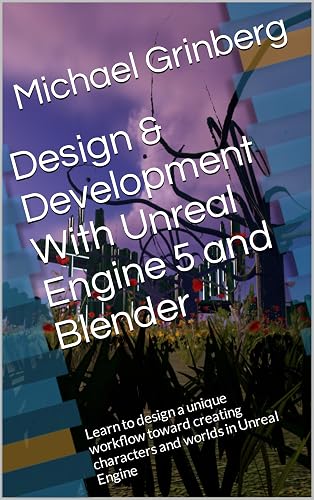
Best for: Artists who prioritize high-fidelity visuals above all else.
This book dives into the design and development side of using Unreal Engine 5 with Blender. It focuses on creating unique characters and worlds that look professional. It’s ideal for those who want to push their visual quality to the limit.
The focus here is heavily on the artistic and design side of the engine. If you’re more interested in deep coding or simple 2D mechanics, this might not be the right fit. It isn’t for the developer who wants to avoid high-end rendering requirements.
Good if:
- You care about realistic graphics.
- You enjoy character and world design.
- You use Unreal Engine 5.
Skip it if:
- You prefer 2D over 3D.
- You have limited hardware power.
4. Complete Game Development Godot

Best for: A beginner who wants a full start-to-finish game project.
This guide covers the full spectrum of game creation, from modeling to building. It’s a good choice if you want to see how professional-quality games are made from scratch. It connects Blender and Godot in a way that’s meant to be comprehensive.
Because it covers everything from design to final build, it can be a lot to process at once. It isn’t for someone who only wants to focus on one small part of the game design process. It requires a commitment to learn multiple stages of development.
Good if:
- You want to learn the whole process.
- You’re new to game development.
- You like using Godot.
Skip it if:
- You only want to learn 3D modeling.
- You prefer a shorter, quicker guide.
5. Game Character Creation Unity

Best for: Someone focused entirely on designing 3D characters for games.
This book is specific to character creation. It links Blender and Unity to show you how to get your models into a game environment. It’s perfect if your main interest is the art of modeling rather than game logic.
If you’re hoping to learn how to script or build complex game worlds, you’ll find this guide lacks that coverage. It’s strictly for the character creation workflow. It isn’t for the user who wants to build a full game from scratch.
Good if:
- You’re a 3D character artist.
- You use Unity as your engine.
- You want to see the import process.
Skip it if:
- You want to build full game worlds.
- You need help with coding.
6. VR Integrated Heritage Recreation

Best for: Someone interested in using VR for historical or educational projects.
This book looks at a niche but fascinating area: using Blender and Unreal Engine 4 for heritage recreation. It’s helpful if you want to build immersive VR experiences. It provides a unique look at how to use these tools for real-world projects.
Because it focuses on a specific use case, it isn’t a general-purpose guide for all game types. If your goal is to build a fantasy shooter or a platformer, the examples here won’t directly apply. It isn’t for the general game developer.
Good if:
- You’re interested in VR.
- You like historical modeling.
- You use Unreal Engine.
Skip it if:
- You want to build arcade games.
- You aren’t interested in VR.
7. Game Development Pipelines

Best for: Someone working in a team who needs to automate asset workflows.
This guide is for the technical artist or pipeline developer. It shows how to connect Blender, Substance 3D, Unreal, and Unity. It’s all about standardizing assets and automating the export process to save time.
This is a highly technical book that assumes you already know the basics of these programs. If you’re just starting out, this will be too advanced. It isn’t for the solo hobbyist who only uses one or two tools.
Good if:
- You work with multiple engine tools.
- You want to automate your export.
- You’re a technical artist.
Skip it if:
- You’re a beginner.
- You only use one software tool.
8. 3D for iPhone Apps with Blender and SIO2

Best for: Developers targeting mobile platforms with open-source tools.
This guide focuses on 3D for iPhone apps using Blender and SIO2. It’s a good choice if you have a specific interest in mobile development. It keeps things grounded in open-source software for your projects.
The mobile landscape changes fast, so ensure your target hardware is compatible with these methods. It isn’t for someone who wants to develop for desktop consoles or high-end PC gaming. It’s a niche guide for a specific platform.
Good if:
- You want to make mobile games.
- You like open-source software.
- You’re an iPhone user.
Skip it if:
- You want to target PC or consoles.
- You need the latest industry-standard engine.
9. Augmented Reality Kudan Vuforia

Best for: Someone looking to build AR experiences using various 3D tools.
This book covers how to use Blender, Maya, and 3ds Max to create models for AR. It incorporates Unreal Engine and Unity to build the actual experience. It’s a great starting point for anyone curious about the intersection of AR and 3D modeling.
AR development requires specific hardware and software knowledge beyond just 3D modeling. If you aren’t prepared to handle the AR-specific SDKs, you might find this challenging. It isn’t for someone who wants a traditional gaming experience.
Good if:
- You’re interested in AR tech.
- You use multiple 3D modeling tools.
- You want to build interactive apps.
Skip it if:
- You only want to build standard games.
- You’re new to 3D software.
10. Blender, Mixamo and Godot: create a modular 2D,2.5D and 3D

Best for: Someone wanting to build a platformer game with a modular workflow.
This guide walks you through modeling in Blender, animating in Mixamo, and coding in Godot. It’s designed to help you create 2D, 2.5D, and 3D platformers. It’s a very structured workflow for a specific type of game.
If you’re looking to build a complex RPG or an open-world game, this workflow may feel too simple. It’s focused on the platformer genre. It isn’t for the user who wants to build large-scale, open-world environments.
Good if:
- You love platformer games.
- You want to use Mixamo for animation.
- You’re a fan of the Godot engine.
Skip it if:
- You want to build open-world games.
- You need help with advanced coding.
Choosing the Best Game Engine for Blender
Most of these guides share a common goal: connecting Blender’s artistic power to an external engine. Whether you choose Godot, Unity, or Unreal, the core challenge is always the same: getting your assets from the modeling software into the game environment without losing quality. The choice between them often comes down to your preferred engine’s ecosystem. For example, guides focusing on Godot often share a similar open-source philosophy, while those covering Unity or Unreal often lean into professional, high-fidelity pipelines. If you’re still learning, the specific engine matters less than the clarity of the workflow provided in the text. You can find comprehensive documentation on engine standards through the Khronos Group 3D standards to see how assets are meant to move between these programs.
Still Not Sure?
How often will I really use this engine?
If you plan to make games every day, pick an engine that has a massive community and regular updates, like Unity or Unreal. If this is just for a weekend project or a single learning goal, a simpler path like Godot might save you a lot of time.
What do I already own that this has to work with?
Check your current hardware. Unreal Engine requires a powerful computer to run smoothly, especially for high-fidelity work. If your setup is older, Godot is often more forgiving. Always match the engine’s system requirements to the machine you have on your desk right now.
What am I most likely to regret choosing?
The most common regret is picking an engine that’s too complex for your current skill level. If you start with a massive, professional-grade pipeline, you might get lost in the settings. Start with a guide like Blender Mixamo Godot to see if the workflow clicks before moving to larger systems.
If you want a free, flexible start, look at Godot Game Development. If you’re aiming for a career in a professional studio, Unity Game Development is the better path. Choose your guide based on your ultimate goal, and remember that you can always learn a second engine later.
Related guides
- 10 Best Addons for Blender to Improve Your Workflow
- How Do You Make Coffee in Life The Game: Simple Steps
- 10 Best Blender 3D Modeling Practice for Beginners Options
Frequently Asked Questions
What does the engine ask of its owner week to week?
Most engines require you to stay updated with their latest versions to keep your projects running. You’ll spend time managing your asset folder and fixing small errors that happen when you move models from Blender into the game. It’s a process of constant iteration and testing.
What has to be replaced, refilled or renewed to keep it working?
You don’t need to refill anything, but you must keep your software plugins current. As Blender updates, the way it exports files can change, so you’ll occasionally need to update your export scripts or plugins to keep the link between your modeler and your game engine active.
What happens when it’s outgrown or used up?
If you outgrow an engine, you simply export your assets and move them to a new one. Your models in Blender are yours to keep, and the skills you learned about rigging and texturing will transfer to any other engine. You never lose your hard work when you switch.
Would the more capable one on this list have suited me better?
A more capable engine often means more features, but it also means more complexity. If you’re just starting, the “most capable” engine might actually slow you down with too many options. Start with a tool that matches your current project size rather than your future ambitions.
Conclusion
Choosing the right path isn’t about picking the most popular tool, but finding the one that fits your creative vision. Download a couple of these engines today and try importing a simple model from your library. You’ll quickly see which workflow feels natural and helps you bring your ideas to life.