
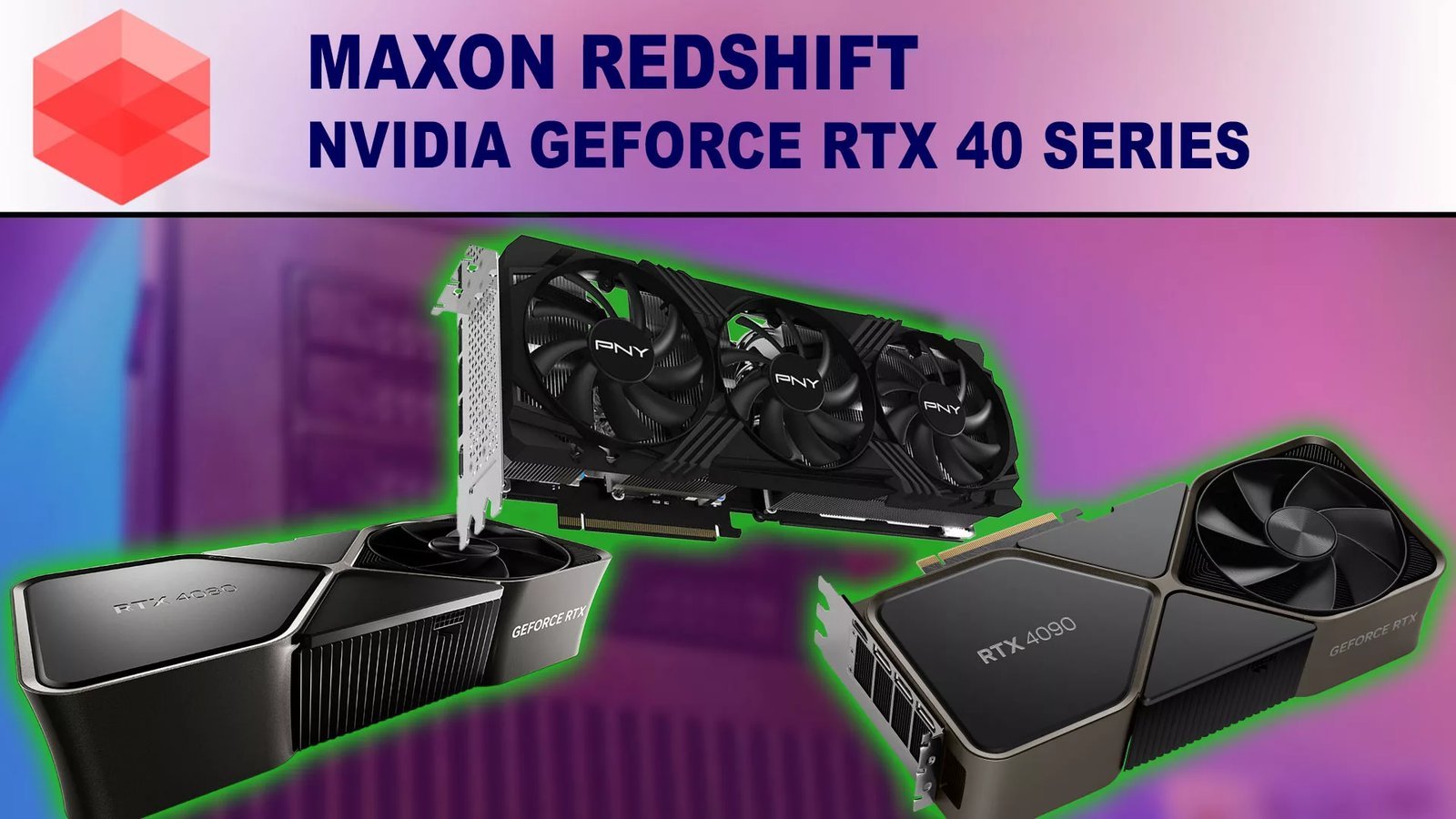
Finding the best gpu for redshift for your specific workflow depends on balancing memory capacity, architecture generation, and thermal management. The right choice depends on your priority: massive VRAM, compact size, or raw compute power. Decide between the extreme capacity of the NVIDIA RTX PRO 6000 or the modern efficiency of the MSI RTX 5070 Ti.
1. ASUS ROG Strix LC NVIDIA GeForce RTX 3090 Ti OC

Best for: Users who need maximum performance and consistent cooling during long renders.
This card uses a 240mm radiator and a full-coverage cold plate to pull heat away from both the GPU die and the memory. This design is built for heavy, sustained workloads where thermal throttling could otherwise slow your progress. It requires space for the radiator and the 600mm tubing, which makes it best suited for EATX chassis where you have room to mount the cooling hardware properly.
The Ampere architecture provides 2nd Gen RT cores and 3rd Gen Tensor cores to assist with ray tracing and AI tasks. Because it relies on a liquid cooling loop, it isn’t for a user who wants a simple, air-cooled drop-in installation or someone working in a very tight, small-form-factor case.
Good if:
- You want liquid cooling for high thermal headroom.
- You need a card designed for sustained, heavy rendering tasks.
- Your case supports a 240mm radiator and long tubing.
Skip it if:
- You have a small case with limited mounting space.
- You prefer a standard air-cooled setup.
2. ASUS ROG Strix NVIDIA GeForce RTX 3090 Gaming Graphics Card

Best for: Professionals who prioritize high VRAM capacity for large, complex 3D scenes.
With 24GB of GDDR6X memory, this card is designed for projects that would otherwise exceed the limits of mid-range hardware. The 2.9-slot design uses an Axial-tech fan system tuned to reduce turbulence, helping the card stay cool despite its size. It’s a large, heavy card that demands a robust power supply and a spacious case to accommodate its physical footprint.
Good if:
- You work with massive 3D assets that require lots of VRAM.
- You want reliable power delivery components.
- You have a large case with plenty of airflow.
Skip it if:
- You’re limited by a small or compact PC case.
- You require the specific AI or ray-tracing features of newer generations.
3. MSI Gaming GeForce RTX 3060 12GB 15 Gbps GDRR6 192-Bit

Best for: First-time users or those needing a balanced, mid-range rendering solution.
This card provides 12GB of GDDR6 memory, which is a useful step up for entry-level rendering tasks that need more than the standard 8GB found in many mainstream cards. Its twin-fan design is more compact than the high-end flagship models, making it easier to fit into a wider variety of standard desktop systems.
Good if:
- You need a reliable card for standard 3D rendering.
- You’re working with a mid-range PC build.
- You want a more compact, dual-fan cooling solution.
Skip it if:
- You’re rendering massive, high-resolution cinema-grade scenes.
- You need the latest architecture for cutting-edge AI features.
4. ASUS ROG Strix GeForce RTX 4060 OC Edition Gaming Graphics
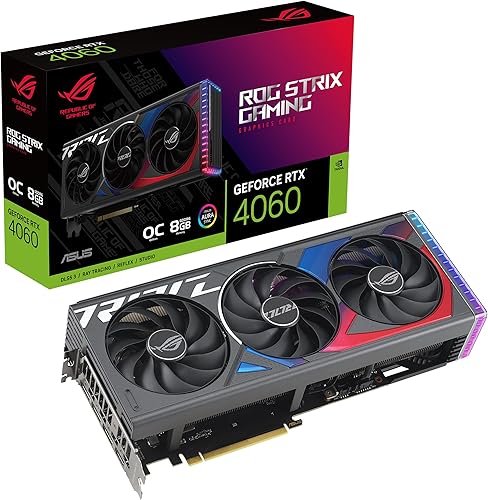
Best for: Builders looking for modern architecture in a compact, efficient footprint.
This card features the Ada Lovelace architecture, which brings 4th Generation Tensor cores and 3rd Generation RT cores to the table. The 3.1-slot design uses a massive fin array and scaled-up Axial-tech fans to move air efficiently, offering a high level of performance per watt.
The card is strictly limited to 8GB of GDDR6 memory. This makes it unsuitable for professional users who regularly deal with large, high-poly environments or complex texture sets that require high VRAM capacity to load without errors.
Good if:
- You want the efficiency of the Ada Lovelace architecture.
- You need a modern card for DLSS 3 support.
- You have a case that fits a 3.1-slot thick card.
Skip it if:
- Your projects require more than 8GB of VRAM.
- You need a high-bandwidth bus for massive datasets.
5. ASUS TUF Gaming GeForce RTX 5090 Triple Fan GPU

Best for: High-end creators pushing the limits of AI-assisted rendering and LLMs.
This card is a powerhouse equipped with 32GB of GDDR7 memory and 21760 CUDA cores. It’s built for complex timelines and 8K assets, utilizing the latest Blackwell architecture to accelerate both rendering and AI tasks like denoise and upscaling. It comes with an included GPU holder to prevent sag, which is a necessary addition given the physical weight of such a high-end card.
Good if:
- You need massive 32GB VRAM for large models.
- You’re experimenting with local LLM inference.
- You need the fastest memory speeds currently available.
Skip it if:
- You have a limited power supply or a small case.
- You don’t perform AI-heavy or 8K rendering tasks.
6. NVlDlA RTX PRO 6000 Blackwell max-Q Workstation Ed. 96GB GDDR7

Best for: Professional research labs and studios needing extreme VRAM and enterprise reliability.
With 96GB of GDDR7 ECC memory, this card is designed to handle the most demanding generative AI pipelines and complex simulations. It fits into standard desktops but provides the performance of a workstation monster, capable of hosting large open-source LLMs locally. It includes enterprise-grade features like ECC memory to ensure data integrity during long, complex calculations.
Good if:
- You need 96GB of VRAM for massive datasets.
- You require ECC memory for calculation stability.
- You’re running complex local AI and simulation pipelines.
Skip it if:
- You’re a casual user or generalist 3D artist.
- You don’t need enterprise-level workstation features.
7. PNY VCNRTXPRO5000B-PB NVIDIA RTX PRO 5000 Blackwell 48GB GDDR7 384B

Best for: Professionals who need a balance of high VRAM and enterprise-grade stability.
This card offers 48GB of GDDR7 memory, providing a substantial amount of space for complex rendering and AI tasks. It uses the PCIe 5.0 interface for high-bandwidth communication with your system, which helps in professional environments where data throughput is critical. It supports up to four monitors, making it ideal for workstation setups that require multiple displays.
Good if:
- You need 48GB of memory for complex professional projects.
- You require a multi-monitor workstation setup.
- You need the stability of professional-grade hardware.
Skip it if:
- You want a card with gaming-first features.
- Your workflow doesn’t require professional-level VRAM.
8. Nvidia RTX 2000 ADA 16GB Graphics Card

Best for: Users with extremely limited space who still need professional features.
This card is built for small-form-factor workstations, featuring a dual-slot, half-height design that fits where other cards cannot. Despite its small size, it provides 16GB of GDDR6 memory with ECC support, which is impressive for a card of this form factor. It uses a blower-style active fan to pull air through the card and out the back of the case.
Good if:
- You’re working with a very small or slim PC case.
- You need ECC memory in a compact form factor.
- You prioritize workstation-class stability.
Skip it if:
- You need a high-performance card for gaming.
- You aren’t restricted by case space.
9. msi Gaming RTX 5070 Ti 16G Ventus 3X PZ OC
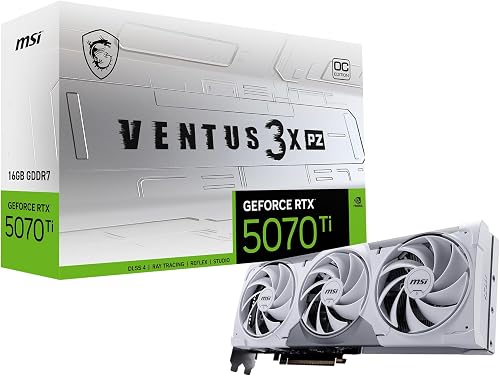
Best for: Enthusiast 3D artists looking for the latest performance and thermal efficiency.
This card leverages the Blackwell architecture and 16GB of GDDR7 memory to provide a strong balance for high-end rendering. It features a nickel-plated copper baseplate and square-designed core pipes to maximize heat transfer, which is helpful for keeping the card stable during long rendering sessions. It’s marketed as SFF-ready, meaning it’s designed to fit into smaller systems without sacrificing too much performance.
Good if:
- You want the latest Blackwell architecture.
- You need a balance of performance and thermal management.
- You’re building a high-end, compact workstation.
Skip it if:
- You need more than 16GB of VRAM for your projects.
- You require enterprise-grade ECC memory.
10. ASRock Intel Arc Pro B60 Creator 24GB Graphics Card

Best for: Creator workstations that need specific ISV-certified drivers and high memory.
This card features 24GB of GDDR6 memory and the Intel Xe2-HPG architecture, making it a strong candidate for AI inference and 3D rendering. It’s ISV certified, meaning it’s validated for specific professional design and engineering software, which can provide extra assurance for professional users. The blower-style cooling is designed to work well in standard workstation chassis.
Good if:
- You need 24GB of VRAM for 3D rendering or AI.
- You require ISV-certified drivers for professional software.
- You want a card with robust media transcoding capabilities.
Skip it if:
- Your software requires CUDA-specific optimizations.
- You’re looking for a card primarily for high-end gaming.
Choosing the Best GPU for Redshift
The choice between these cards often comes down to the specific memory capacity and thermal constraints of your system. Cards like the ASUS ROG Strix RTX 3090 and the ASRock Intel Arc Pro both offer 24GB of memory, making them overlap in their capability to handle large scenes. However, their underlying architectures and driver certifications differ significantly, which may be the deciding factor depending on your software. Similarly, the ASUS ROG Strix RTX 4060 and MSI RTX 5070 Ti both aim at more compact builds, though the latter offers newer architecture and faster GDDR7 memory. For those choosing between the professional workstation cards, such as the PNY NVIDIA RTX A4500 and the NVIDIA RTX 2000 ADA, the primary difference is the physical size and the specific memory requirements of your project.
Still Not Sure?
How often will I really use it for heavy rendering?
If you’re rendering daily, you should prioritize a card with robust cooling and higher VRAM, like the ASUS ROG Strix LC RTX. If you only render occasionally, a mid-range card like the MSI Gaming RTX 3060 will likely be more than enough for your needs.
What do I already own that this must work with?
Check your power supply and case clearance first. If you own a small-form-factor case, the NVIDIA RTX 2000 ADA is a great fit. If you have a large EATX case with plenty of room, you have the freedom to choose larger, more powerful cards like the ASUS TUF RTX 5090.
What am I most likely to regret choosing?
Most users regret choosing a card with too little VRAM for their projects. If you work with complex 3D environments, don’t settle for an 8GB card like the ASUS ROG Strix RTX 4060. Instead, aim for at least 16GB or 24GB models like the MSI RTX 5070 Ti or the ASRock Intel Arc Pro.
As an Amazon Associate, we earn from qualifying purchases. This post contains affiliate links – if you buy through them, we may earn a commission at no extra cost to you.
Related guides
Frequently Asked Questions
What does this card ask of its owner week to week?
Most modern GPUs require very little maintenance beyond ensuring your drivers are updated through the manufacturer’s software. For liquid-cooled models like the ASUS ROG Strix LC RTX, you should occasionally check that the radiator fans are free of dust to maintain efficient cooling performance.
What has to be replaced or renewed to keep it working?
There are no parts that need regular replacement on these cards. However, if you notice your GPU temperatures rising, cleaning the dust from the fans and heatsinks is the best way to keep the card working at its peak performance for years.
What happens when it’s outgrown or used up?
When a GPU is outgrown, you’ll typically notice longer rendering times or errors when trying to load complex scenes that exceed your VRAM limit. At this point, you would look to upgrade to a card with higher memory capacity, such as moving from a 12GB to a 24GB or 48GB model.
Would the more capable one on this list have suited me better?
A more capable card is only better if you’re hitting the limits of your current hardware. If you aren’t seeing performance bottlenecks or VRAM errors, a more powerful card won’t necessarily make your renders look better; it will only make them finish faster.
Conclusion
Before you commit to a purchase, check your current power supply unit to ensure it’s ready for your upgrade. Don’t let a bottleneck hold back your render times. Once you’ve verified your hardware compatibility, you’ll be set to start pushing your creative projects to a whole new level of detail.