
As an Amazon Associate, we earn from qualifying purchases. This post contains affiliate links – if you buy through them, we may earn a commission at no extra cost to you.
Finding the right way to bake normals for characters in Blender depends on your specific goals and current skill level. You might need to focus on game-ready assets, character rigging, or general modeling workflows to get the best results. The best approach for you is decided by whether you’re a beginner needing a step-by-step path or a professional looking to optimize your existing technical pipeline. Choosing between these guides often comes down to selecting either Blender for Game Development for asset-specific tasks or Blender Character Creation Made Simple for a broader character-focused curriculum.
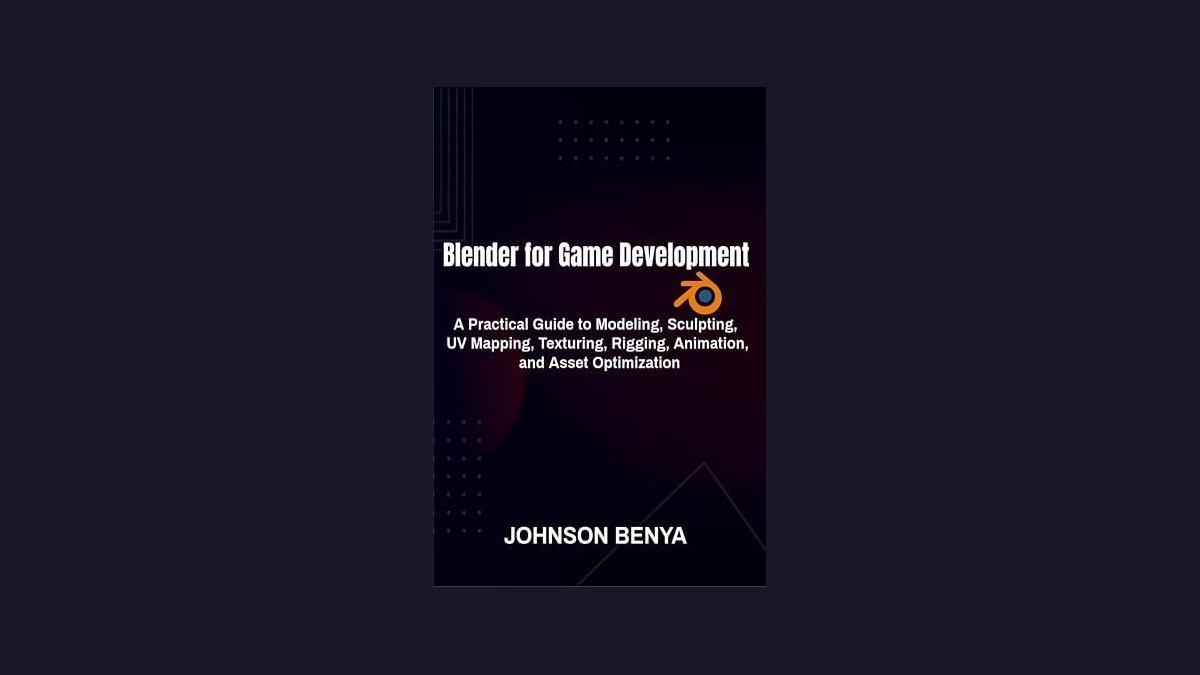
1. Blender for Game Development

Best for: Someone building assets specifically for real-time game engines.
This book explains the transition from a high-poly sculpt to a low-poly model optimized for game performance. It covers the technical steps required to bake details onto a game-ready mesh, which is essential for character artists.
The content focuses on the entire pipeline, including UV mapping and texturing, so you can manage your data efficiently. The listing doesn’t mention the book’s exclusions.
Good if:
- You’re focusing on game asset production.
- You need to learn UV mapping for characters.
- You’re interested in asset optimization techniques.
Skip it if:
- You have no interest in game engines.
- You prefer a general guide to 3D.
2. Blender for Game Creation

Best for: A beginner who needs a practical, project-based workflow.
This guide provides a clear path for character design and asset building. It helps you organize your workspace so that tasks like baking normals become a standard part of your daily routine rather than a complex hurdle.
The workflow-heavy approach ensures you don’t get stuck on technical details.
Good if:
- You’re a beginner to 3D character design.
- You want a practical, step-by-step workflow.
- You need help with interactive world building.
Skip it if:
- You’re already an advanced 3D artist.
- You need deep technical theory.
3. Blender Character Creation Made Simple

Best for: A beginner starting from scratch who wants an all-in-one guide.
This book covers the full cycle of character creation. Because it includes sculpting, rigging, and texturing, you’ll find it easier to understand where normal maps fit into the larger character development process.
The focus is on keeping the process manageable for new users. It isn’t designed for professionals who need specialized knowledge on advanced geometry nodes or procedural animation systems.
Good if:
- You’re a first-time character creator.
- You want to learn sculpting and rigging.
- You prefer a comprehensive, end-to-end approach.
Skip it if:
- You’re looking for advanced procedural modeling.
- You only care about rendering and visual effects.
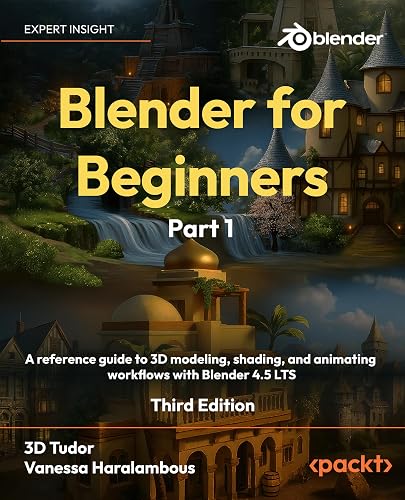
4. Blender for Beginners Part 1
Best for: Someone who wants a solid technical reference guide.
This reference provides clear documentation on shading and modeling workflows within the Blender 4.5 LTS environment. It’s useful for understanding the exact settings needed for high-quality normal map production.
The structure is built for quick lookups rather than linear project building.
Good if:
- You want a technical reference for your desk.
- You use Blender 4.5 LTS specifically.
- You need to understand shading workflows clearly.
Skip it if:
- You want a project-based tutorial.
- You prefer videos over written references.
5. Blender 5.2 LTS Made Practical

Best for: Users who want to stay up-to-date with modern software versions.
This guide focuses on the 2026 edition of Blender, ensuring you use the most recent tools for rendering and visual effects. It helps you integrate normal baking into a modern, efficient production pipeline.
The book is broad, covering everything from VFX to rendering, which means it covers each individual topic in less depth.
Good if:
- You need to learn the latest 5.2 LTS tools.
- You’re interested in visual effects and rendering.
- You want a modern guide for creative workflows.
Skip it if:
- You have a specific interest in only one area.
- You’re using a much older version of Blender.
6. Production-Ready Game Assets

Best for: Artists who want to combine ZBrush and Blender.
This guide explains how to use multiple tools to create high-quality assets. It’s excellent for those who want to bake normals from a ZBrush sculpt onto a Blender-ready game model.
The advanced nature of the content assumes you already know the basics of both programs.
Good if:
- You already use ZBrush alongside Blender.
- You want to master real-time rendering workflows.
- You’re aiming for professional production standards.
Skip it if:
- You’re brand new to 3D modeling.
- You don’t own or want to learn ZBrush.
7. Blender 5.2 Practical Guide

Best for: Someone who wants one book that covers everything.
This complete guide touches on almost every aspect of production. It is helpful for understanding how normal maps relate to geometry nodes and compositing, giving you a comprehensive view of your production.
Good if:
- You want a complete guide in one volume.
- You’re interested in geometry nodes and compositing.
- You want to prepare for professional production work.
Skip it if:
- You prefer short, highly focused manuals.
- You have a limited interest in advanced nodes.
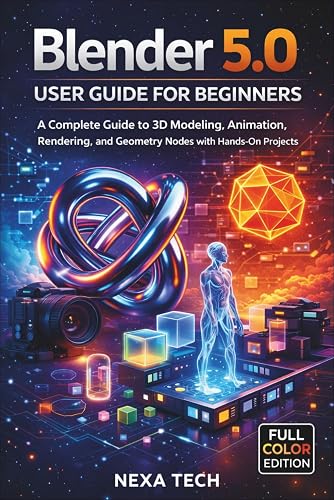
8. Blender 5.0 User Guide
Best for: A beginner who learns best through hands-on projects.
This guide uses practical projects to teach modeling and rendering. By doing the work, you will learn the process of baking normals as part of a real project cycle.
The content is designed to be accessible, which means it avoids overly complex technical jargon.
Good if:
- You learn best by doing hands-on projects.
- You’re a beginner to Blender 5.0.
- You want to start your first complete project.
Skip it if:
- You’re looking for a deep technical manual.
- You need advanced geometry node tutorials.
9. Blender 5 Best Practices

Best for: Someone looking to optimize their existing workflow.
This book focuses on the “how-to” of efficiency. It helps you identify where your current character workflow is slow and shows you how to bake normals more quickly.
The focus is on advanced techniques and procedural assets. It isn’t for a complete beginner who is still struggling to navigate the basic user interface of the software.
Good if:
- You want to optimize your current workflow.
- You’re interested in advanced procedural techniques.
- You have mastered the basics and want more.
Skip it if:
- You’re still learning the basic tools.
- You don’t need to optimize your production speed.
10. Blender 5.2 Geometry Nodes

Best for: Users interested in procedural modeling and simulations.
This book teaches you how to use geometry nodes to automate tasks. It’s useful for creating character assets that need to be dynamic or procedural.
The focus is heavily on nodes and physics, which is a specific subset of the software.
Good if:
- You want to master procedural modeling.
- You’re interested in dynamic simulations.
- You use Blender 5.2 LTS.
Skip it if:
- You prefer traditional manual modeling methods.
- You aren’t interested in procedural node workflows.
Where Blender Normals Bake Best
Many of these guides overlap in their coverage of basic modeling and UV mapping, which are the foundations of baking normals across the entire software interface. Books like Blender 5.0 User Guide and Blender for Beginners Part 1 provide similar ground-level knowledge for anyone starting out. The main difference lies in the project focus; some lean toward game assets, like Production-Ready Game Assets, while others focus on general character design. If you need to produce assets for a game engine, choose a title that specifically mentions game workflows. If you want a general understanding of character creation from start to finish, a book like Blender Character Creation Made Simple will provide the best overview.
Still Not Sure?
How often will I really use it?
If you plan to make characters every day, you need a guide that covers the technical pipeline, such as Blender for Game Development. If you only plan to model occasionally for fun, a broader guide like Blender 5.0 User Guide will give you enough knowledge to complete your projects without feeling overwhelmed by advanced technical details.
What do I already own that this has to work with?
If you’re already using ZBrush for sculpting, you should look at Production-Ready Game Assets to see how to bridge your existing tools with Blender. If you’re only using Blender, any of the dedicated Blender titles will serve you well. Always check that the book matches your current software version.
What am I most likely to regret choosing?
You might regret choosing a book that’s too advanced if you’re just starting out. Beginners often struggle with titles that focus heavily on geometry nodes or physics. If you’re new to the software, it’s safer to start with Blender Character Creation Made Simple to build a solid foundation first.
Needs generally fall into two camps: those building game-ready assets and those learning the basics of character design. For game assets, Production-Ready Game Assets is a strong choice, while Blender Character Creation Made Simple is best for beginners. Pick the one that matches your current goal and start your first project today.
Frequently Asked Questions
What is the best way to bake normals for characters?
The best way is to use a high-poly sculpt and bake the details onto a low-poly mesh using the Blender bake settings. You must ensure your UVs are unwrapped correctly and that your cage mesh is set up to avoid projection errors, as described in the Blender documentation for baking cycles.
Do I need to know sculpting before baking normals?
Sculpting is necessary because baking normals requires a high-detail model to capture data from. If you are new to this, Blender Character Creation Made Simple provides the necessary steps to learn sculpting before you move on to the technical task of baking your maps for your character.
Does the Blender version matter for baking normals?
Yes, it’s important to choose a guide that matches your version, such as Blender 5.2 LTS Made Practical for the latest features. While the core concept of baking remains the same, the menus and hotkeys change between versions, which can be confusing for a beginner trying to follow an older tutorial.
Can I bake normals for characters using geometry nodes?
You can use geometry nodes to help build your character, but the actual baking process is usually handled by the render engine settings. If you’re interested in using nodes to speed up your production, the latest long-term support release of the software explains how to incorporate these tools into your overall 3D workflow effectively.
Conclusion
Regardless of the path you choose, don’t get discouraged if your first few bakes look a bit messy. It’s a skill that takes time to refine, so keep experimenting with your cage settings and smoothing groups. You’ll find that as you practice, your character details will start looking much sharper.