Choosing the best blender 3d modeling practice for beginners depends on your specific goals and learning style. Because no single book suits everyone, you must select a resource that aligns with your creative habits, whether you are building game assets, designing characters, or sculpting. This guide evaluates how different titles approach the software’s complex toolset to help you find the right fit.
As an Amazon Associate, we earn from qualifying purchases. This post contains affiliate links – if you buy through them, we may earn a commission at no extra cost to you.
1. Blender 5.1 User Guide

Best for: Someone who wants a complete, updated reference for all core features.
This guide provides a wide look at the software, covering everything from basic modeling to visual effects. It’s designed for those who want to see the full scope of what the program can do without jumping between different specialized books.
Because it covers so many areas, it’s a great starting point if you aren’t sure which path you want to take. It doesn’t go into deep detail on one single niche, so it may feel broad for someone who only wants to focus on one specific task.
Good if:
- You want to learn about animation and geometry nodes.
- You prefer having one main manual for many tasks.
- You’re starting from zero and need a broad overview.
Skip it if:
- You only care about character sculpting.
- You prefer short, task-specific tutorials.
2. Blender 5.0 User Guide

Best for: Beginners who want to start with the basics of digital sculpting.
This book helps you move from having no experience to creating your first project. It focuses on the sculpting workflow, which is often the most intuitive way for new artists to see results quickly.
By focusing on the creation of a complete project, it helps you understand how the different tools interact. It’s a good choice for artists who learn best by making something tangible rather than just reading about menus.
Good if:
- You’re interested in organic shapes and character forms.
- You need a project-based approach to stay motivated.
- You have never used any 3D software before.
Skip it if:
- You’re more interested in hard-surface or mechanical design.
- You want a deep dive into technical rendering settings.
3. Blender for Game Creation

Best for: Aspiring developers who need to build assets for interactive worlds.
This book is tailored for those who want to see their models inside a game engine. It covers the specific needs of game design, such as asset building and texturing, which differ from traditional static modeling.
The practical focus means you learn the workflows that matter for game performance. It’s a specialized tool, so it might not be the best choice if you’re only interested in making still images for film or art.
Good if:
- You plan to use your models in game engines.
- You want to learn character design for interactive media.
- You need to understand asset optimization.
Skip it if:
- You only want to create still, non-animated renders.
- You aren’t interested in game design workflows.
4. 3D Modeling and Animation with Blender

Best for: Artists who want to focus entirely on building animated characters.
This guide takes you through the process of creating a character from start to finish. It’s perfect for those who find the technical side of modeling easier when it’s tied to a specific character project.
It provides a clear path for character design, which is one of the most popular reasons to learn 3D. Since it’s so focused on animation, it might not cover other areas like hard-surface modeling in depth.
Good if:
- You want to see how a model comes to life.
- You prefer a single, long-term project structure.
- You’re interested in the character creation pipeline.
Skip it if:
- You want to model machines, buildings, or vehicles.
- You prefer to learn tools in isolation.
5. Blender 3D Incredible Models
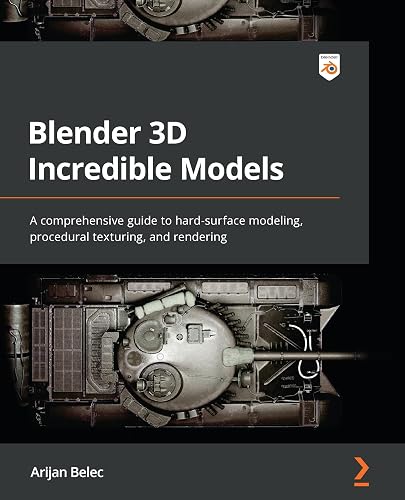
Best for: Students interested in mechanical or hard-surface design.
This guide is for those who prefer clean lines, geometry, and mechanical parts over organic sculpting. It covers procedural texturing and rendering, which are essential for making hard-surface models look realistic.
The focus here is on the technical precision required for architecture or mechanical items. It’s a highly specialized book, so it isn’t ideal if your main goal is to create people or animals.
Good if:
- You love modeling buildings, robots, or gadgets.
- You want to master procedural texturing techniques.
- You enjoy technical, grid-based modeling.
Skip it if:
- You want to learn character sculpting.
- You prefer loose, artistic modeling styles.
6. Blender for Beginners

Best for: Learners who want a structured, step-by-step path.
This book breaks down the learning process into manageable steps. It covers a wide range of topics, ensuring you get a taste of everything from lighting to geometry nodes without feeling overwhelmed.
The step-by-step format is built for those who get frustrated when they can’t find the next button to press. Because it tries to cover so much, it might move quickly through individual topics.
Good if:
- You want a clear, guided learning path.
- You’re worried about getting stuck in the software.
- You want to learn the basics of rendering and nodes.
Skip it if:
- You want to master one specific, advanced skill quickly.
- You prefer to jump around between different topics.
7. Sculpting the Blender Way

Best for: Users who want to dive deep into sculpting tools.
This title focuses on the latest sculpting features, such as the cloth brush and mesh filters. It’s a great choice if you have already learned the basic interface and now want to focus on high-detail sculpting.
It assumes you’re ready to learn complex workflows, so it isn’t the best for a complete beginner who has never opened the software before. It’s purely about the sculpting side of the program.
Good if:
- You want to master advanced sculpting brushes.
- You’re interested in detailed character detailing.
- You want to explore Blender’s latest sculpting features, including Face Sets, Mesh Filters, and the Cloth brush.
Skip it if:
- You’re a total beginner to 3D modeling.
- You want to learn about lighting or animation.
8. 3D Modeling with Blender 5.1
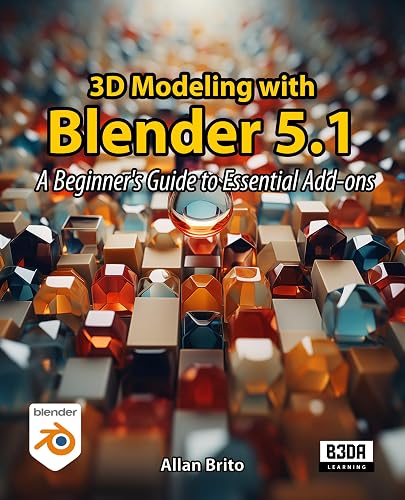
Best for: Users who want to speed up their workflow using add-ons.
This book focuses on the essential add-ons that make modeling efficient and easy. It’s a smart choice for those who realize that standard tools aren’t enough for their specific project needs.
By teaching how to use add-ons effectively, it helps you build a custom workspace. Since it highlights specific add-ons, it might be less useful if you prefer to learn only the native, built-in tools.
Good if:
- You want to model more efficiently.
- You like customizing your software environment.
- You want to learn about tools that extend standard functionality.
Skip it if:
- You want to learn the core software without external tools.
- You’re just looking for a general beginner overview.
9. Learning Blender

Best for: Those who need hands-on practice to learn 3D animation.
This guide focuses on the “learning by doing” method, specifically for animated characters. It’s ideal for those who lose interest when reading long technical manuals.
Hands-on practice builds muscle memory, though this approach prioritizes application over the theory behind why specific tools function the way they do.
Good if:
- You learn best by following along with a project.
- You want to create animated characters quickly.
- You enjoy a practical, hands-on learning style.
Skip it if:
- You prefer to understand the theory of 3D modeling first.
- You aren’t interested in character animation.
10. The Beginner’s Guide to 3D Modeling with Blender (Blender Series

Best for: Someone who wants a simple, high-level introduction.
This is the classic starting point for anyone who wants to learn the basics of 3D modeling. It provides a solid foundation without getting bogged down in the more complex or niche features of the software.
It’s a gentle introduction, making it perfect for someone who is nervous about the learning curve. Because it’s an introductory book, you’ll likely need another resource later to advance to professional-level work.
Good if:
- You want a soft entry into the world of 3D.
- You prefer short, clear lessons.
- You want to build a foundation before choosing a specialty.
Skip it if:
- You’re looking for advanced animation or sculpting techniques.
- You want a guide that covers the absolute newest software features.
Where These Overlap
Most of these guides are similar in that they all start with the basic interface, so the core navigation and modeling tools are consistent across almost every book. The real difference is found in the final chapters or the specific project examples. For instance, Blender 5.1 User Guide and Blender for Beginners are very close in their broad scope. You would choose between them based on whether you want a comprehensive reference manual or a step-by-step project guide. The specialized books are also quite similar to one another in their structure, but they differ entirely in the software tools they highlight. If you’re struggling to decide, look at the project example on the back cover of the book to see if it matches the type of art you want to create.
Still Not Sure?
How often will I really use it?
If you only want to tinker with 3D on weekends, a broad overview like the Beginner’s Guide to Blender will serve you well without overwhelming your schedule. If you plan to make this a daily habit or a career, you should pick a more specialized title like Blender for Game Creation to build professional skills.
What do I already own that this has to work with?
If you already have a tablet for drawing, you’ll have a much easier time with a book that focuses on sculpting, such as Sculpting the Blender Way. If you only have a mouse and keyboard, you might find more success with the hard-surface modeling focus found in Blender 3D Incredible Models.
What am I most likely to regret choosing?
You’ll regret choosing a book that focuses on a niche you don’t enjoy. If you hate character design, don’t buy a character-focused guide just because it’s popular. Stick to your interests. If you want a safe bet that covers everything, Blender 5.1 User Guide is the most versatile choice.
Related guides
Frequently Asked Questions
What does it ask of its owner week to week?
Consistent daily practice is more effective than cramming, as steady exploration of the interface helps you internalize the complex toolset.
What has to be replaced, refilled or renewed to keep it working?
These books don’t need to be refilled, but the software itself updates often. You should check if your guide is for a specific version, like 5.0 or 5.1. While the core tools remain similar, newer versions often move menus or improve performance, so using a guide that matches your software version prevents confusion.
What happens when it’s outgrown or used up?
Once you complete your first project, you’ll likely find that you need more advanced, specialized tutorials. Most beginners outgrow a general guide within a few months. When this happens, you should look for books that focus on high-level compositing, advanced rigging, or specific professional workflows to continue your growth.
Would the more capable one on this list have suited me better?
If you’re a fast learner, you might find that an introductory book feels too slow within the first week. If you feel bored, you can always move to a more specialized title like Blender 3D Incredible Models. It’s better to challenge yourself than to stick with a book that no longer teaches you anything new.
Conclusion
If you’re just starting, the Blender 5.1 User Guide is the best choice for a broad foundation, while Learning Blender is the best for those who want to jump straight into hands-on character work. Pick the style that matches your goals and start your first project today.