
As an Amazon Associate, we earn from qualifying purchases. This post contains affiliate links – if you buy through them, we may earn a commission at no extra cost to you.
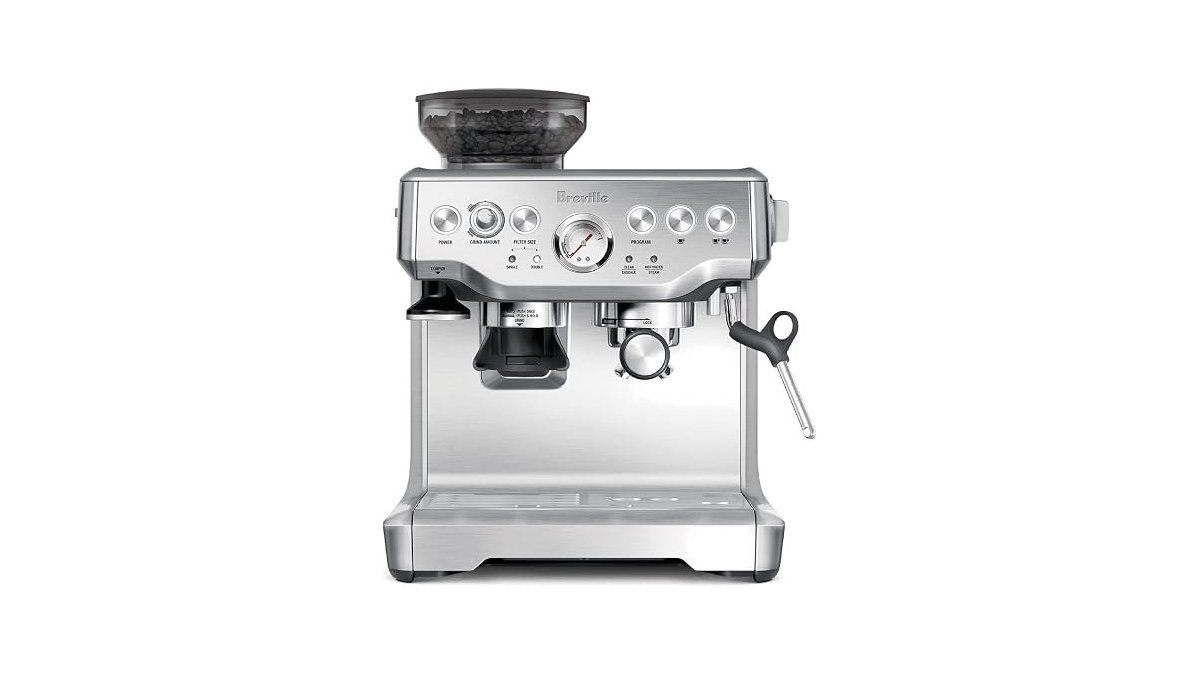
Most coffee machine listings focus on features rather than daily habits, and buyers often learn what separates good espresso from bad only after weeks of use. We explain trade-offs in build, automation, and maintenance before recommending anything, identifying which specs change your routine versus marketing noise. For most people, the Breville Barista Express remains the strongest starting point because its integrated grinder and manual steam wand teach proper technique without overwhelming complexity.
What Actually Matters
Grinder Integration vs. Separate Equipment
Built-in grinders save space but limit upgrades. Separate grinders allow independent upgrades but require more space and steps. Decide whether convenience or flexibility matters more.
Automation Level and Skill Required
Super-automatics handle grinding, tamping, and brewing at one button press. Semi-automatics require manual dosing, tamping, and timing for direct control. Your choice determines if automation helps or frustrates.
Milk System Design and Cleaning Burden
Steam wands produce superior microfoam but demand practice and cleaning. Automatic frothing simplifies milk drinks but rarely matches hand-steamed texture. Neglecting cleaning risks clogging milk pathways.
Footprint Versus Water Capacity
Compact machines fit small kitchens but hold less water. Check reservoir capacity against your refill tolerance. The right balance depends on your layout and volume.
1. Breville BES870XL Barista Express Espresso Machine

Best for: Learning espresso fundamentals with integrated grinding
The integrated conical burr grinder delivers fresh grounds directly into the portafilter, eliminating a separate piece of equipment while ensuring consistent dosing for balanced extraction. Digital temperature regulation maintains precise water temperature throughout brewing, which matters because temperature swings cause sour or bitter shots that beginners struggle to diagnose.
Low pressure pre-infusion gradually increases pressure at the start of extraction, drawing out flavors evenly rather than channeling through weak spots in the puck. The manual steam wand produces true microfoam suitable for latte art, but requires practice and immediate wiping after each use to prevent milk residue buildup.
Pros
- Integrated grinder ensures fresh grounds every shot
- Manual steam wand creates authentic microfoam texture
- PID temperature control prevents extraction inconsistencies
- Grind size dial allows adjustment for different beans
- Pre-infusion promotes even flavor extraction
Cons
- Requires learning curve for consistent results
- Steam wand needs immediate cleaning after use
2. Ninja Luxe Café Pro 4-in-1 Espresso Machine

Best for: Multiple drink types with guided assistance
Barista Assist Technology guides users through grinding, dosing, and tamping with real-time adjustments based on selected drink type, reducing guesswork for beginners. The dual froth system combines magnetic whisking with automatic steaming, producing consistent foam without manual technique, though this automation trades away the texture customization that experienced baristas prefer.
Cold pressed espresso function brews at lower temperature and pressure, extracting smoother flavor compounds that hot brewing misses entirely. The built-in conical burr grinder offers 25 settings specifically calibrated for different drink types, from fine espresso to coarse cold brew.
Pros
- Four brewing functions cover espresso, drip, cold brew
- Automatic frothing removes milk texturing learning curve
- Guided technology assists beginners through each step
- Cold press mode extracts unique flavor profiles
- Onboard accessory storage reduces countertop clutter
Cons
- Automatic frothing limits texture customization options
- Complex feature set may overwhelm simple-preference users
- Magnetic whisk system differs from traditional steam texture
3. De’Longhi Magnifica Duo Automatic Espresso Machine

Best for: One-touch specialty drinks with minimal effort
Twenty preset recipes unlock authentic espresso, drip coffee, and cold brew at single button presses, removing preparation variables that cause inconsistency across users. LatteCrema Hot and Cool technologies froth dairy and plant-based milks into velvety foam automatically, with removable components that go directly in the dishwasher for easy maintenance.
Cold Extraction Technology produces cold brew in under three minutes using specialized brewing parameters distinct from hot methods. The integrated conical burr grinder is built for long-lasting performance, delivering consistent freshness across all twenty recipe types.
Pros
- Twenty presets cover hot and cold specialty drinks
- Dishwasher-safe milk system simplifies daily cleanup
- Fast cold brew extraction under three minutes
- Plant-based milk compatibility expands dietary options
- Fully automatic operation removes user error
Cons
- Limited parameter adjustment beyond preset recipes
- Super-automatic complexity unnecessary for black coffee drinkers
- Milk system still requires regular descaling maintenance
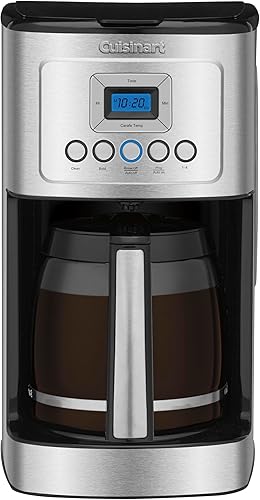
4. Cuisinart Coffee Maker
Best for: Large-batch drip brewing with programmable convenience
Fourteen-cup capacity serves households or offices where multiple people need coffee simultaneously without waiting for individual brews. Adjustable carafe temperature keeps brewed coffee at preferred warmth levels through Low, Medium, or High settings, addressing the common complaint of coffee cooling too fast or burning on warming plates.
Brew strength control offers regular or bold settings that adjust extraction intensity without changing grind size or dose amount. Programmability with auto-off and ready alert tone allows you to schedule unattended morning brewing the night before, though the glass carafe lacks thermal insulation that would maintain temperature without external heating.
Pros
- Large capacity serves multiple people efficiently
- Adjustable warming plate prevents burning or cooling
- Brew strength control customizes extraction intensity
- Programmable timer enables unattended morning brewing
- Brew pause feature allows mid-cycle serving
Cons
- Glass carafe loses heat without warming plate
- No espresso or milk drink capability
- Minimum brew volume still produces multiple cups
5. Breville BES500BSS Bambino Plus Espresso Machine

Best for: Small kitchens needing fast espresso capability
Automatic steam wand adjusts milk temperature and texture with preset options, creating consistent microfoam without requiring manual stretching technique that takes months to master.
Compact 7.7-inch width preserves counter space while maintaining a 54mm portafilter with 19-gram capacity. Auto purge function clears the heating system after steaming, ensuring the next espresso extracts at correct temperature rather than running too hot from residual steam heat.
Pros
- Three-second heat-up enables quick morning espresso
- Automatic steam wand simplifies milk texturing
- Compact footprint fits narrow counter spaces
- Auto purge maintains correct brew temperature
- Full-size portafilter produces authentic double shots
Cons
- Does not include an integrated grinder
- No integrated bean-to-cup workflow
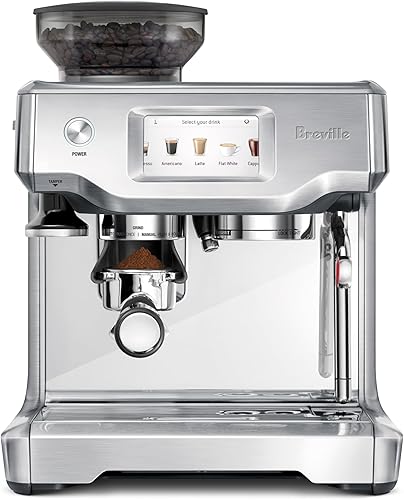
6. Breville BES880BSS Barista Touch Espresso Machine
Best for: Touchscreen-guided espresso with saved preferences
Touchscreen display simplifies café drinks into three steps—grind, brew, milk—with adjustable strength, texture, and temperature settings saved as up to eight personalized profiles. ThermoJet heating achieves extraction temperature in three seconds, matching Bambino Plus speed while adding guided interface that reduces learning curve for new users.
Integrated precision conical burr grinder delivers correct dose on demand with single touch activation, combining fresh grinding with touchscreen convenience in one workflow. Automatic steam wand produces barista-quality microfoam with texture and temperature adjustments accessible through the same interface controlling brew parameters.
Pros
- Saved profiles store preferences for multiple users
- Touchscreen guides beginners through complex drinks
- Fast heat-up matches compact machine performance
- Integrated grinder maintains fresh bean-to-cup workflow
- Adjustable milk parameters accessible through interface
Cons
- Screen dependency frustrates users preferring physical controls
- Menu navigation adds steps for simple espresso
7. Keurig K-Supreme Single Serve K-Cup Pod Coffee Maker

Best for: Single-serve convenience with pod variety
MultiStream Technology saturates grounds evenly across K-Cup pods, extracting more flavor and aroma than older single-stream brewers that left portions underextracted. Back-to-back brewing eliminates reheating wait between cups, serving sequential drinkers efficiently without temperature recovery delays that slow morning routines.
Sixty-six ounce dual-position reservoir adapts to different counter layouts while reducing refill frequency compared to standard single-serve tanks. Four brew sizes plus strong and over-ice options customize output without measuring or timing, though pod dependency means limited roast selection versus whole beans.
Pros
- MultiStream extraction improves pod flavor consistency
- Sequential brewing serves multiple people quickly
- Dual-position reservoir fits various counter layouts
- Over-ice setting optimizes iced coffee strength
- Simple button operation requires no learning curve
Cons
- Pod-only format limits coffee selection
- No fresh grinding or espresso capability
- Ongoing pod supply creates recurring expense
8. Bosch 800 Series Fully Automatic Coffee

Best for: App-controlled personalization with remote brewing
Home Connect app enables remote brewing control and access to thirty-five plus beverage recipes from anywhere with internet connectivity, allowing coffee preparation before reaching the kitchen. Large touchscreen display adjusts strength, size, milk ratio, and aroma parameters with granular precision that exceeds typical super-automatic customization ranges.
Combined cleaning and descaling program minimizes maintenance time through automated cycles with step-by-step guidance displayed on screen. Mavea water filter included in box addresses hardness issues.
Pros
- Remote brewing starts coffee before entering kitchen
- Extensive recipe library exceeds typical preset counts
- Granular parameter adjustment personalizes every drink
- Automated maintenance reduces cleaning burden
- Included water filter protects against scale damage
Cons
- Smart features add complexity over mechanical alternatives
9. Keurig K-Duo Hot & Iced Single Serve & Carafe Coffee

Best for: Households needing both pods and carafe brewing
Dual functionality brews K-Cup pods for individual servings and ground coffee carafes for batch needs using shared seventy-two ounce reservoir. MultiStream Technology saturates grounds evenly in both modes, extracting full flavor whether brewing single cups or twelve-cup carafes for group serving.
Programmable carafe auto-brew schedules batch coffee well in advance of your wake-up time, while single-serve side offers strong brew and extra hot options for immediate needs. Brew-over-ice function adjusts temperature to maximize flavor extraction while minimizing ice melt in single-cup iced preparations.
Pros
- Dual brewing covers individual and group needs
- Shared reservoir reduces refill frequency
- Programmable carafe enables scheduled batch brewing
- Strong and extra hot options customize single servings
- Brew-over-ice optimizes iced coffee preparation
Cons
- No espresso or dedicated milk drink capability
- Dual functionality adds footprint over single-purpose machines
- Pod dependency persists on single-serve side
10. Chefman Crema Deluxe Espresso Machine with Double Boiler

Best for: Simultaneous brewing and steaming with double boiler
Double boiler system allows milk frothing and espresso extraction simultaneously, eliminating the temperature switching wait that forces sequential preparation in single-boiler machines. Thirty-setting conical burr grinder dispenses fresh grounds directly into fifty-eight millimeter portafilter with single and double shot baskets for volume flexibility.
Fifteen-bar pump produces full-bodied espresso with customizable shot temperature and volume settings spanning caffe lungo to ristretto extractions.
Pros
- Simultaneous brewing and steaming saves preparation time
- Thirty grind settings accommodate various bean types
- Large reservoir supports extended drink sessions
- Fifty-eight millimeter portafilter accommodates single and double shot baskets
- Included accessories eliminate separate purchases
Cons
- Double boiler increases machine footprint significantly
- Large capacity unnecessary for occasional single-drink users
Who Should Buy Which
The Breville Barista Express teaches espresso fundamentals through integrated grinding and manual steaming, rewarding learners willing to develop technique over weeks. Choose based on whether you value learning, automation, capacity, or space constraints over other factors.
Mistakes That Catch Buyers Out
- Judging espresso machines solely by pump pressure ratings when temperature stability and grinder quality determine actual shot consistency far more than peak bar numbers.
- Choosing super-automatic convenience without considering that milk system cleaning requirements often exceed semi-automatic maintenance despite removing brewing labor.
- Assuming integrated grinders perform identically to standalone units when built-in versions typically offer fewer adjustment points and harder replacement paths if mechanisms fail.
- Taking “barista-quality” marketing claims at face value without verifying whether steam wands produce true microfoam or merely aerated bubbles that collapse quickly in the cup.
For most home users, the Breville Barista Express offers the best balance of learning capability and integrated convenience. Before ordering, measure your counter depth and height clearance to ensure the machine fits your actual space, including room for bean loading and cup placement underneath the portafilter.
Frequently Asked Questions
How often do integrated grinders need replacement?
Integrated grinder lifespan varies significantly by usage volume and bean hardness, with most manufacturers specifying service intervals rather than fixed replacement timelines. Check whether replacement burrs are sold separately for your model, as some require full machine service when grinding performance degrades. Regular cleaning prevents oil buildup that accelerates wear beyond normal mechanical degradation from daily use.
Can super-automatic machines make real espresso?
Super-automatic machines produce espresso meeting technical pressure and volume standards, though texture and crema quality often differ from semi-automatic results due to automated tamping limitations.
Conclusion
Pick a machine that fits your morning routine, not just your kitchen counter. Once it arrives, don’t rush the first cup. Spend a few days dialing in your grind size and water temperature. You’ll taste the difference quickly, and you won’t look back.