
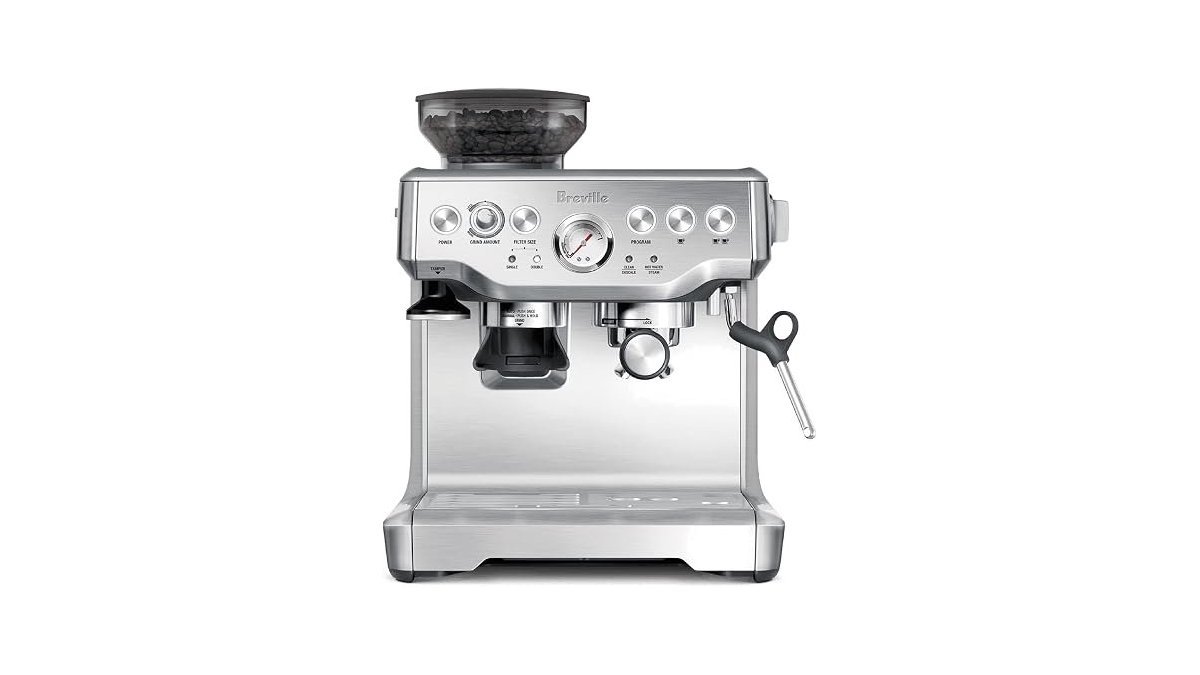
Picking the best espresso machine under 500 buying guide isn’t simple when every listing promises café drinks at home. You’ll see numbers like 15-bar or 20-bar, built-in grinders, and automatic milk frothers all mixed together. This page explains what those details actually change in your cup before recommending anything. We’re comparing ten machines to show you which features matter and which ones don’t. The Breville BES870XL Barista Express is the pick for most people because its integrated conical burr grinder lets you go from whole beans to a shot without needing extra equipment.
As an Amazon Associate, we earn from qualifying purchases. This post contains affiliate links – if you buy through them, we may earn a commission at no extra cost to you.
What Actually Matters
Built-In Grinder vs. Separate Gear
A grinder built into the housing saves counter space and keeps beans fresh until brewing. Machines without one need pre-ground coffee or a separate grinder bought on your own. That changes how much room you need and how many steps stand between you and your morning cup. Check your counter space and whether you already own a capable grinder before deciding.
Pump Pressure Numbers
Listings often shout about 15-bar or 20-bar pumps, but traditional espresso extraction happens around 9 bars. Higher pump pressure doesn’t automatically mean better coffee; it just means the motor pushes harder. What matters more is whether the machine controls that pressure during the shot. Look for terms like “pre-infusion” or “PID” rather than just the highest bar number.
Milk Frothing Method
Frothing milk by hand requires practice to get smooth microfoam for latte art. Automatic wands or dual froth systems do the work for you, letting you walk away while milk heats. Manual wands give you full control over texture but take time to learn. Decide if you want hands-on control or a push-button result before ordering.
Heat-Up Time
Waiting several minutes for a boiler to reach temperature slows down a rushed morning routine. Some machines use specialized heating systems that reach extraction temperature in just 3 seconds. Others with traditional boilers take longer but might hold heat differently. If you brew multiple drinks back-to-back, check how long the machine takes to recover between steaming and pulling shots.
1. Breville BES870XL Barista Express Espresso Machine

Best for: Home baristas wanting an all-in-one grinding and brewing setup.
This machine combines a conical burr grinder with an espresso maker so you don’t need separate gear. The grind size dial lets you adjust for any bean roast, delivering grounds directly into the portafilter. Digital temperature regulation (PID) holds water at the exact right temperature for even extraction. Low pressure pre-infusion gradually builds pressure at the start, drawing flavors out evenly instead of blasting the puck.
Pros
- Integrated conical burr grinder eliminates needing separate equipment
- PID digital temperature regulation ensures consistent extraction
- Grind size dial offers flexibility for different bean roasts
- Low pressure pre-infusion draws flavors evenly from the puck
Cons
- Manual steam wand requires practice to master microfoam
2. Breville BES500BSS Bambino Plus Espresso Machine

Best for: Small kitchens needing fast heat-up and automatic milk texturing.
The ThermoJet heating system reaches extraction temperature in 3 seconds, removing the wait before your first shot. An automatic steam wand adjusts both milk temperature and texture on its own, creating microfoam without requiring you to learn manual techniques. After steaming, the auto purge function resets the heat system so your next espresso extracts correctly. It uses a 54mm portafilter holding 19 grams of ground coffee.
Low pressure pre-infusion starts the extraction gently to balance the flavor profile. At 7.7 inches wide, it fits tight countertops easily.
Pros
- ThermoJet heating system reaches extraction temperature in 3 seconds
- Automatic steam wand textures milk without manual skill
- Auto purge resets temperature immediately after steaming milk
- Compact 7.7-inch width fits small kitchen countertops easily
Cons
- Requires a separate grinder for fresh whole beans
3. De’Longhi La Specialista Arte Evo Espresso Machine with Coffee Grinder

Best for: Drinkers who want cold brew capability alongside hot espresso.
A built-in conical burr grinder offers 15 settings tailored for single shots, double shots, or cold brew drinks. Cold Extraction Technology produces cold brew in under 5 minutes using a method developed with the Specialty Coffee Association. You can choose from three temperature settings while an Italian pump maintains optimal 9-bar pressure during extraction. The commercial-style steam wand heats quickly to deliver smooth micro-foam.
Pros
- Built-in conical burr grinder has 15 distinct settings
- Cold Extraction Technology makes cold brew in under 5 minutes
- Three temperature settings allow customized extraction profiles
- Commercial-style steam wand delivers consistent micro-foam quickly
Cons
- Focused primarily on espresso and cold brew formats
4. Ninja Luxe Café Premier 3-in-1 Espresso Machine
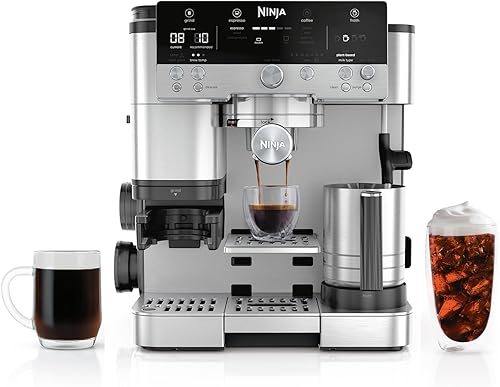
Best for: Households wanting espresso, drip coffee, and cold brew combined.
This 3-in-1 machine covers double or quad espresso shots, three drip styles, and two cold brew options in sizes from 6 to 18 oz. A built-in conical burr grinder provides 25 settings matched to your chosen drink. Barista Assist Technology guides you through precision grinding, weight-based dosing, assisted tamping, and real-time temperature adjustments. The Dual Froth System uses a spinning whisk and automatic steamer for hands-free milk texturing.
Pros
- Brews espresso, drip coffee, and cold brew from one unit
- Built-in grinder features 25 adjustable grind settings
- Barista Assist Technology automates dosing, tamping, and temperature
- Dual Froth System creates hands-free microfoam with four presets
Cons
- Automated processes limit manual control for experienced users
5. Gaggia RI9380/46 E24 Espresso Machine
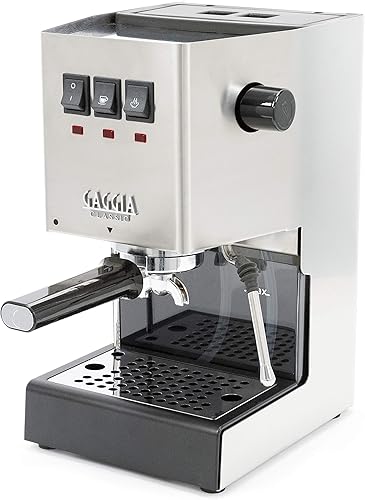
Best for: Traditionalists seeking commercial-grade components and solid steel construction.
Built in Italy with solid steel housing, this machine relies on proven mechanical parts rather than digital automation. It pulls 9 bar espresso extractions using a stainless steel 58mm commercial portafilter. A commercial three-way solenoid valve releases pressure after the shot, keeping the puck dry and making cleanup straightforward. The commercial steam wand gives you direct control over milk texturing.
6. Breville BES450BSS Bambino Espresso Machine

Best for: Tight spaces needing fast extraction and included accessories.
Sharing the rapid ThermoJet heating system with its bigger sibling, this model gets to brewing temperature almost instantly. Low pressure pre-infusion gradually increases pressure to draw flavors evenly from the 19-gram dose in the 54mm portafilter. Digital temperature regulation (PID) keeps water precise throughout the pull. The automatic steam wand allows you to adjust milk temperature and texture for microfoam.
It ships with single and dual wall filter baskets, a milk jug, tamper, and descaling powder.
Pros
- ThermoJet heating system reaches temperature almost instantly
- Includes single/dual wall baskets, milk jug, and tamper
- PID digital temperature regulation ensures even extraction
- Compact design fits comfortably in small home kitchens
Cons
- Listed for 19 grams, so larger dose baskets are left out
7. De’Longhi Stilosa Compact Manual Espresso Machine

Best for: Beginners wanting a straightforward manual brewing experience.
A stainless steel boiler is engineered to last long and work for years inside this compact frame. It includes a portafilter, a measuring scoop that doubles as a tamper, and two filters for single or double espresso. The manual steam wand lets you texture milk for lattes and cappuccinos yourself.
Pros
- Stainless steel boiler engineered for long-term daily use
- Includes portafilter, measuring scoop/tamper, and filters
- Manual steam wand allows personal milk texturing control
- Straightforward design avoids complex electronic programming
Cons
- Manual operation requires learning proper technique independently
8. PHILIPS Baristina Espresso Machine
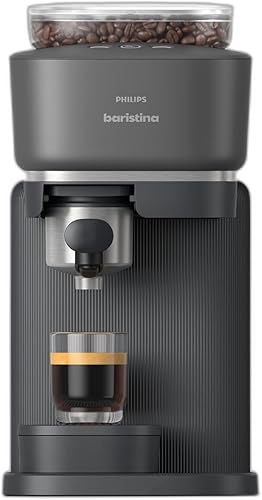
Best for: Fast routines where automated tamping removes human error.
You swipe the handle and the machine grinds, tamps, and brews in less than 60 seconds. A 16-bar pressure pump extracts flavor from freshly ground beans automatically. You can select espresso, lungo, or extra intense depending on your preference. The design uses over 50% recycled plastics and carries an A+ energy label based on Swiss standards.
Pros
- Swiping handle grinds, tamps, and brews under 60 seconds
- 16-bar pressure pump extracts robust flavor consistently
- Uses over 50% recycled plastics with A+ energy label
- Compact footprint fits easily on any kitchen counter
Cons
- Limited to espresso, lungo, and extra intense styles
9. CASABREWS CM5418 Compact Espresso Machine with Milk Frothing Steam Wand

Best for: Small kitchens needing a built-in pressure gauge and large tank.
A 20-bar professional Italian pump works with a 1350W boiler to extract espresso. The built-in pressure gauge shows exact pressure during brewing, helping you adjust your technique to match personal taste. A powerful steam wand textures milk for cappuccinos or flat whites. The 34 oz removable water tank lets you brew multiple cups before refilling.
Pros
- Built-in pressure gauge displays exact extraction pressure
- 34 oz removable water tank supports multiple consecutive cups
- Powerful steam wand textures milk for various drink styles
- Includes single/double filters, portafilter, and tamper
Cons
- Requires cooling period between steaming milk and brewing
- Twenty-bar pump needs careful adjustment via the gauge
10. SHARDOR 20 Bar Espresso Machine with Built-In Grinder

Best for: Users wanting extensive grind settings and anti-static grinding.
An anti-static grinder design reduces clumping and scattering across 45 precision grind settings. PID temperature control holds the brew temperature between 194-204°F while a 20-bar pump extracts the shot. It includes a cold brew mode, adjustable brew strength, auto shut-off, and a cup warmer. The 60.9 oz removable water tank minimizes refills during busy mornings.
Pros
- Anti-static grinder reduces mess with 45 precision settings
- PID control maintains 194-204°F brew temperature accurately
- Includes cold brew mode and adjustable brew strength options
- Backed by a 2-year manufacturer warranty for coverage
Cons
- Dual-wall filters require adjusting grind to settings 8-12
- Specific dimensions may not suit all countertop layouts
Who Should Buy Which
If you use your machine hardest every morning, the Gaggia RI9380/46 E24 offers solid steel housing and a commercial three-way solenoid valve built for heavy repetition. For your very first machine, the De’Longhi Stilosa keeps things simple with a stainless steel boiler and basic manual controls. If you want the fewest things to go wrong, the Philips Baristina automates grinding and tamping in under 60 seconds. Replacing something that let you down? The Breville BES870XL Barista Express covers the whole process with its integrated grinder and PID temperature regulation.
Mistakes That Catch Buyers Out
- Judging a machine solely by the highest bar pressure number instead of looking for pre-infusion or PID control.
- Choosing a built-in grinder you’ll never adjust over a reliable heat-up system you’ll use every single morning.
- Assuming every compact machine includes a milk frother when some models only brew straight espresso or lungo.
- Taking claims like “café-quality” at face value without checking if the portafilter size and components support actual technique.
For most people, the Breville BES870XL Barista Express handles everything from grinding to extraction in one spot. Before ordering, measure your counter depth to ensure the machine and its portafilter clearance actually fit your space.
Frequently Asked Questions
Why do listings show different bar pressures?
Pump ratings vary because manufacturers use different motors, but espresso extraction typically happens around 9 bars. A 15-bar or 20-bar pump just means the motor can push harder, not that it always does. Look for machines that manage pressure during the shot rather than just advertising the maximum number.
Do I really need a built-in grinder?
Freshly ground beans produce better crema and flavor than pre-ground coffee sitting in a bag. A built-in grinder saves counter space and keeps everything in one workflow. If you already own a good grinder, a machine without one gives you more room on your counter.
How important is PID temperature control?
PID stands for Proportional-Integral-Derivative, and it keeps water temperature stable during extraction. Without it, water temperature can swing and change how your espresso tastes from shot to shot.
Can these machines make regular drip coffee?
Most traditional espresso machines only pull concentrated shots that you dilute with water to make an Americano. The Ninja Luxe Café Premier is an exception, offering specific drip coffee styles alongside espresso. If you drink mostly drip coffee, verify the machine lists those brew styles before buying.
What maintenance do these machines require?
Regular descaling removes mineral buildup from the boiler and internal pipes. Machines with steam wands need purging and wiping after every use to prevent milk from drying inside the tip. Filter baskets and portafilters should be rinsed clean, and built-in grinders need brushing to clear stuck coffee oils.
Conclusion
Finding the right machine is just the beginning. Once it arrives, you’ll want to dial in your grind size and pull a few test shots to learn how it behaves. Don’t worry if the first cup isn’t perfect—you’ll get there quickly with a little practice.