
As an Amazon Associate, we earn from qualifying purchases. This post contains affiliate links – if you buy through them, we may earn a commission at no extra cost to you.
Picking the right drip coffee makers isn’t easy when shelves are full of buttons and promises that sound the same. What actually changes your morning is how hot the water gets, whether the carafe keeps it there, and how much counter space you’ll lose. We’ll walk through those differences before naming any products so you know what matters.
What Actually Matters
Brew Temperature
Coffee grounds need hot water to release their flavor properly. The Specialty Coffee Association recommends water between 194°F and 205°F for proper extraction, as detailed in their SCA brewing standards. Machines that don’t reach this range make weak, flat coffee. Look for a wattage number or a stated temperature range in the product details.
Programmability
Waking up to ready coffee sounds great until the machine beeps loudly or takes ten steps to set. Some models offer 24-hour timers, auto-shutoff windows, and brew-pause buttons. Others just have one switch. Count the buttons you’d actually press every day.
Built-In Gadgets
Some machines include grinders, apps, or fancy showerheads. These features sell the box but rarely earn their keep if you already own a good grinder or prefer simple mornings. An integrated grinder adds moving parts that eventually need cleaning or replacing. Check the warranty length to see how long the maker stands behind those extras.
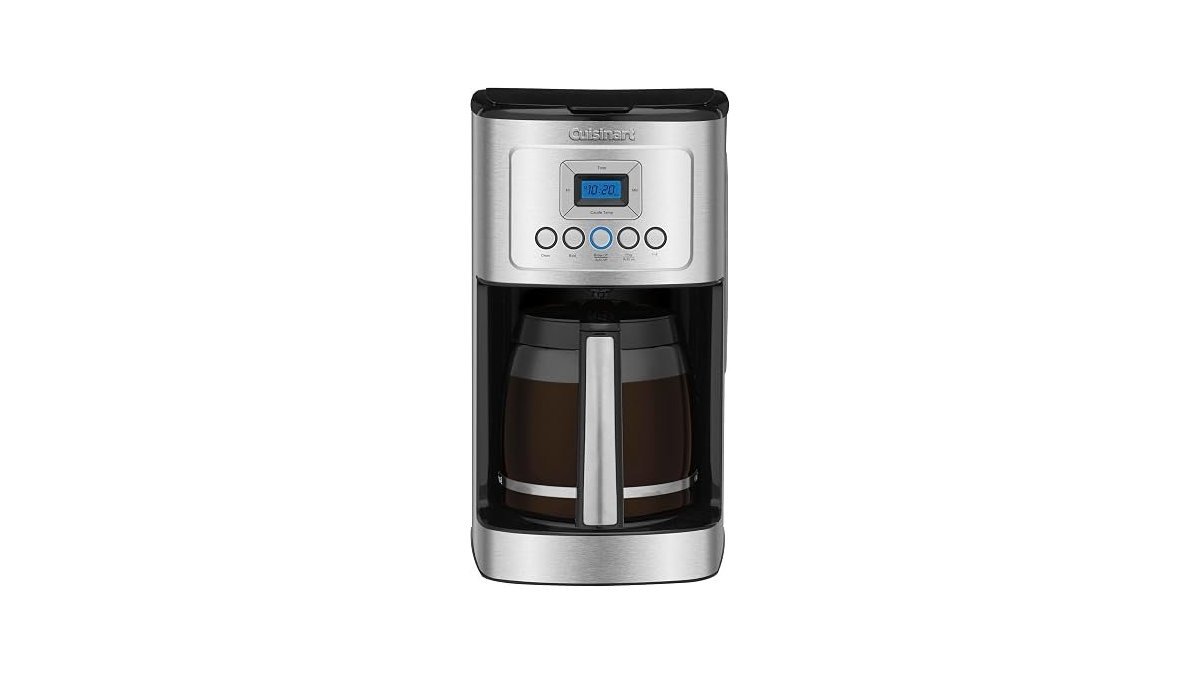
1. Cuisinart Coffee Maker
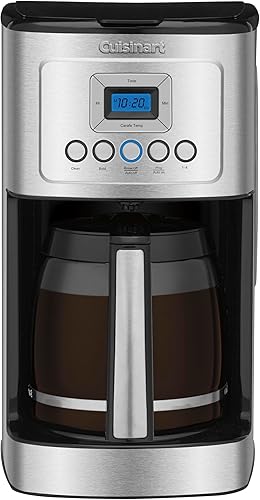
Best for: Large households needing adjustable warmth and daily programming.
This machine tackles the carafe question by using glass paired with a warming plate you can set to Low, Medium, or High.
With a 14-cup capacity—where each cup equals about five ounces—it handles large batches easily.
Pros
- Adjustable warming plate has three distinct heat settings.
- Brew strength control switches between regular and bold.
- Auto-off timer adjusts from zero to four hours.
- Brew Pause stops flow for an early cup.
Cons
- Glass carafe requires the heated plate to stay warm.
- Fourteen cups means five-ounce servings, not standard mugs.
2. Fellow Aiden Precision Smart Drip Coffee Maker

Best for: Detail-oriented brewers wanting app control and thermal insulation.
Fellow built this around precision brewing, offering expert presets for light, medium, and dark roasts plus cold brew. It calculates the exact coffee amount needed for any batch size from one to ten cups.
Pros
- Thermal carafe keeps coffee hot without a plate.
- App allows scheduling and sharing custom brew profiles.
- Dedicated preset brews cold coffee in hours.
- Two-year standard warranty covers the machine.
Cons
- Relies heavily on a smartphone app for customization.
- Ten-cup maximum limits larger gatherings.
3. Breville BDC650BSS Grind Control Thermal Carafe
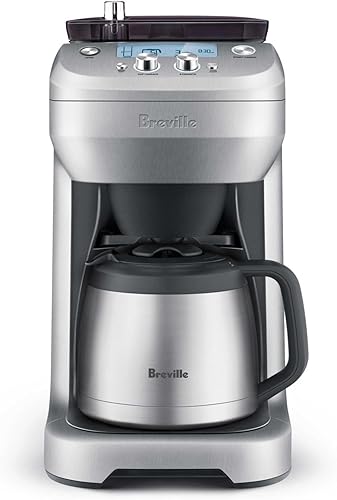
Best for: Whole-bean lovers wanting fresh grinding built in.
This model answers the gadget question by putting an adjustable grinder directly inside the machine. You can tweak the grind size to match your beans, then choose from eight strength settings or bypass the grinder for pre-ground coffee. The Steep and Release technology controls how water interacts with the grounds before dropping into the carafe. It brews directly into the included 12-cup dual-wall stainless steel thermal carafe, a tall cup, or a travel mug.
The bean hopper holds half a pound of coffee, and the water tank fits 60 ounces. Buyers who hate cleaning complex machinery should avoid this, because grinding beans leaves oils and dust that require regular brushing.
Pros
- Built-in grinder adjusts size for any bean.
- Eight strength settings customize the final cup.
- Brews into a carafe, tall cup, or mug.
- Includes gold tone filter and cleaning brush.
Cons
- Internal grinder demands frequent cleaning.
- One-year limited warranty is relatively short.
4. Bonavita 8 Cup Drip Coffee Maker Machine

Best for: Fast brewing with certified temperature accuracy.
Bonavita uses a 1500-watt heater to push water between 194° and 205°F. That power lets it brew a full 1.3-liter carafe in just six minutes with minimal input. The optional pre-infusion mode wets the grounds first for richer extraction.
It pairs that fast heating with a stainless steel double-wall thermal carafe, avoiding a hot plate completely.
Pros
- 1500-watt heater brews eight cups in six minutes.
- SCA certified for optimal brewing temperature.
- Stainless steel thermal carafe retains heat well.
- Dishwasher-safe parts make cleanup very easy.
Cons
- Eight-cup capacity limits larger households.
5. Braun BrewSense 12-Cup Drip Coffee Maker w/ 24 Hour Timer

Best for: Small kitchens needing clean water filtration.
Braun includes an integrated charcoal filter that purifies water before brewing. It also includes a premium gold-tone filter designed to let essential oils pass through into your cup. Its smaller footprint and lower profile fit tight counters.
Pros
- Charcoal filter actively purifies brewing water.
- Compact footprint fits under low kitchen cabinets.
- Descaling adjusts to local water hardness levels.
- Gold-tone filter enhances flavor extraction.
Cons
- No specific small-batch brewing setting mentioned.
6. Ninja Fresh Brew Coffee Maker

Best for: Flexible batch sizes with removable filling.
Ninja solves the filling problem by giving you a 60-oz removable water reservoir you can carry straight to the sink. You don’t have to lean over the counter or use a separate pitcher to fill the tank. It offers Classic or Rich brew styles, ensuring the coffee stays flavorful without turning bitter. The small batch function specifically targets one-to-four-cup brews so they aren’t diluted.
Pros
- Removable 60-oz reservoir makes filling very easy.
- Small batch function prevents weak coffee.
- Warming plate stays on up to four hours.
- Two distinct brew styles offer flavor variety.
Cons
- Glass carafe requires continuous plate heat.
7. Hamilton Beach FrontFill 12 Cup Programmable Drip Coffee Maker

Best for: Tight spaces where top access is blocked.
This machine rethinks how you load it, using a swing-open brew basket that opens from the front instead of the top. You can select regular, bold, or a one-to-four-cup option.
It programs up to 24 hours in advance and reminds you when maintenance is due by flashing “CLEAN” on the display. The easy-view water window shows clear measurement marks as you fill the 12-cup capacity.
8. BLACK+DECKER 12-Cup Drip Coffee Maker with Vortex Brewing

Best for: Simple operation with tactile controls.
BLACK+DECKER focuses on ease of use with large, rubberized buttons. The digital screen clearly displays the clock, brew time, and programming options. QuickTouch programming sets the 24-hour auto brew feature. It uses Vortex Brewing technology to circulate water through the grounds.
The 12-cup Duralife glass carafe features measurement markings and an easy-grip handle for pouring. A Sneak-A-Cup feature temporarily stops coffee flow. It lacks thermal insulation or multiple brew strength settings. The two-hour auto shutoff turns off the warming plate automatically.
9. OXO Brew 8-Cup Coffee Maker

Best for: Single-serve drinkers wanting certified precision.
OXO uses BetterBrew precision technology to keep water between 194°F and 205°F throughout the cycle. This meets the Specialty Coffee Association’s Golden Cup standard. It pairs that precision with a double-wall vacuum-insulated thermal carafe that locks in heat for hours without a warming plate. The Rainmaker showerhead distributes water evenly over the grounds.
For solo drinkers, it includes an optional brew basket designed specifically for single-serve cups. The removable well underneath fits everything from small espresso cups to tall travel mugs.
Pros
- Meets SCA Golden Cup temperature standards.
- Vacuum-insulated thermal carafe retains heat.
- Optional basket supports quick single-serve brewing.
- Removable well fits various mug heights.
Cons
- Eight-cup maximum limits family-sized brewing.
10. Amazon Basics Programmable 12 Cup Drip Coffee Maker with Glass

Best for: Straightforward daily brewing with touchscreen controls.
Amazon Basics uses a touch screen interface for its 24-hour programmable timer. You set it the night before. The built-in two-hour automatic shutoff handles safety without requiring you to remember to turn it off. It uses a Duralife glass carafe with an ergonomic handle designed for drip-free pouring.
The auto-pause function lets you grab a cup mid-brew without making a mess on the warming plate. Anyone seeking adjustable brew strengths or thermal insulation won’t find those features here.
Pros
- Touch screen simplifies setting the timer.
- Removable filter basket eases daily cleanup.
- Two-hour auto shutoff ensures safety.
- Ergonomic carafe handle prevents drips.
Cons
- No brew strength options are available.
- Glass carafe depends on the warming plate.
Also Worth Considering
The Hamilton 2-Way Serve Coffee Maker offers both a full carafe and a single-serve side, which suits homes where people drink coffee at different times. The Cuisinart 12-Cup Coffee Maker adds a thermal carafe and brew strength control to the brand’s familiar layout. The Café 10-Cup Drip Coffee Maker brings SCA certification and the ability to brew hot or iced coffee directly into a thermal vessel.
Who Should Buy Which
If you brew for a crowd and want control over heat, the Cuisinart DCC-3200 gives you three warming plate settings and fourteen cups. First-time buyers who value simplicity should grab the BLACK+DECKER Vortex for its rubberized buttons and fixed shutoff. Those replacing a broken machine who want fewer parts to fail might choose the Bonavita 8 Cup, since its simplified controls skip timers entirely. If you grind whole beans daily, the Breville Grind Control saves counter space by combining both steps, provided you’re willing to brush out the burrs.
Mistakes That Catch Buyers Out
- Assuming “12 cups” means twelve standard mugs, when most makers count five-ounce portions instead.
- Choosing a built-in grinder for convenience but ignoring the weekly cleaning it demands to prevent stale oil buildup.
- Buying a thermal carafe model expecting a hot plate underneath, only to find the coffee cools naturally over hours.
- Trusting terms like “bold brew” without checking if the machine actually changes water flow or just slows it down.
For most kitchens, the Cuisinart DCC-3200 remains the safest pick because of its adjustable warming plate. Before ordering, measure the vertical clearance under your cabinets to ensure the lid opens fully.
Related guides
Frequently Asked Questions
How often should I clean my drip coffee maker?
You should run a cleaning cycle whenever the machine prompts you, or roughly once a month if it lacks a reminder. Mineral deposits from tap water build up inside the heating element and slow down brewing. Using filtered water extends the time between deep cleans. Always wash the carafe and filter basket after every use.
Does a higher wattage make better coffee?
Higher wattage heats water faster, which helps reach the ideal 194°F to 205°F range quickly. Machines with 1500 watts often finish brewing sooner than those with lower power. However, wattage alone doesn’t guarantee flavor; the showerhead design and water distribution matter just as much for extracting oils from the grounds.
Can I use paper filters in machines with gold-tone baskets?
Most machines that include a reusable gold-tone filter also accept standard paper filters if you prefer them. Paper filters trap more coffee oils and fine sediment, resulting in a cleaner, lighter cup. Check your specific model’s manual, as using both simultaneously can cause overflow during the brewing cycle.
Why does my coffee taste bitter after an hour?
Bitterness usually happens when coffee sits on a heated warming plate too long, essentially cooking the liquid. Switching to a thermal carafe model prevents this because it insulates the coffee without adding external heat. If you prefer glass carafes, look for models with adjustable plate temperatures so you can lower the heat.
What does SCA certification actually mean for me?
SCA certification means the machine met specific laboratory standards for water temperature, brew time, and volume ratio. Certified brewers consistently hit the 194°F to 205°F range needed for proper extraction. You don’t need certification to make good coffee, but it removes the guesswork if you care about specialty-grade results at home.
Conclusion
You’ve got the basics down, so don’t overthink it. Pick a brewer that fits your counter and habits, then test it with your favorite beans. You’ll quickly see what works for your mornings, and you won’t regret skipping features you’d never use anyway.