
As an Amazon Associate, we earn from qualifying purchases. This post contains affiliate links – if you buy through them, we may earn a commission at no extra cost to you.
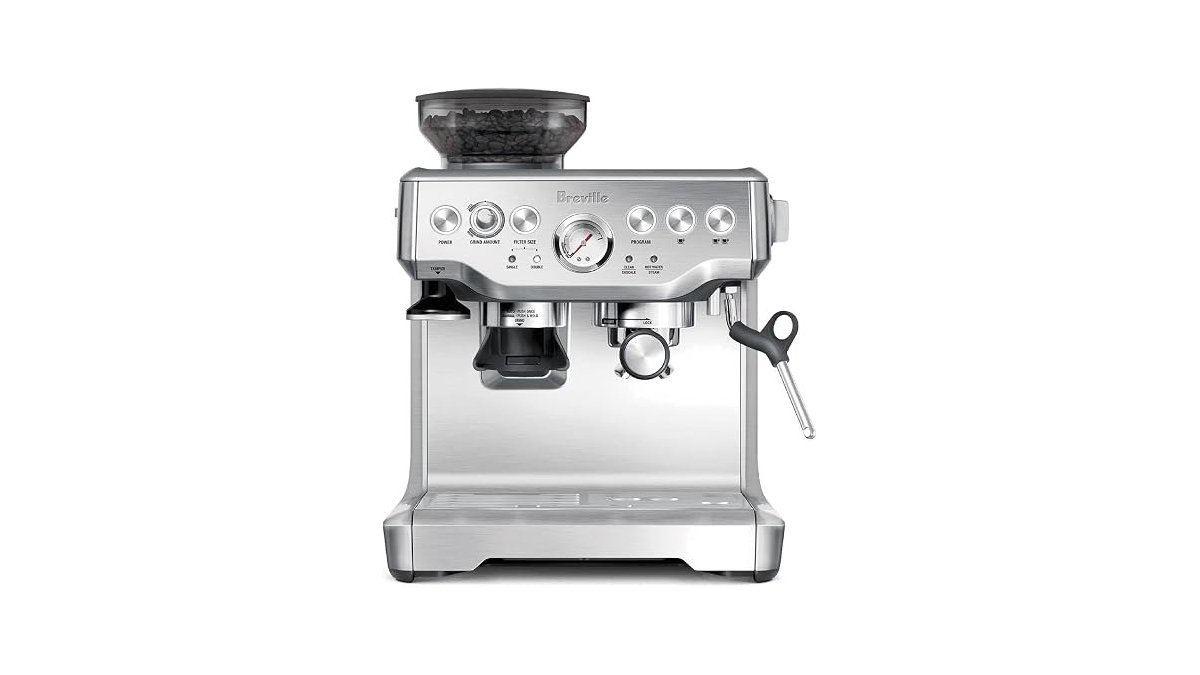
Picking the right coffee geek espresso machine buying guide means sorting real features from loud claims. Most buyers get stuck because every listing promises café results. This page explains what actually separates a good machine from a bad one before recommending anything. You’ll learn which specs matter for daily use and which don’t. For most people, the Breville Barista Express BES870XL is the pick because its integrated conical burr grinder delivers fresh grounds directly into the portafilter on demand.
What Actually Matters
Built-In Grinder vs. Separate Setup
A built-in grinder saves counter space but limits your upgrade path later. Machines with conical burrs handle different bean roasts without clogging or stalling mid-grind. If you already own a good standalone grinder, paying for an internal one makes little sense. Check whether the grinder offers multiple size settings before ordering. More steps mean finer control over extraction.
Pressure Numbers That Sell Machines
Listings love shouting about 20-bar pumps, but that’s mostly marketing noise. Espresso extraction happens around 9 bars; the pump just needs enough headroom to reach it consistently. Higher numbers rarely improve the shot in your cup. Instead of chasing peak pressure, look for machines mentioning low-pressure pre-infusion. It gently wets the grounds first, preventing channeling and pulling flavors evenly.
Milk Frothing Control
Steam wands vary wildly between single-hole tips and multi-hole designs. A manual wand lets you texture milk for latte art, while automatic ones do the work but limit your style. If you drink straight espresso, this feature doesn’t matter much. Count the wand’s steam temperature range or check if it rotates. Fixed wands make fitting larger pitchers difficult during busy mornings.
Heat-Up Time for Daily Use
Waiting five minutes for a boiler isn’t fun when you’re rushing out the door. ThermoJet or instant heating systems reach brewing temperature in seconds rather than minutes. Traditional boilers hold more stable heat for back-to-back drinks but take longer to start. Decide if you brew one cup at a time or several. Check the listed heat-up time to match your morning routine.
1. Breville BES870XL Barista Express Espresso Machine

Best for: Home baristas wanting fresh grinding and precise extraction.
This machine uses an integrated precision conical burr grinder to deliver fresh coffee directly into the portafilter. Digital temperature regulation (PID) keeps water exactly where it needs to be for even extraction.
The manual steam wand creates hand-textured microfoam for latte art, giving you full control over milk texture.
Pros
- Integrated conical burr grinder saves counter space.
- PID digital temperature regulation ensures precise extraction.
- Low-pressure pre-infusion draws out balanced flavors evenly.
- Manual steam wand allows custom microfoam texturing.
Cons
- Manual milk steaming requires practice to master.
- Grinding directly into portafilter can create mess.
2. Gevi 20 Bar Espresso Machine with Grinder & Steam Wand

Best for: Users wanting extensive grind customization at home.
Gevi equips this machine with a built-in conical burr grinder offering 30 adjustable settings. A 20-bar professional Italian pump provides the force, while NTC and PID temperature control maintains optimal heat for both brewing and frothing. You can customize grinding duration and select single or double shot volumes independently.
The dual-function steam wand dispenses hot water for Americanos and switches modes via a simple knob turn.
Pros
- 30 adjustable grinder settings offer deep customization.
- NTC and PID control stabilizes brewing temperatures.
- Customizable grinding duration and shot volumes.
- Dual-function wand dispenses hot water easily.
Cons
- Extensive settings require patience to dial in.
- Not suited for manual weight-based dosing workflows.
3. Geek Chef Espresso Machine with Milk Frother
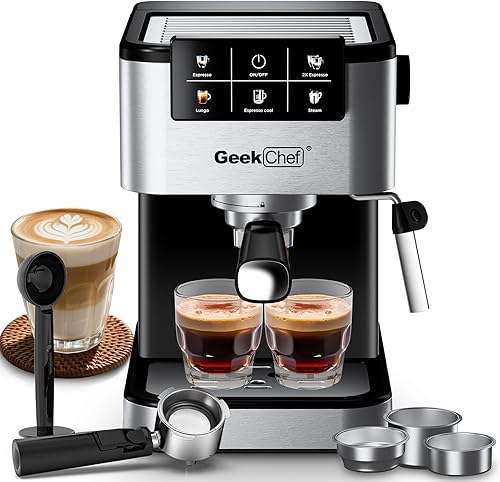
Best for: Busy mornings needing fast heat-up and touchscreen ease.
Unlike traditional boiler-based machines, this one uses an instant heating system ready in just 30 seconds. You can brew iced coffee by adding ice and pressing the cool button, or pull a milder Lungo shot with one touch.
The powerful steam wand creates creamy foam for lattes and cappuccinos quickly. Cleanup stays easy thanks to an internal cleaning function, detachable drip tray, and removable water tank. It also accepts ESE pods for mess-free convenience when you don’t want to measure grounds. This machine isn’t for purists who demand manual tamp pressure control.
Pros
- Instant heating system is ready in 30 seconds.
- Touchscreen control simplifies daily operation significantly.
- Dedicated buttons for iced coffee and lungo shots.
- Removable parts and internal cleaning ease maintenance.
Cons
- Touchscreen lacks tactile feedback for quick adjustments.
- Not ideal for manual tamping workflow purists.
4. Geek Chef Espresso Machine 20 Bar

Best for: Beginners wanting simple one-touch brewing and included accessories.
This model delivers stable high pressure to extract aromatic substances and build a thick golden crema. One-touch brewing covers espresso, iced espresso, lungo, Americano, and milk frothing without complicated setups. The high-performance steam frother whips cold milk into dense foam quickly for macchiatos or lattes.
It ships with everything needed to start: single and double cup filters, an ESE pod filter, portafilter, and a tamper with a spoon.
Pros
- One-touch brewing covers multiple drink types easily.
- Includes comprehensive accessory kit out of box.
- Simple button-press cleaning flushes the system.
- ESE pod compatibility adds mess-free brewing options.
Cons
- Lacks programmable parameters for advanced tweaking.
- Basic tamper may need upgrading later on.
5. GE Profile Automatic Espresso Machine + Milk Frother

Best for: Smart kitchens wanting app-connected customization and speed.
With a single press, this automatic machine dispenses espresso, Americano, lungo, or hot water in less than 90 seconds. It connects to WiFi and syncs with the SmartHQ app, letting you customize drink volume and strength from your phone. The stainless steel conical burr grinder offers 5 levels ranging from coarsest to finest, handling any bean roast consistently.
Beans are pre-infused with low pressure to bloom flavors before gradually increasing to 20 bars of pump pressure. A 15.8-ounce stainless steel frothing pitcher with measurement engravings is included. The “My Cup” setting defaults to ristretto but adjusts via the app.
Pros
- Brews multiple drink types in under 90 seconds.
- WiFi app enables remote recipe customization and updates.
- Rotating steam wand improves pitcher clearance easily.
- Included stainless steel pitcher has engraved measurements.
Cons
- Only 5 grind levels limit fine-tuning options.
- Requires app reliance for full customization features.
6. Breville BES870BTR Barista Express Espresso Machine
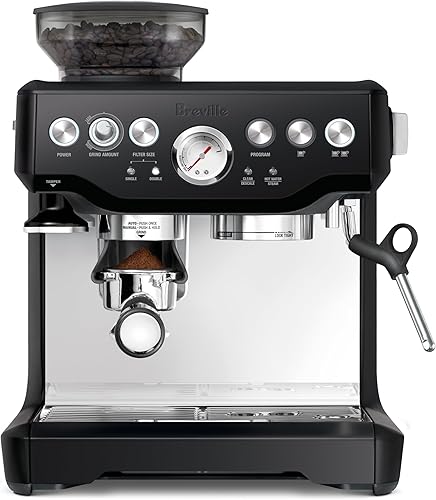
Best for: Users wanting proven extraction tech in a darker finish.
The manual steam wand produces hand-textured microfoam suitable for pouring latte art at home. Like its sibling, it goes from whole beans to espresso in under a minute using the 4 keys formula.
Pros
- Conical burr grinder doses directly into portafilter.
- PID temperature control guarantees precise water heat.
- Manual steam wand supports detailed latte art creation.
- Intuitive dial adjusts grind size for any roast.
Cons
- Manual milk texturing requires user skill development.
- Darker finish shows dust more easily than brushed steel.
7. Breville BES450BSS Bambino Espresso Machine

Best for: Small kitchens needing fast heat-up and automatic milk texturing.
The Bambino uses a ThermoJet heating system that reaches optimum extraction temperature in just 3 seconds. Unlike manual wands, its automatic steam wand adjusts milk temperature and texture hands-free for consistent microfoam. It utilizes a 54mm portafilter holding 19 grams of coffee to ensure full flavor delivery.
Pros
- ThermoJet heats to brewing temperature in 3 seconds.
- Automatic steam wand textures milk completely hands-free.
- Compact footprint suits very small kitchen counters.
- 54mm portafilter holds 19 grams for rich extraction.
Cons
- No built-in grinder requires separate equipment purchase.
- Automatic wand limits manual texturing technique practice.
8. PHILIPS 4400 Series Fully Automatic Espresso Machine
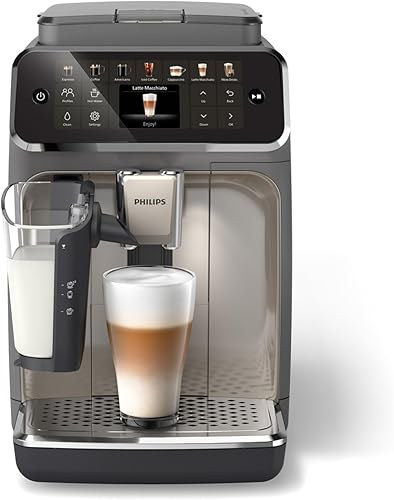
Best for: Households wanting fully automatic one-touch drinks and easy cleanup.
This fully automatic machine grinds, tamps, and brews at the push of a button using an intuitive color display. It offers 12 presets covering hot espresso, lattes, iced coffee, and hot water. Quiet Mark certifies this noise reduction.
Pros
- 12 presets and 2 saved profiles simplify daily use.
- LatteGo system cleans in 10 seconds without tubes.
- SilentBrew shielding reduces grinding noise significantly.
- Ready to brew in just 3 seconds via QuickStart.
Cons
- Full automation removes manual brewing control entirely.
- Color display adds electronic complexity over simple dials.
9. HIBREW H10B Programmable Espresso Machine with LED Display & Pressure

Best for: Tinkerers wanting programmable temperatures and visible pressure tracking.
This programmable machine pairs a 20-bar pump with an NTC temperature sensor and adjustable pre-infusion to soak grounds evenly. The built-in real-time pressure gauge lets you monitor the entire brewing process visually, helping avoid channeling. You can adjust extraction temperature between 194°F and 204°F, change single or double shot volumes, and set pre-infusion duration.
Pros
- Real-time pressure gauge visualizes extraction clearly.
- Adjustable temperature range from 194°F to 204°F.
- Programmable pre-infusion duration prevents uneven channeling.
- Pressurized basket works well with standard pre-ground coffee.
Cons
- Multiple parameters require time to dial in properly.
- No built-in grinder means sourcing grounds separately.
10. De’Longhi Stilosa Compact Manual Espresso Machine

Best for: First-time buyers needing a durable manual starting point.
The Stilosa keeps things fundamental with a stainless steel boiler engineered to last for years. It includes a portafilter, measuring scoop/tamper, and two filters for single or double espresso right in the box. A manual steam wand lets you texture milk for lattes and cappuccinos at your own pace. Because it strips away digital screens and complex programming, there are fewer components to maintain.
Pros
- Stainless steel boiler is built for long-term durability.
- Manual steam wand teaches proper milk texturing skills.
- Simple operation leaves fewer electronic parts to fail.
- Includes essential filters and tamper out of box.
Cons
- Lacks digital temperature or pressure monitoring tools.
- No built-in grinder requires purchasing one separately.
Who Should Buy Which
If you pull shots daily and want total control, the HIBREW H10B offers programmable temperatures and a visible pressure gauge. First-time buyers should start with the De’Longhi Stilosa, as its stainless steel boiler and simple manual wand leave little room for confusion. If your old machine failed due to slow mornings, the Breville BES450BSS Bambino replaces it with a 3-second ThermoJet heat-up.
Mistakes That Catch Buyers Out
- Judging a machine solely by its maximum pump pressure instead of checking if it uses low-pressure pre-infusion to prevent bitter channeling.
- Choosing a built-in grinder for convenience when you already own a better standalone one, locking yourself into limited adjustment steps.
- Assuming “automatic milk frother” means latte-art quality, when many systems produce fixed foam textures you can’t manually alter.
- Taking “ready in seconds” claims at face value without realizing the boiler still needs time to stabilize temperature for consecutive drinks.
For most people, the Breville Barista Express BES870XL remains the strongest choice because its integrated grinder and PID control handle daily routines reliably. Matching the machine to your available space and existing gear prevents immediate frustration.
Related guides
- Automatic Coffee Machine Buying Guide: 10 Best Picks
- Espresso Machine Buying Guide Features: 9 Best Picks
- Amazon Coffee Machine Buying Guide: 10 Best Picks
Frequently Asked Questions
What does a PID controller actually do?
A PID controller monitors and adjusts heating elements continuously to keep water at a specific target temperature. Without it, boilers swing between too hot and too cool during extraction. This stability prevents sour or bitter notes caused by fluctuating heat hitting the coffee puck.
Is a 20-bar pump better than 15-bar?
Not necessarily. Espresso extraction requires about 9 bars of pressure at the coffee puck. Higher pump ratings simply provide overhead to maintain that 9 bars against resistance. Focus on whether the machine features pre-infusion rather than chasing the highest number printed on the box.
Do I really need a built-in grinder?
You need freshly ground coffee for good espresso, but the grinder doesn’t have to be inside the machine. Built-in grinders save space and streamline workflow. However, they limit future upgrades. If you already own a quality burr grinder, a machine without one avoids redundant hardware.
How important is pre-infusion for home espresso?
Pre-infusion wets the coffee grounds gently at low pressure before full extraction begins. This step swells the puck evenly, reducing the chance of water finding weak spots and channeling through. Machines with this feature generally produce smoother, more balanced shots compared to those applying full force instantly.
Can I use pre-ground coffee in these machines?
Most manual and semi-automatic machines accept pre-ground coffee using specific filter baskets. Pressurized baskets help generate crema from older grounds by restricting flow. Fully automatic machines with hoppers usually require whole beans. Always check the included accessories to see if a single-wall or pressurized basket comes in the box.
Conclusion
Finding the right gear is just the start. Your next move is dialing in a single bag of fresh beans until the shot tastes sweet and balanced. Don’t rush it. Once you’ve got that down, you’ll pull great cups every morning without thinking too hard.