
As an Amazon Associate, we earn from qualifying purchases. This post contains affiliate links – if you buy through them, we may earn a commission at no extra cost to you.
Picking the right coffee machine buying guide features can feel confusing when every listing promises the best cup. The truth is that a good choice depends on what you actually drink each morning, not on the longest list of buttons. Some machines brew a full pot while you sleep, and others pull espresso shots with milk foam in seconds. This page breaks down those differences so you know exactly what separates a daily workhorse from a shelf decoration. For most people, the KitchenAid KCM1204OB fits because its 24-hour programmability and small batch mode handle both full pots and single cups without extra steps.
Coffee Machine Buying Guide Features That Matter
Brew Style vs Drink Menu
Drip machines make standard coffee, but espresso combos pull concentrated shots and steam milk for lattes. A drip brewer won’t give you a cappuccino, and an espresso machine doesn’t easily serve four guests at once. Before ordering, count how many milk-based drinks your household actually makes each week. That number decides whether you need a simple pot or a combo unit.
Capacity and Batch Modes
A large reservoir saves time for families, yet brewing a full pot for one person wastes grounds and leaves stale coffee sitting on a heater. Machines with a small-batch setting adjust water flow so a few cups still taste strong. Check your largest typical serving size against the listed liter or cup capacity. If it’s just you, a smaller carafe keeps things fresh.
Programmability and Automation
Timers let you wake up to finished coffee, while one-touch systems handle pressure and heat automatically for espresso. Programmability sounds great, but check whether the machine retains its settings after a power outage. Look at the control panel in the photos. If the buttons seem too small or the display too cluttered, you might skip programming entirely.
Cleaning and Filter Types
Reusable filters save you from buying paper ones constantly, though they require rinsing after every use. Espresso machines with Teflon-coated parts or removable baskets wipe clean faster than fixed components. Milk frothers add another piece to wash immediately before dairy dries. Think about your sink space and how much effort you’ll honestly spend scrubbing each morning.
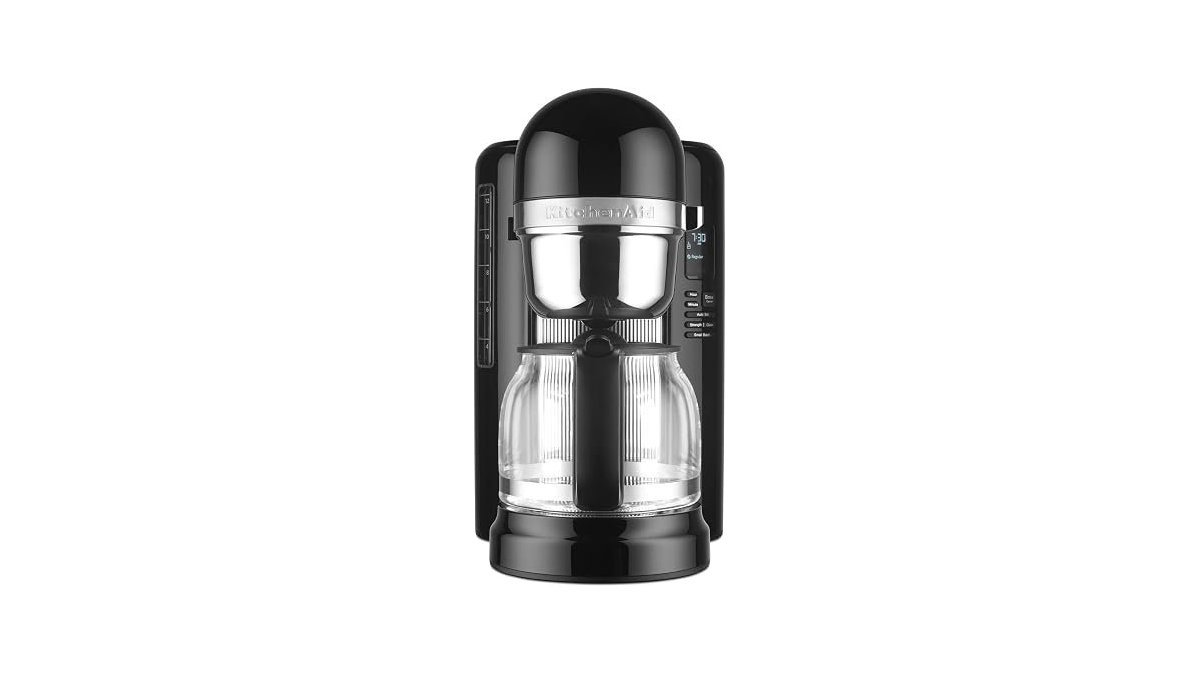
1. KitchenAid KCM1204OB 12 Cup Coffee Maker with One Touch Brewing

Best for: Daily drip coffee with flexible batch sizes.
This machine leans heavily on programmability, letting you set a brew time up to 24 hours ahead so coffee is ready when you walk into the kitchen. It also includes a variable brew strength selector, which changes how water moves through the grounds to give you regular or bold cups. The small batch brew mode means you aren’t forced to make twelve cups just to get two that taste right. Its design mirrors the brand’s stand mixer, which matters if your counter space is already styled around their appliances.
The pause and pour feature stops the cycle mid-brew so you can grab a cup without waiting for the whole pot to finish. However, this is strictly a drip coffee maker, so it isn’t for anyone who wants espresso, lattes, or milk foam built into their morning routine. You’ll need a separate tool if your tastes run toward café-style milk drinks.
Pros
- 24-hour programmability sets brewing ahead of time.
- Small batch mode adjusts flavor for fewer cups.
- Variable brew strength selector offers regular or bold options.
- Pause and pour interrupts the cycle for early servings.
Cons
- Small Batch Brew Mode is listed, so a full 12 cup carafe cannot use it.
2. SEVEN&ME Espressor Machine Coffee Maker

Best for: Espresso and milk drinks made simultaneously.
This combo unit handles espresso, lattes, cappuccinos, and macchiatos using a smart control system that manages brewing time, pressure, and heating automatically. The double pressure extraction system aims to produce a rich crema rather than a weak shot. Because it brews coffee and froths milk at the same time, a complete drink finishes in about three minutes with one click. The box includes two frothing disk accessories alongside the machine and manual.
Cleaning involves rinsing the Moka pot and stainless steel milk frother under running water, aided by a Teflon-coated jar that resists oxidation. These materials are SGS approved and meet FDA standards for food-grade safety. Still, this compact 8.66-inch machine isn’t for someone who regularly serves coffee to large groups. It focuses on individual espresso-based beverages rather than filling a multi-cup carafe for a family breakfast.
Pros
- Brews coffee and froths milk simultaneously.
- Double pressure extraction creates rich crema.
- One-click operation finishes drinks in three minutes.
- Teflon-coated jar and stainless steel frother rinse easily.
- Backed by a limited lifetime full warranty.
Cons
- Not designed for brewing large pots of coffee.
- Limited to individual espresso-based beverage servings.
3. Koolatron Kenmore Drip Coffee Maker

Best for: Programmed large batches with built-in water filtering.
This drip maker holds up to 1.8 liters, or 12 cups, inside a dishwasher-safe glass carafe, making it fit for larger gatherings. It uses a programmable timer with a digital LCD display so you can load water and grounds the night before. When you only need a little, the 1-4 cup mode adjusts the process, and pressing that same button during a full pot acts as a bold setting to slow water flow for stronger flavor. It includes a charcoal water filter to remove tap impurities and a reusable gold-tone cone filter.
The pause and serve function interrupts coffee flow for up to 20 seconds if you pull the carafe out early. While it covers both volume and scheduling well, it isn’t for buyers who want espresso or milk-frothing capabilities built into their countertop setup. This machine stays focused entirely on standard drip coffee preparation.
Pros
- Brews up to 1.8 liters into a dishwasher-safe carafe.
- Charcoal filter removes impurities from tap water.
- Reusable gold-tone cone filter eliminates paper waste.
- Programmable timer with clear LCD display.
- Bold setting slows water flow for richer flavor.
Cons
- No espresso or milk frothing functions included.
4. BLACK+DECKER CM0700BZ 4-in-1 5-Cup Coffee Station Coffeemaker

Best for: Small kitchens needing basic, compact drip coffee.
Built specifically for tight spaces like apartments, RVs, and dorm rooms, this station maxes out at five cups. It keeps things simple with a lighted on/off switch for one-touch control, removing any need to navigate timers or digital screens. A heated carafe plate maintains the coffee’s temperature after the brew cycle ends. The sneak-a-cup feature temporarily halts the flow if you pull the carafe away, letting you pour a first cup without making a mess on the warming plate.
Cleanup relies on a removable filter basket that’s dishwasher safe and works with standard basket-style paper filters. Because it lacks programmability or brew-strength adjustments, it isn’t for someone who wants to schedule their morning coffee the night before or tweak extraction for bolder flavor. It does exactly one straightforward job in a very small footprint.
Pros
- Space-saving design fits apartments and dorm rooms.
- Sneak-a-cup feature pauses flow for early pouring.
- Dishwasher-safe removable brew basket simplifies cleanup.
- Lighted on/off switch provides clear visual confirmation.
- Heated carafe plate maintains drinking temperature.
Cons
- Maximum capacity is limited to five cups.
- No programmable timer or brew strength settings.
5. XIXUBX Cold Brew Espresso Machine with Milk Frother

Best for: Fast espresso, cold brew, and manual milk texturing.
This semi-automatic machine uses a 1350W heating system and a 20 Bar pump to extract espresso in about 30 seconds. It stands out by offering a dedicated one-touch cold brew mode alongside hot espresso, giving you low-acid options without needing a separate steeping pitcher. An NTC sensor continuously monitors water temperature to keep extraction within the ideal range, reducing sour or burnt notes. The push-button panel assigns one pre-programmed task to each button, avoiding complex dials or gauges.
An adjustable steam wand lets you texture milk manually for cappuccinos and lattes, putting control over foam density in your hands. The NTC temperature sensor technology helps maintain consistent thermal readings across electronic appliances. It carries a 1-year warranty and access to video tutorials. Yet, it isn’t for buyers who prefer fully automated milk frothing where the machine pours the finished drink into the cup for you, since this wand requires your active involvement.
Pros
- 1350W system heats rapidly for fast extraction.
- 20 Bar pump produces espresso in about 30 seconds.
- Dedicated one-touch mode for cold brew coffee.
- NTC sensor maintains consistent water temperature.
- Adjustable steam wand allows manual milk texturing.
Cons
- Steam wand requires manual operation and practice.
- Semi-automatic design needs more user involvement.
Who Should Buy Which
If you host weekend breakfasts or share a kitchen with several coffee drinkers, the Koolatron Kenmore Drip handles 1.8 liters and filters your tap water. First-time buyers living alone or in a dorm should look at the BLACK+DECKER CM0700BZ, since its five-cup limit and single switch leave nothing to confuse. Those replacing a broken pod machine who crave real espresso and cold brew will find the XIXUBX Cold Brew Espresso covers both with its 20 Bar pump. If your daily habit revolves around lattes rather than plain coffee, the SEVEN&ME Espressor Machine brews and froths together. For a reliable middle ground, the KitchenAid KCM1204OB programs ahead and adjusts for small batches.
Mistakes That Catch Buyers Out
- Choosing a machine based solely on its maximum cup capacity while ignoring whether it has a small-batch mode for days you brew just a single serving.
- Buying an espresso combo for the idea of being a barista, then realizing you never actually use the steam wand because it requires practice you don’t have time for.
- Assuming all “programmable” coffee makers remember their clock settings after a brief power outage, when many reset and require you to program the timer again.
- Taking a listing’s claim of “bold flavor” at face value without checking if the machine actually slows water flow to steep the grounds longer, or if it just uses hotter water.
For most households, the KitchenAid KCM1204OB remains a reliable starting point. Before you order, measure your available counter depth and check the machine’s dimensions to ensure the lid clears your upper cabinets when open.
Frequently Asked Questions
Can I use regular coffee beans in an espresso machine?
Espresso machines require a fine grind to build the necessary pressure for proper extraction. Standard pre-ground coffee meant for drip makers is too coarse and will result in watery, weak shots. You’ll need whole beans and a grinder capable of an espresso-fine setting, or bags specifically labeled for espresso preparation.
Does a higher bar pump guarantee better espresso?
A pump rating like 15 or 20 Bar describes the machine’s maximum potential pressure, not the constant pressure applied to the coffee puck. Actual extraction usually happens around 9 Bar. Higher numbers in listings indicate the motor’s capability, but consistent temperature control and grind size matter far more for flavor.
Why does my drip coffee taste bitter after an hour?
Leaving brewed coffee sitting on a heated carafe plate continues to cook the liquid, breaking down compounds and creating a harsh, burnt flavor. If you don’t plan to drink the entire pot quickly, transfer the remaining coffee into an insulated thermal carafe. This preserves the original taste without applying continuous heat.
Is a reusable filter better than paper filters?
Reusable metal or nylon filters allow more natural coffee oils to pass through into your cup, resulting in a heavier body and richer mouthfeel. Paper filters absorb those oils and trap finer sediment, producing a cleaner, brighter cup. Neither is objectively superior; the right choice depends entirely on your preferred flavor profile.
Conclusion
You’ve got the details sorted, so it’s time to brew your first real cup. Don’t overthink the specs anymore; just pick a machine that fits your morning routine and start enjoying better coffee at home. You’ll taste the difference right away.