
Choosing the right gear for your chainsaw or climbing setup depends on your specific job, whether pruning branches or securing yourself. No single option fits everyone; the best choice depends on intended use, equipment weight, and required safety certifications. The Notch Quick Cinch Lanyard suits those needing quick saw access, while the AOLEBA Static Climbing Rope offers high-tensile strength for heavy-duty climbing.
As an Amazon Associate, we earn from qualifying purchases. This post contains affiliate links – if you buy through them, we may earn a commission at no extra cost to you.
1. Notch Quick Cinch Chainsaw Lanyard 25mm (NQCCL-25mm)

Best for: Arborists needing a fast, reliable way to secure a chainsaw.
This lanyard is built for efficiency, allowing you to switch between two attachment methods easily. Its quick carabiner cinch is designed to prevent the strap from getting snagged on your saw handles, which is a common frustration during active tree work. The 60-inch reach provides enough length for most tasks, while the compact stow length keeps your harness clean when not in use.
Because this unit is individually serialized, it’s a solid choice for teams that need to track gear inspections. It’s rated with a safe working load of 25 kg. This product isn’t for climbing or fall protection, as it’s strictly designed for tool management and chainsaw support.
Good if:
- You need to quickly attach and detach your saw.
- You want to keep your harness free from tangled straps.
- You prefer gear that’s individually tracked for safety.
Skip it if:
- You’re looking for a rope to support your body weight.
- You need a longer line for complex rigging operations.
2. Steel Wire Core Flipline

Best for: Climbers who need extra rigidity for stable positioning.
The steel wire core construction makes this flipline significantly stiffer than standard ropes, which helps you “flip” the line around a tree trunk with ease. It includes a forged steel shackle and a swivel buckle, ensuring the gear moves with you rather than twisting. The 8-foot length is standard for most climbing positions, providing a secure, predictable hold.
This rope is designed for fall prevention, but it requires a compatible rope grip adjuster to function correctly. It isn’t intended for users who prioritize extreme lightweight gear, as the steel core adds noticeable mass compared to nylon alternatives.
Good if:
- You want a line that holds its shape against the tree.
- You need high-strength steel components for positioning.
- You’re performing routine tree climbing or rescue work.
Skip it if:
- You want a lightweight or highly flexible rope.
- You’re sensitive to the extra weight of a steel core.
3. Notch TriTech 7/16″ (11mm) x 20′ FlipLine w/Triple Action Snap

Best for: Professionals working in harsh environments requiring high abrasion resistance.
This flipline features a unique construction with a Technora sheath and Spectra inner jacket, making it highly resistant to nicks and cuts. The 20-foot length offers versatility for larger trees, and the triple-action snaphook provides an extra layer of security during use. It’s a technically advanced piece of equipment meant for serious arborists.
Good if:
- You work in environments with sharp bark or debris.
- You need a non-conductive rope for safety.
- You require a longer, versatile length for complex setups.
Skip it if:
- You want a simple, basic rope for occasional yard work.
- You don’t need the advanced abrasion resistance of TriTech.
4. Weaver Leather 08-98226 (-BO) Arborist Bungee Chain Saw Strap

Best for: Users who need a simple bungee-style strap for their saw.
This strap is designed with elastic webbing that stretches from 33.5 to 48 inches, giving you enough room to maneuver your saw without being tethered too tightly. The double box-stitched nylon ensures durability, while the nickel-plated rings allow for easy connection to your existing belt or saddle.
The design includes a half-twist in the loop end to keep the saw hanging straight, which helps prevent it from swinging into your legs. This isn’t intended for breakaway, so it won’t release if the saw gets stuck in a pinch.
Good if:
- You prefer a bungee design for better reach.
- You want a simple, lightweight way to hang a saw.
- You need a strap that keeps your saw from twisting.
Skip it if:
- You need a safety-rated breakaway feature.
- You’re looking for a heavy-duty climbing lanyard.
5. High Limb Rope Saw

Best for: Trimming high branches from the ground.
This tool is designed for reaching limbs that are otherwise inaccessible without a ladder or climbing gear. It features a 55-inch length, allowing you to pull the saw back and forth to cut through wood. It’s a straightforward, manual solution for basic pruning tasks around your property.
Good if:
- You want to prune branches while standing on the ground.
- You need a manual, low-maintenance saw.
Skip it if:
- You’re an arborist doing professional work.
- You need to cut very thick or dense trunks.
6. Pocket Chainsaw 36 Inch
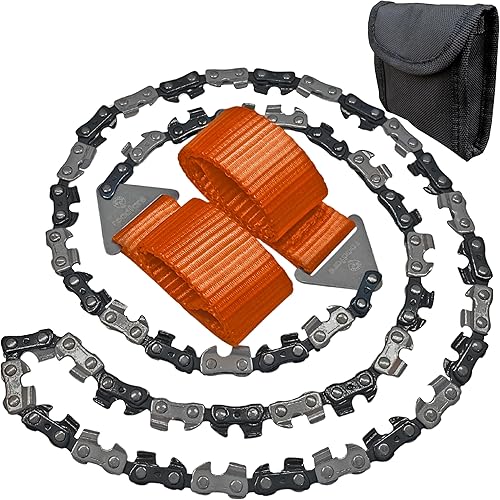
Best for: Backpackers and campers needing a portable cutting tool.
The 36-inch length allows this saw to wrap around thicker branches, and the bi-directional teeth ensure it cuts on both the pull and push strokes. The 65Mn steel construction is durable enough for repeated use in the wild, and the reinforced nylon handles help reduce hand fatigue during longer jobs.
Since it’s so light at 6 ounces, it’s easy to carry in your pack. However, it isn’t for heavy-duty logging or daily professional use, as it requires manual effort to operate effectively.
Good if:
- You need a lightweight tool for camping or survival.
- You want a saw that cuts on both directions.
- You need to reach branches that are high up.
Skip it if:
- You prefer a power-driven chainsaw for faster results.
- You’re clearing a large amount of debris.
7. Survival Pocket Chain Saw

Best for: Hikers and survivalists who need a compact tool.
This 24-inch saw uses 11 heat-treated carbon steel teeth to slice through branches efficiently. It’s designed to be flexible, allowing it to cut three sides of a limb at once, which speeds up the process. The kit includes a compact pouch, making it easy to store in a pocket or survival kit.
The listing doesn’t mention if this saw is intended for large-scale timber clearing.
Good if:
- You need a small tool for your survival kit.
- You want a fast-cutting manual saw for branches.
- You prioritize portability above all else.
Skip it if:
- You need to cut large tree trunks regularly.
- You’re looking for a professional-grade climbing tool.
8. X XBEN Outdoor Climbing Rope 10M(32ft) 20M(64ft) 30M(96ft) 50M(160ft) 70M(230ft)

Best for: General-purpose utility and recreational climbing.
This static rope is built with 13 core strands, providing a reliable balance of softness and strength. With a diameter of 8mm, it’s easy to control and knot, making it a versatile choice for various outdoor tasks including hiking and tree stand accessories. The low skin sliding rate ensures the rope remains smooth during operation.
It’s rated for a max tensile force of 15 KN. While it’s durable, this isn’t for high-stakes professional climbing where specific certification standards are mandatory.
Good if:
- You need a multi-purpose rope for camping and hiking.
- You want a rope that’s easy to tie and handle.
- You need a lightweight cord for general utility.
Skip it if:
- You require professional-grade CE certification for work.
- You’re performing heavy-duty rigging.
9. AOLEBA 10.5 mm Static Climbing Rope 10M(32ft) 20M(64ft) 30M(96ft) 50M(160ft)

Best for: Professionals requiring CE-certified safety equipment.
This 10.5mm static rope meets CE EN 892 standards, providing the quality control necessary for professional climbing, rescue, and escape operations. It’s made from high-tenacity nylon, offering excellent abrasion resistance and a smooth grip that’s easy to handle.
The rope is designed to be firm and tear-resistant, making it a reliable choice for demanding environments. It isn’t for users who need a dynamic rope, as this is strictly a static line meant for positioning and support.
Good if:
- You need a rope that meets professional safety standards.
- You require a durable line for heavy-duty work.
- You want a rope that’s easy to knot and handle.
Skip it if:
- You need a dynamic rope for shock absorption.
- You’re looking for a basic utility cord for yard work.
10. MaxxHaul 3/8-inch x 50 ft Diamond Braided Polypropylene Rope

Best for: General utility tasks around the home or campsite.
This polypropylene rope is built to resist rot, moisture, and UV rays, making it a reliable choice for outdoor projects like securing gear or clotheslines. Its diamond-braided structure provides a textured grip that holds knots securely even under tension. The inner core expands to provide extra utility.
With a 500 lb working load limit, it’s suitable for light-to-medium tasks. It isn’t for climbing, fall protection, or any life-safety applications.
Good if:
- You need a rope for general DIY or camping tasks.
- You want a material that resists rot and moisture.
- You need a cord that holds knots well.
Skip it if:
- You’re looking for a climbing or rigging rope.
- You need to lift heavy loads above 500 lbs.
Where These Overlap
Most of these products fall into two clear camps: professional arborist gear or portable survival tools. The Notch TriTech Flipline and AOLEBA Static Climbing Rope are close in their professional utility, both offering high-strength materials for serious work; your choice between them will likely depend on whether you prioritize the specific abrasion resistance of the TriTech or the CE-certified static nylon of the AOLEBA. On the other hand, the survival saws like the Pocket Chainsaw 36 Inch and Survival Pocket Chain Saw are nearly identical in their goal of portability, with the main difference being the length and tooth count. If you’re a casual hiker, either will suffice, and the decision can be based on the specific length that fits your pack best.
Still Not Sure?
How often will I really use this?
If you’re an arborist working daily, you need the durability of a certified professional rope like the AOLEBA Static Climbing Rope. If you only need a tool for occasional yard cleanup or a camping trip, a manual saw or a basic utility cord is likely sufficient.
What do I already own that this must work with?
Check your current harness or belt connections before buying. If you have specific snap hooks or rings, ensure the Notch Quick Cinch Lanyard or the Weaver Leather Saw Strap are compatible with your current hardware. Using the wrong connection type can make your setup frustratingly difficult to use in the field.
What am I most likely to regret choosing?
The most common mistake is choosing a utility rope for climbing or a professional climbing rope for simple yard work. If you need safety, always look for certified gear like the AOLEBA Static Climbing Rope. If you just need to tie down a tarp, don’t waste your money on specialized arborist equipment.
Professional climbers should always consult ANSI Z133 safety requirements to ensure their gear meets the latest standards for tree care operations. Choosing the right equipment involves checking if your gear is rated for the specific loads you expect to encounter.
For your tree work, stick to certified climbing ropes like the AOLEBA Static Climbing Rope if you’re doing professional-level positioning. If you’re just clearing brush or camping, the Pocket Chainsaw 36 Inch offers the best portability. Always inspect your gear for wear before every use, regardless of which product you choose.
Related guides