
As an Amazon Associate, we earn from qualifying purchases. This post contains affiliate links – if you buy through them, we may earn a commission at no extra cost to you.
Finding the best platform for physics simulation reddit depends on whether you need a quick environment for calculations or a deep hardware setup for robotics. Your choice rests on your background in programming, your specific physics domain, and how much you want to build versus analyze. While some platforms favor pure computation, others focus on the physical interaction between software and machines. For a fast start in modeling, look at Wolfram Cloud; if you need to integrate hardware for robotics, consider the NVIDIA Jetson Orin Nano.
1. Wolfram Cloud
Best for: Someone needing immediate access to powerful computation without local software setup.
This platform provides a cloud-based environment for complex analysis and visualization. It’s designed for those who want to start coding immediately, as it removes the need to manage local compilers or system dependencies. You can perform heavy computations and create interactive visualizations directly through your browser.
Because it operates in the cloud, it’s ideal for users who switch between different computers or tablets. However, it may not be the right choice for someone who requires offline access or direct control over low-level hardware drivers.
Good if:
- You prioritize mobility and cloud access.
- You need tools for both data analysis and programming.
- You want to avoid managing local software installations.
Skip it if:
- You work in a location with unreliable internet.
- You need to interface with physical sensors or robotic hardware.
2. MATLAB Accelerator Physics

Best for: Students and researchers focusing on particle accelerator modeling and academic study.
This resource provides a specialized approach to physics simulation using the MATLAB environment. It’s tailored for those who need to understand accelerator dynamics through hands-on exercises. It helps bridge the gap between theoretical physics concepts and their practical numerical implementation.
The content is structured for academic research, making it a strong choice for those already working within the MATLAB ecosystem.
Good if:
- You’re currently using MATLAB for your research.
- You need specific insights into accelerator physics.
- You prefer structured, academic-style learning paths.
Skip it if:
- You’re looking for a general-purpose physics engine.
- You want a platform that focuses on Python-based simulation.
3. NVIDIA Jetson Orin Nano Super Developer Kit

Best for: Developers building autonomous robots that require high-performance AI inference.
This developer kit is built for those creating entry-level AI robots and smart cameras. It features an Ampere GPU and a 6-core ARM CPU, allowing it to handle multiple concurrent AI pipelines. The hardware is designed for prototyping edge AI products that need to process data in real-time.
The kit includes a reference carrier board with multiple MIPI CSI connectors, which is helpful for high-resolution camera integration. It isn’t intended for someone seeking a simple, entry-level learning tool, as it requires a higher level of technical knowledge to leverage the full NVIDIA software stack.
Good if:
- You’re developing next-gen edge AI products.
- You need high-performance inference for robotics.
- You want access to the NVIDIA AI software stack.
Skip it if:
- You’re a beginner with no experience in AI frameworks.
- You don’t need to integrate physical cameras or sensors.
4. Experiential Robotics Platform

Best for: Teens and adults starting their journey into hands-on robotics and programming.
This DIY kit offers a structured way to learn robotics through a combination of hardware and software. It supports multiple languages like Python and Blockly, making it accessible for varying skill levels. The modular design allows you to integrate sensors and actuators, helping you master robotics concepts through physical projects.
The platform provides a technical forum for community support, which is useful when you hit a roadblock. Note that the kit doesn’t include a chassis or batteries, so you must plan for those additional parts. The listing doesn’t mention industrial-grade simulation.
Good if:
- You want a structured learning path with projects.
- You prefer a multi-language coding experience.
- You value community-driven support and forums.
Skip it if:
- You need a complete system including a chassis.
- You’re looking for high-end professional simulation power.
5. Numerical Methods in Physics

Best for: Physicists who want to use Python to solve complex numerical problems.
This guide focuses on applying Python to solve standard problems in physics through numerical methods. It assumes the reader has an interest in scientific computing and wants to translate mathematical models into code. It’s a practical resource for those who prefer learning through implementation.
The content is focused on the intersection of programming and physical modeling. The listing doesn’t mention hardware control or 3D engine simulation.
Good if:
- You’re comfortable using Python for scientific tasks.
- You want to learn numerical techniques for physics.
- You prefer a book-based, step-by-step learning approach.
Skip it if:
- You want a visual, drag-and-drop simulation environment.
- You’re building physical robotics hardware.
6. Advanced Computational Physics
Best for: Students or professionals seeking deep technical knowledge of simulation and modeling.
This text provides a comprehensive look at the computational techniques used in modern physics. It covers numerical methods and simulation strategies, making it a strong reference for those who need to understand the underlying math of their models. It serves as a bridge to complex computational work.
Good if:
- You need a deep dive into computational techniques.
- You want to understand the theory behind simulations.
- You’re working on high-level modeling projects.
Skip it if:
- You’re looking for a pre-built software platform.
- You want a quick, entry-level guide to coding.
7. Foundations of Robotics
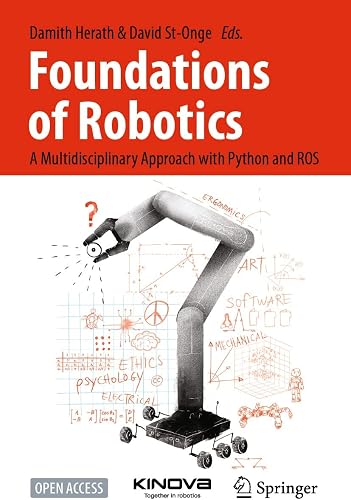
Best for: Those who want to use Python and ROS for multidisciplinary robotics study.
This approach covers the core principles of robotics using industry-standard tools like Python and the Robot Operating System. It’s designed to teach you how to integrate software with robotic systems. The focus is on the multidisciplinary aspects, including control and design.
Good if:
- You want to learn professional tools like ROS.
- You’re interested in a multidisciplinary approach.
- You want to use Python for robotics.
Skip it if:
- You have no interest in robotics hardware.
- You want a general, non-robotic physics guide.
8. Python for Physical Modeling

Best for: Students who want a clear guide to using Python for physical simulations.
This book serves as a student-focused introduction to modeling physical systems. It helps bridge the gap between basic physics equations and the programming needed to visualize them. It’s an excellent starting point for anyone who knows some Python and wants to apply it to physics.
The book is focused on educational modeling rather than the high-end computational power required for complex industrial simulations. It’s a guide, not a hardware platform.
Good if:
- You’re a student starting with computational physics.
- You want to see physical models written in Python.
- You prefer a guide that explains the code clearly.
Skip it if:
- You need to control physical robotic hardware.
- You’re looking for professional, high-performance engines.
9. Physics with Functional Programming

Best for: Programmers who want to explore physics using the Haskell language.
This guide offers a unique perspective by using functional programming to model physical systems. It’s perfect for those who are already interested in Haskell or functional paradigms and want to see how they apply to physics. It challenges the traditional imperative approach used in most simulation software.
This is a niche resource. It isn’t suitable for someone who needs to integrate their work with standard industry tools like ROS or NVIDIA hardware.
Good if:
- You’re interested in functional programming.
- You want to explore physics through Haskell.
- You enjoy unconventional coding approaches.
Skip it if:
- You need to use industry-standard Python tools.
- You’re building hardware-based robots.
Choosing the Best Physics Simulation Platform
Most of these resources, such as Numerical Methods in Physics, Foundations of Robotics, and Python for Physical Modeling, rely heavily on Python as the primary language for computation. These are excellent if you want to build your own simulations from scratch. In contrast, the NVIDIA Jetson Orin Nano is an entirely different category, providing the actual hardware engine for real-time robotics. The Wolfram Cloud and MATLAB resources stand apart as they offer their own proprietary environments. If you’re already invested in a specific language, your choice is likely determined by your need for either a deep educational resource or a high-performance hardware kit.
Still Not Sure?
Do I need a physical robot or just a digital model?
If you want to test code on a real machine, the NVIDIA Jetson Orin Nano is the standard for high-performance edge AI. If you are interested in physics simulations, consider a book like Python for Physical Modeling to build your models in software first.
Am I looking for an academic guide or a tool?
If you need a structured academic approach to research, MATLAB Accelerator Physics or Advanced Computational Physics are your best bets. For a tool you can use daily to run simulations, the Wolfram Cloud provides a flexible, cloud-based platform that handles heavy computations without local setup requirements.
How much coding experience do I have?
If you’re a total beginner, the Experiential Robotics Platform offers a structured way to learn using Python and Blockly. If you’re an experienced programmer who wants to try a different paradigm, Physics with Functional Programming offers a unique, hands-on guide using the Haskell language for your physics exploration.
Frequently Asked Questions
Which platform is best for beginners in physics simulation?
For beginners, Python for Physical Modeling is a strong starting point as it uses a widely learned language to explain concepts. It allows you to build models that visualize physics without needing complex hardware. If you prefer a hands-on kit, the Experiential Robotics Platform provides a structured path for those new to robotics and coding.
Can I use these platforms for game physics?
Most of these resources focus on scientific and robotic simulation rather than game engines. If your goal is specifically game physics, titles like Game Physics are more relevant. The others, like the Jetson Orin Nano, are designed for autonomous systems and AI inference pipelines rather than standard 3D game rendering or physics engines.
Do I need to know Python to use these tools?
Python is the most common language across these resources, especially for tools like Foundations of Robotics and Numerical Methods in Physics. However, platforms like Wolfram Cloud and MATLAB use their own proprietary languages. You don’t need to know Python to use those, but it’s highly recommended for the other options.
What hardware do I need for robot simulation?
For high-performance robotics, the NVIDIA Jetson Orin Nano is a complete developer kit that includes the module and carrier board. If you’re starting with smaller hobbyist projects, the Experiential Robotics Platform is sufficient, though you must provide your own chassis and batteries to complete the assembly and begin your simulation and testing.
Conclusion
If you want a fast, cloud-based environment for computation, choose Wolfram Cloud. If you need to build and test autonomous robots, the NVIDIA Jetson Orin Nano is the right choice. Start by checking your specific hardware needs, then look at the coding language each platform uses to ensure it fits your workflow.