
As an Amazon Associate, we earn from qualifying purchases. This post contains affiliate links – if you buy through them, we may earn a commission at no extra cost to you.
Finding the best render settings for animation blender depends on your specific goals as a creator. There’s no single setting that works for every project, as your choices are driven by your hardware, your target output quality, and the complexity of your animation. Whether you need photorealistic results or a quick workflow for character movement, the right guide helps you balance these demands. Choosing the right material often comes down to whether you’re focusing on technical rendering engines or the creative process of animation. For engine settings, look at Blender Rendering with Cycles; for step-by-step animation, Blender for Beginners Part 2 is a strong starting point.
1. Blender Rendering with Cycles

Best for: Users who need to master technical lighting and rendering engine output.
This book focuses on the technical side of the Cycles engine. It covers how to handle lighting setups, manage HDRI workflows, and organize your compositing nodes to get professional results. Because it targets photorealistic output, it’s ideal for those who prefer adjusting settings over modeling characters.
It isn’t for someone looking for a general guide on how to rig or model objects from scratch. If your main goal is to learn the basics of character movement or sculpting, this book might feel too focused on the render engine itself. It assumes you’re ready to refine the final look of your 3D scenes.
Good if:
- You want to master the Cycles engine.
- You need help with advanced lighting setups.
- You’re focused on photorealistic 3D output.
Skip it if:
- You’re looking for a general modeling tutorial.
- You need help with character rigging or animation basics.
2. Blender for Beginners Part 2

Best for: Someone who wants to create polished animations from start to finish.
This guide helps you move through the animation, lighting, and rendering stages in a logical way. It helps you create professional scenes without getting bogged down in engine theory. It’s a practical choice for those who have finished their first project and want to improve their final render quality.
This isn’t for an advanced user who already knows how to animate and light scenes. If you’re looking for complex simulation techniques or specific material nodes, you might find this guide too basic for your needs. It focuses on the workflow steps rather than deep technical engine mastery.
Good if:
- You want a structured animation workflow.
- You’re building polished, optimized scenes.
- You prefer a project-based approach to learning.
Skip it if:
- You’re looking for advanced simulation tutorials.
- You’re an experienced user who knows the interface well.
3. Blender 5.0 Project-Based Mastery
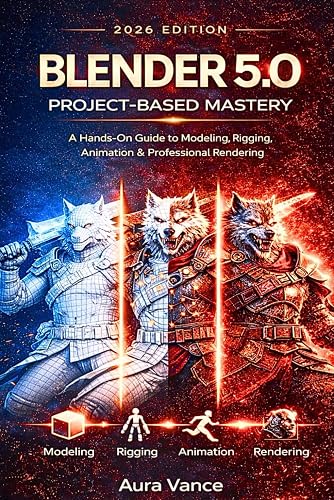
Best for: A learner who wants to compare modeling, rigging, and rendering based on the provided specifications.
This book uses a project-based approach to teach you every part of the 3D pipeline. By working through specific tasks, you learn to set up your animation and rendering settings in context. It’s a good choice for someone who learns best by following along with a complete project.
It isn’t for someone who wants a quick reference guide or a manual for specific settings. If you just want to look up how to change a render sample rate, this book might be too long to search through. It is meant to be read as you build your 3D scenes.
Good if:
- You learn best by doing projects.
- You need a guide that covers modeling and rigging.
- You want to see how rendering fits into the pipeline.
Skip it if:
- You need a quick reference manual.
- You prefer short, isolated tutorials over long projects.
4. Blender 5.2 LTS Zero to

Best for: A complete beginner starting their journey into 3D animation.
This guide takes you from the very beginning, helping you model and animate your scenes step-by-step. It’s built to ensure you reach the final render stage without getting lost in the software. It provides a clear path for someone who has never touched the software before.
It isn’t for someone who has already mastered the basics of modeling. If you’re already comfortable with the interface, you might find the early chapters move too slowly for your liking. It is designed for those building their foundation from nothing.
Good if:
- You’re a beginner with no prior experience.
- You need step-by-step guidance.
- You want to focus on the basics of rendering.
Skip it if:
- You already have experience with Blender.
- You’re looking for high-level simulation tips.
5. Blender 5.1 User Guide

Best for: Users who want to create cinematic renders and environments.
This guide is designed as a complete reference for building 3D models and environments. It puts a heavy emphasis on the final look of your scene, making it useful for artists who want to achieve a cinematic quality. It covers the process from the first model to the final output.
It isn’t for a user who only wants to focus on animation or character movement. If your priority is character acting or rigging, you may find that the environment-focused chapters take up too much space. It’s a general guide that covers many topics rather than focusing on one specific area.
Good if:
- You want to focus on cinematic render quality.
- You need a guide for building complex environments.
- You want a broad overview of the software.
Skip it if:
- You only care about character animation.
- You want a book focused on one specific feature.
6. Blender Quick Start Guide

Best for: A user who wants to learn Eevee rendering quickly.
This guide focuses on the Eevee engine, known for its rendering speed. It is ideal for those needing quick project completion and real-time output. It keeps things simple and direct.
It isn’t for someone who wants to learn the Cycles engine or high-end photorealistic rendering. Eevee and Cycles work differently, so if you’re aiming for high-end cinematic quality, this guide may lack the depth you need. It’s intended for those who prioritize speed and efficiency.
Good if:
- You want to use the Eevee engine.
- You need to get your renders done quickly.
- You’re new to 3D rendering.
Skip it if:
- You need to learn the Cycles engine.
- You want to achieve photorealistic results.
7. Realizing 3D Animation in Blender

Best for: Someone focused on the fundamentals of character movement and keyframing.
This book covers core animation principles, including character movement and keyframing. It is great for artists who struggle to make character movements look natural. It bridges the gap between static models and finished animations.
It isn’t for a user who is looking for deep technical rendering advice or lighting tutorials. If your main concern is how to optimize your render settings for output, this book won’t provide those answers. It’s strictly focused on the art of animation itself.
Good if:
- You want to improve your character movement.
- You need to understand keyframing principles.
- You’re an artist focused on animation performance.
Skip it if:
- You’re looking for technical rendering engine advice.
- You need help with lighting or material nodes.
8. Learn Blender Simulations
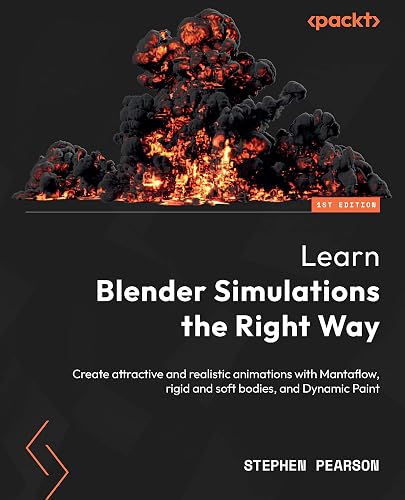
Best for: Artists who want to create realistic physics-based animations.
This guide focuses on Mantaflow and rigid bodies to add realism. It teaches you how to use these tools to make animations look professional. It’s ideal for someone who wants to move beyond simple character movement into dynamic scenes.
It isn’t for a beginner who hasn’t yet learned how to model or set up a basic scene. The concepts here are more advanced and require a solid understanding of the software before you can effectively use simulation tools. It’s a specialized guide for a specific type of work.
Good if:
- You want to learn Mantaflow and rigid bodies.
- You’re interested in physics-based animation.
- You want to add realism to your scenes.
Skip it if:
- You’re a total beginner.
- You aren’t interested in physics or simulations.
9. Learn Blender 5

Best for: Beginners who want a comprehensive guide for their first steps.
This book provides step-by-step instructions for the 3D process. It covers modeling, rendering, and animation for new users. It’s meant to be a general starting point for anyone who wants to learn the basics of the software.
It isn’t for an intermediate or advanced user who needs deep dives into specific topics like geometry nodes or advanced compositing. If you’re looking for a specialized book on rendering, this general guide might feel too broad. It aims to teach you a little bit about everything.
Good if:
- You’re a beginner looking for a broad start.
- You want step-by-step instructions.
- You want to learn modeling, rendering, and animation.
Skip it if:
- You’re an advanced user.
- You need a deep dive into one specific feature.
10. Photorealistic Materials Cycles

Best for: Users who want to master textures and material nodes in Cycles.
This guide focuses on creating professional, production-ready materials. It is perfect for those who know the basics but want more believable materials. It’s a technical book for those who care about the look of their surfaces.
It isn’t for someone who wants to learn how to animate or rig models. If you’re looking for a guide on how to move characters through a scene, you won’t find it here. It’s dedicated to the visual quality of your models, not the movement of them.
Good if:
- You want to create professional materials.
- You’re focused on the Cycles engine.
- You want your projects to be production-ready.
Skip it if:
- You’re looking for animation tutorials.
- You want a general overview of the software.
Best Blender Animation Render Settings
Most of these guides share a common goal: helping you move from the basics of the interface to a finished render. Many of them, such as Blender 5.0 Project-Based Mastery and Learn Blender 5, cover the entire pipeline, including modeling and rendering. The main difference lies in the depth of technical detail. If you’re a beginner, the general guides are very similar in their approach to teaching the interface. The choice between them often comes down to which project or lesson style appeals to you more. The specialized books are the only ones that truly differ, as they ignore general modeling to focus on specific tasks like simulations or material nodes.
Still Not Sure?
How often will I really use these tools?
If you plan to animate every day, you need a workflow that’s efficient. A guide like Blender for Beginners Part 2 helps you set up a routine that works for fast production. If you only animate occasionally, a broad guide like Learn Blender 5 is better suited for your needs.
What do I already own that this must work with?
If you want to focus on photorealistic output, Blender Rendering with Cycles covers the Cycles engine. If you prioritize speed, the Blender Quick Start Guide focuses on the Eevee engine.
What am I most likely to regret choosing?
You’ll regret choosing a specialized book if you’re still learning the basics of the interface. If you’re a beginner, picking a book like Learn Blender Simulations might frustrate you because it skips the fundamentals. Always ensure your choice matches your current skill level before you dive in.
The best render settings depend on whether you need photorealistic output or fast animation workflows. For technical depth in Cycles, use Blender Rendering with Cycles. For a structured path to finishing professional animations, choose Blender for Beginners Part 2. Pick the guide that fits your current project needs and start your next render today.
Related guides
- Best Settings for Rendering Unreak
- 10 Best Settings for a Final Render Blender for Your Kitchen
- 9 Best Tile Sizes for Nvidia 1080 Blender Rendering Settings
Frequently Asked Questions
Which render engine should I use for 3D animation?
The engine depends on your goals. Use Cycles if you need the highest level of photorealistic lighting and detail in your final output. Use Eevee if you need fast, real-time rendering for your animations. The Blender Documentation explains the core technical differences between these two primary engines.
How do I optimize my render settings for faster output?
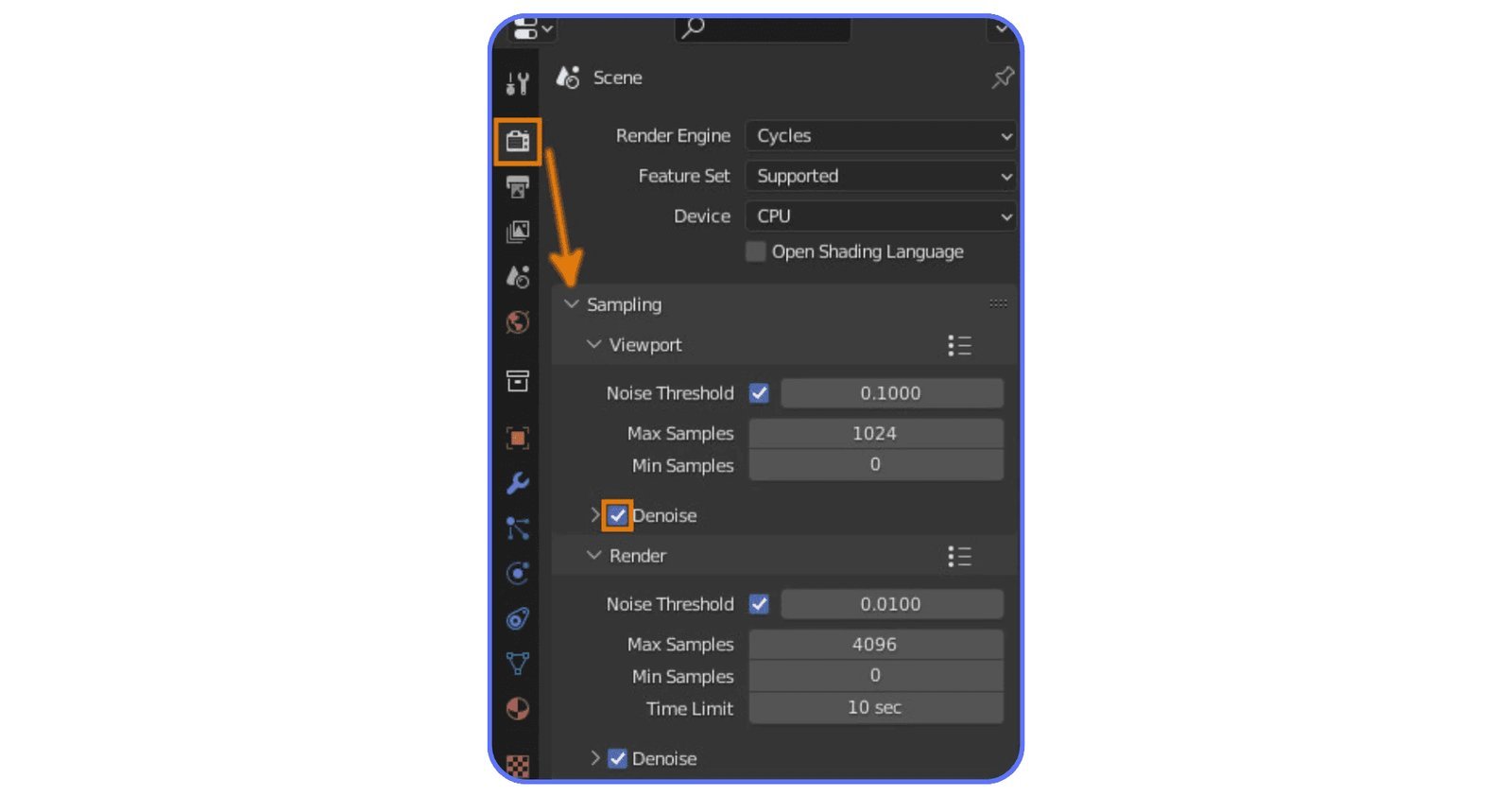
To speed up your renders, you should adjust your sample count and use denoising settings to clean up the image. You can also use lower resolution settings for your test renders.
Do I need to learn geometry nodes for animation?
You don’t need to learn geometry nodes to begin animating, but they’re very helpful for creating complex environments or procedural effects. If you want to learn professional workflows, Blender 5.0 Project-Based Mastery covers modeling, rigging, and rendering.
What is the difference between LTS and regular versions?
LTS stands for Long Term Support. These versions are designed for stable, long-term projects where you don’t want the software to change frequently. If you’re working on a large, multi-month animation, a book like Blender 5.2 LTS Zero to will help you stay on a stable, supported platform.
Conclusion
Once you’ve settled on your preferred settings, try running a short test render of just ten frames. It’s the best way to spot potential issues before you commit to a long overnight bake. You’ll find that a little patience during these early trials makes your final production run much smoother.