
As an Amazon Associate, we earn from qualifying purchases. This post contains affiliate links – if you buy through them, we may earn a commission at no extra cost to you.
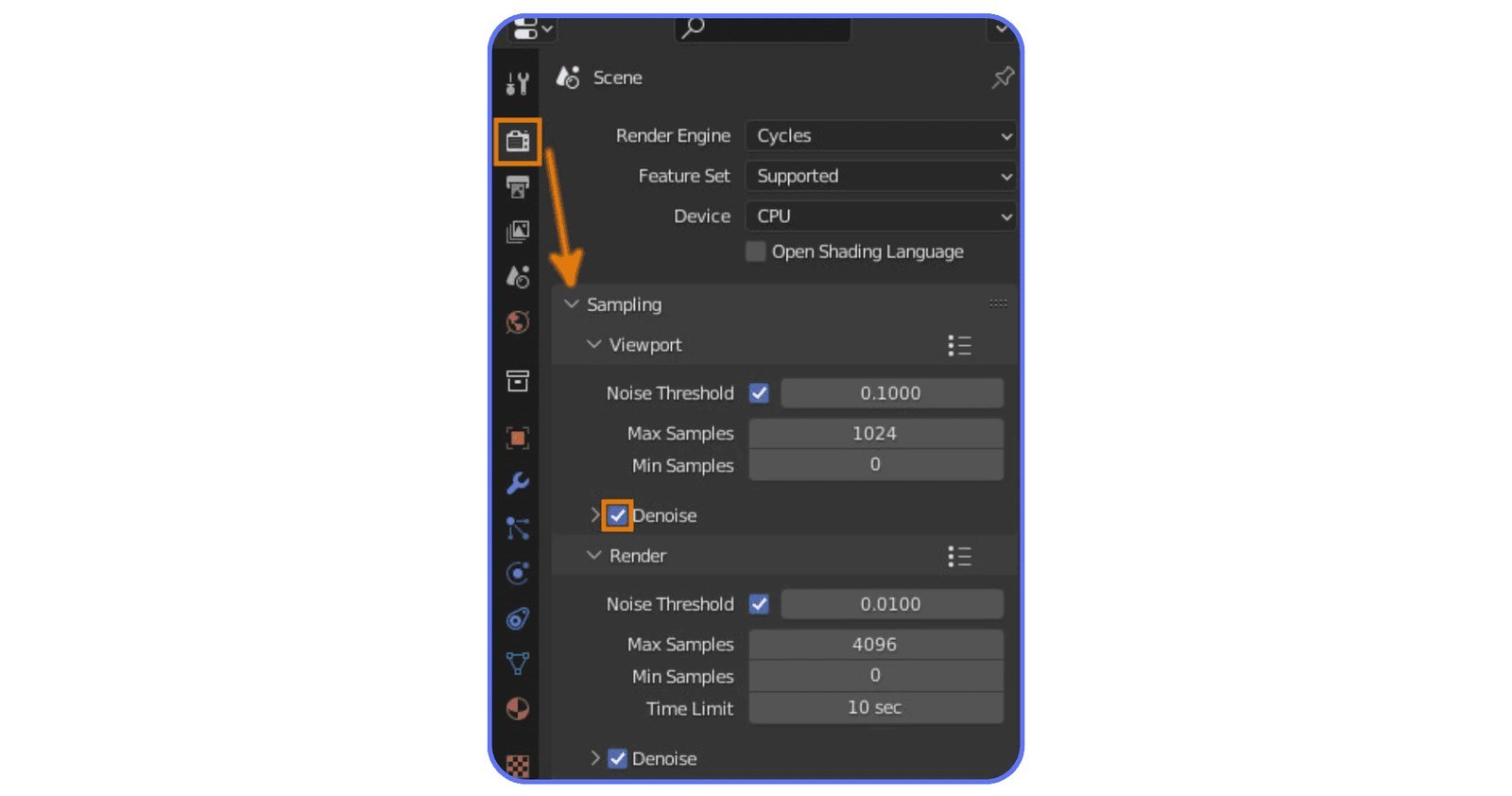
Finding the best render settings for gpu blender depends entirely on your specific hardware and the complexity of your scenes. There’s no single setting that works for everyone, as your choice is dictated by your GPU’s memory capacity, your cooling setup, and your overall project requirements. These products differ primarily in their memory architecture, thermal management, and compatibility with modern software standards. To choose the right path, you must balance raw compute power against the physical space inside your case. For those seeking maximum output, the MSI RTX 5070 Ti Ventus is the primary choice, while users needing a compact solution often look toward the ASUS Prime RTX 5070.
1. msi Gaming RTX 5070 Ti 16G Ventus 3X PZ OC
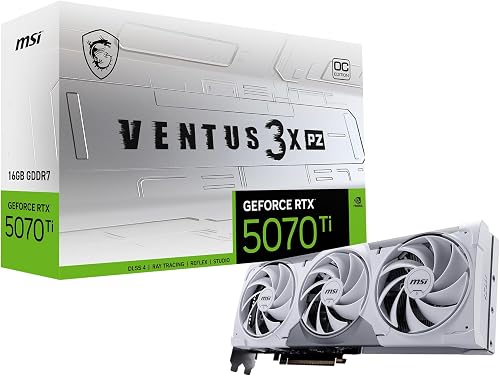
Best for: Professionals rendering complex 3D scenes requiring high memory bandwidth and throughput.
The Blackwell architecture and DLSS 4 support provide a significant lift for heavy rendering tasks. This card uses TORX Fan 5.0 technology to keep temperatures stable under long periods of heavy load, which is critical when your GPU is pinned at 100% usage for hours. The nickel-plated copper baseplate ensures that heat is moved away from the core efficiently, which helps prevent thermal throttling during long animation renders.
The core pipe design is specifically shaped to maximize contact with the GPU baseplate. This enhances thermal management, allowing the card to maintain its high boost clocks consistently. This card isn’t for someone using a tiny, restricted case, as its triple-fan size requires significant clearance to function as intended.
Good if:
- You’re handling high-poly geometry and complex textures.
- You need the latest architecture for modern rendering APIs.
- You have a case with enough room for a 3-fan design.
Skip it if:
- Your PC case is a small-form-factor build with limited space.
- You’re looking for a low-power, entry-level solution.
2. ASUS SFF-Ready Prime NVIDIA GeForce RTX 5070 Graphics Card

Best for: Creators working with small-form-factor builds who need modern performance.
This card is designed specifically for tight spaces without sacrificing the power of the Blackwell architecture. Its 2.5-slot design is a smart trade-off, offering enough cooling surface area to manage temperatures while fitting into smaller chassis where larger cards simply won’t go. The axial-tech fans focus downward air pressure effectively, ensuring that even in a cramped case, your render times remain stable.
The inclusion of a phase-change thermal pad is a major benefit for reliability. The phase-change GPU thermal pad helps ensure optimal heat transfer and lower GPU temperatures. It isn’t for users who want to push the absolute limits of overclocking, as the compact design focuses more on efficiency and compatibility than extreme thermal headroom.
Good if:
- You’re building or upgrading a compact workstation.
- You need compatibility with modern PCIe 5.0 standards.
- You prefer a card that balances size with thermal reliability.
Skip it if:
- You need the highest possible raw performance regardless of size.
- You have a massive case and want the largest cooler available.
3. msi Gaming GeForce RTX 3070 LHR 8GB GDRR6 256-Bit HDMI/DP
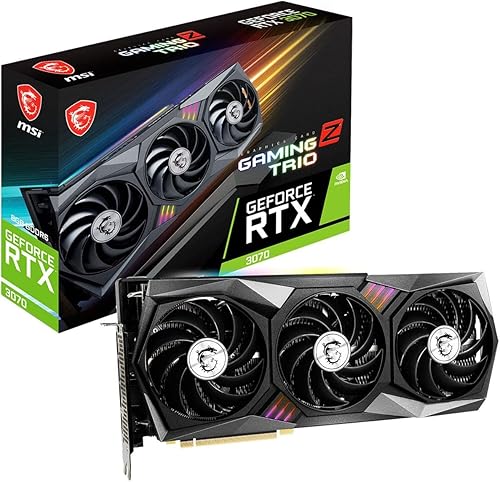
Best for: Established workflows that demand stable, proven performance for everyday rendering.
The RTX 3070 remains a capable workhorse for many artists because it provides a reliable 8GB of GDDR6 memory. With a boost clock of 1845 MHz, it handles standard viewport navigation and final frame renders with ease. The Torx Fan 4.0 design is featured on the card.
This card is a solid middle ground for those who don’t need the latest architecture features but still require a card that handles standard 3D tasks reliably. It isn’t for someone working on massive, memory-intensive scenes that exceed the 8GB VRAM limit, as you’ll see performance dips if your project size outgrows the available memory.
Good if:
- You need a reliable card for standard 3D modeling tasks.
- Blender compatibility is not mentioned in the listing.
- You’re working with typical scene sizes that fit 8GB VRAM.
Skip it if:
- You’re working with massive textures or complex simulations.
4. ASUS Geforce GTX 1050Ti 4GB ROG Strix OC Edition HDMI

Best for: Students or beginners learning the basics of 3D rendering on a budget.
The Pascal architecture is highly efficient, making this card a great starting point for someone just beginning their 3D journey. It’s built to run cool and quiet thanks to the DirectCU II cooling system, which uses wing-blade fans to keep the card stable. This card is capable of 1080p gaming at 60 FPS.
Auto-Extreme Technology uses Super Alloy Power II components. However, this isn’t for professional work or high-speed production rendering. With only 4GB of memory, it will struggle with modern, complex scenes that have high polygon counts or large texture maps.
Good if:
- You’re a student just starting to learn Blender.
- You need a power-efficient card for basic 3D tasks.
- You want a card with high build quality for long-term use.
Skip it if:
- You’re doing professional-level animation or high-res rendering.
- You need more than 4GB of VRAM for your textures.
5. EVGA GeForce GTX 780 Ti Superclocked w/ACX Cooler 3GB GDDR5

Best for: Legacy systems and older projects that require specific hardware support.
This is a classic card that still holds value for specific, older workflows. With 2880 CUDA cores, it provides a decent amount of compute power for projects that don’t rely on the latest ray-tracing or AI features found in modern cards. The ACX cooler is designed to manage heat effectively, ensuring the card stays within safe limits during operation.
Because this is an older architecture, it lacks the modern ray-tracing hardware that makes Blender’s Cycles engine so fast today. The listing doesn’t mention software compatibility.
Good if:
- You’re maintaining an older workstation or legacy build.
- Your current software workflow relies on older CUDA versions.
- You need a card that supports multiple concurrent displays.
Skip it if:
- You’re using the latest version of Blender with Cycles.
- You need modern features like hardware-accelerated ray tracing.
Best Blender GPU Render Settings
The MSI RTX 5070 Ti Ventus and the ASUS Prime RTX 5070 are the two most modern choices, sharing the same Blackwell architecture. They offer the best path for anyone looking to future-proof their render setup. The main difference is physical: the MSI card is for full-sized builds where performance is the only priority, while the ASUS card is for those who need to fit high-end power into a smaller space. If you have the room, the MSI is the logical step up, but the ASUS choice doesn’t force you to sacrifice the core technology. The other models serve specific, smaller niches rather than broad, modern needs.
Still Not Sure?
How much VRAM do I really need?
If you’re working with complex textures and large scenes, you’ll quickly hit the VRAM wall. If you’re just starting, 8GB is sufficient. For high-end, heavy production, choose the MSI RTX 5070 Ti Ventus.
Will my current power supply be enough?
Modern GPUs are more efficient than older models, but they still require stable power. You should always check the manufacturer’s recommended wattage for your specific card. The NVIDIA GPU power requirements provide the essential guidance you need to ensure your system runs safely during long, heavy render jobs.
Is upgrading to a new architecture worth it?
Upgrading to a newer architecture like Blackwell provides massive benefits in render speed and AI-driven denoising. If you’re using an older card like the EVGA GTX 780 Ti, the jump in performance with a modern card will be immediate. For the best modern experience, the ASUS Prime RTX 5070 is a great choice.
Frequently Asked Questions
Does the GPU architecture affect my render times?
Yes, modern architectures like the Blackwell series are specifically optimized for current rendering engines. They include dedicated hardware for ray tracing and AI denoising that older cards lack. If you’re using the latest version of Blender, choosing a card like the MSI RTX 5070 Ti Ventus will significantly reduce your total render times compared to older hardware.
Can I use a small-form-factor card for professional work?
You certainly can, provided you choose a model designed for it. The ASUS Prime RTX 5070 is an excellent example of a card that packs high-end performance into a 2.5-slot design. It handles heavy rendering tasks well, but you must ensure your case has sufficient airflow to keep the card cool during long, sustained rendering sessions.
Why do some cards have more fans than others?
The number of fans is primarily about managing thermal dissipation. Larger cards like the MSI RTX 5070 Ti Ventus use three fans to spread heat across a larger surface area, allowing for quieter operation at higher performance levels. Smaller cards use specialized fan designs, like those found on the ASUS Prime RTX 5070, to maintain pressure in a limited space.
What happens if my scene exceeds my GPU memory?
When your scene size exceeds your VRAM, Blender will either crash or fall back to your system RAM, which is significantly slower. This results in massive slowdowns or an inability to render the frame at all. To avoid this, always match your GPU memory to the complexity of your scenes, favoring 16GB options like the MSI RTX 5070 Ti Ventus.
Conclusion
Your choice of GPU for Blender rendering comes down to the balance of your scene complexity and your physical space. If you need top-tier performance for large projects, the MSI RTX 5070 Ti Ventus is the clear leader. If your build is space-constrained, the ASUS Prime RTX 5070 offers a high-performance alternative. Choose your card, then optimize your scene settings accordingly.