
As an Amazon Associate, we earn from qualifying purchases. This post contains affiliate links – if you buy through them, we may earn a commission at no extra cost to you.
Finding the best settings for rendering in cycles blender depends on whether you need a broad overview or deep technical knowledge for a specific project. Some users require a beginner-friendly approach to master basic workflows, while others look for advanced techniques to handle complex lighting and photorealistic materials. The best choice for you relies on your current skill level and whether you prefer a step-by-step tutorial or a reference-style guide. If you’re starting out, look at Blender 5.2 LTS Practical, while those focused on high-end realism should examine Blender Rendering Cycles.
1. Blender Rendering Cycles

Best for: Artists seeking a comprehensive guide to achieve professional photorealistic 3D output.
This book focuses on the essential pillars of the Cycles engine, including lighting, HDRI workflows, and compositing.
It’s designed for users who want to master the engine’s capabilities from start to finish. However, it may be too dense for someone looking for a quick, one-page cheat sheet for common settings.
Good if:
- You want to learn advanced compositing.
- You need to master HDRI environment lighting.
- You’re aiming for photorealistic results.
Skip it if:
- You only need basic modeling help.
- You prefer short, simplified tutorials.
2. Blender Cycles Cookbook

Best for: Users who want to solve specific lighting and rendering challenges quickly.
This guide acts as a resource for those who already understand the basics but need to refine their lighting setups.
The book is ideal for those who learn by doing through targeted examples. It isn’t intended for complete beginners who are still navigating the Blender interface for the first time.
Good if:
- You have specific lighting problems.
- You enjoy learning through practical recipes.
- You want to improve your rendering speed.
Skip it if:
- You’re new to 3D software.
- You want a general overview of modeling.
3. Photorealistic Materials Cycles

Best for: Creators prioritizing material accuracy and complex texture workflows in their renders.
Texture creation and node editor proficiency are just as important as the render settings themselves. This book dives into these areas, ensuring your assets look production-ready for any high-end project.
It provides a deep dive into the technical side of surface shaders. It isn’t for users who only want to learn about camera settings or animation.
Good if:
- You want to create custom shaders.
- You need production-ready material workflows.
- You’re focused on texture detail.
Skip it if:
- You only care about lighting setups.
- You aren’t interested in node-based workflows.
4. Blender Rendering German

Best for: German-speaking artists who need a technical reference for Cycles and HDRI setups.
This guide covers the same technical ground as English manuals but is written specifically for the German-speaking community.
The book serves as a reliable reference for technical workflows. It isn’t suitable for those who don’t read German, as the terminology is tailored to that language.
Good if:
- You prefer technical guides in German.
- You want to master HDRI and compositing.
- You need a reliable desk reference.
Skip it if:
- You aren’t fluent in German.
- You want a beginner’s guide to animation.
5. Blender Rendu 3D avec Cycles
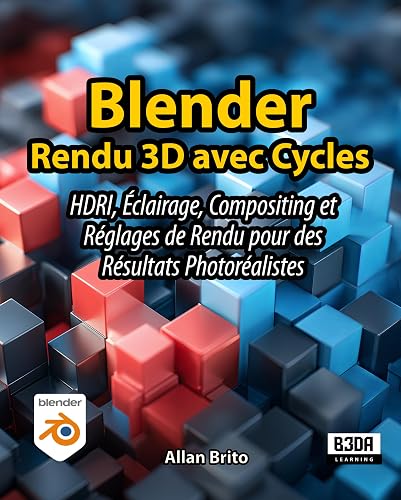
Best for: French-speaking users looking for photorealistic results using Cycles.
This book offers a structured approach to lighting and compositing in French. It’s helpful for those who find it easier to learn technical software concepts in their native language.
It provides a clear path for achieving professional renders. It isn’t for users looking for English-language instructions or those who are already experts in the engine.
Good if:
- You need a guide in French.
- You want to improve your render quality.
- You’re learning about HDRI workflows.
Skip it if:
- You only read English.
- You’re an advanced user seeking deep code-level customization.
6. Blender 5.2 LTS Practical

Best for: Absolute beginners who need a broad foundation in all Blender features.
This guide provides a starting point for those who want to understand the entire pipeline, from modeling to rendering. It’s updated for the LTS version, making it a safe choice for those who want long-term stability.
It’s great for someone just opening the program. It isn’t for someone who only wants to focus on rendering and skips the modeling or animation sections.
Good if:
- You’re a first-time user.
- You want to learn the full 3D pipeline.
- You prefer an updated version guide.
Skip it if:
- You only need advanced rendering tips.
- You’re already an experienced Blender user.
7. Blender 4.5 User Manual

Best for: Users who want a comprehensive, all-in-one manual for the latest features.
This manual covers the core tools within Blender 4.5. It’s a broad reference book that touches on every part of the software, including rendering settings and material management.
It’s meant to be a go-to book for quick look-ups. It isn’t the best choice if you want a niche book that specializes only in complex lighting or shaders.
Good if:
- You want a general user manual.
- You need to cover multiple workflows.
- You like having a reference book handy.
Skip it if:
- You want a deep dive into one specific feature.
- You prefer video-based learning.
8. Blender 2.6 Cycles Cookbook

Best for: Enthusiasts working with legacy versions of the software.
It’s a specialized tool for older versions. It isn’t for users working with the latest Blender 4.0 or 5.0 releases, as the interface and settings have changed significantly.
Good if:
- You work with older Blender files.
- You want to learn the basics of texturing.
- You’re a collector of technical books.
Skip it if:
- You’re using the latest version of Blender.
- You need modern rendering tips.
9. Blender 2.8 Architecture

Best for: Architects and interior designers who need to render realistic buildings.
This book specifically targets the needs of architectural visualization. It explains how to set up lighting and materials to make buildings look real in both Eevee and Cycles.
It’s highly focused on a specific industry. It isn’t for character animators or VFX artists who need to learn about particle systems or rigging.
Good if:
- You work in architectural visualization.
- You need to render realistic interior spaces.
- You want to compare Eevee and Cycles.
Skip it if:
- You’re a character animator.
- You need a general guide for all Blender tools.
10. Blender 4.2 Guidebook

Best for: Users seeking a balanced approach between beginner concepts and expert rendering workflows.
This guidebook bridges the gap by offering step-by-step instructions for both beginners and those who need to master complex rendering tasks. It is designed for those who need to complete specific rendering projects.
It’s a well-rounded manual. It may not be detailed enough if you’re looking for an extremely niche, deep dive into one single aspect of the software.
Good if:
- You want a guide that scales with your skills.
- You need help with animation and modeling too.
- You want a modern 4.2-focused resource.
Skip it if:
- You need only a short, focused rendering manual.
- You’re already a power user.
Where These Overlap
Many of these guides, such as the Blender 4.2 Guidebook and Blender 5.2 LTS Practical, offer broad coverage of the software. They’re close enough that the choice often comes down to which version of Blender you currently have installed. If you’re a beginner, these general guides are very similar in quality. However, they’re genuinely different from specialized books like Photorealistic Materials Cycles. If your goal is to master textures, the specialized book is a better investment than a general manual. Choose the general guide for a broad start, or the specialized one if you have hit a wall in your workflow.
Still Not Sure?
How often will I really use it?
If you plan to render daily, you need a book that functions as a reliable reference, like the Blender 4.5 User Manual. The listing doesn’t mention the difficulty level of the Blender 4.5 User Manual.
What do I already own that this has to work with?
Check your current Blender version before picking a book. Using an older book like the Blender 2.6 Cycles Cookbook with a modern version of the software will lead to confusion. If you’re using the latest build, stick with the Blender 4.2 Guidebook or similar current editions.
What am I most likely to regret choosing?
You’ll regret buying a highly specialized book if you’re still learning the basics of the interface. Beginners should avoid advanced material or compositing books until they’re comfortable. Start with the Blender 5.2 LTS Practical to ensure you have a solid foundation before moving to complex topics.
The best settings for rendering in Cycles Blender depend on your project needs. For a total beginner, the practical handbook for the current long-term support release is the best starting point. If you’re a professional focused on photorealism, Blender Rendering Cycles is the correct choice. Pick the book that matches your version and current goal.
Frequently Asked Questions
Is it hard to learn rendering settings in Blender?
Learning the basics is straightforward, but mastering advanced nodes and light paths takes time. The Blender Foundation documentation explains the core technical parameters that every user should understand. If you find the official text too dry, a cookbook-style guide like the Blender Cycles Cookbook makes the process much more manageable.
Does the version of the book matter for rendering?
Yes, the version of the book matters significantly because the rendering engine and interface update frequently. Using a book written for an older version, such as the Blender 2.6 Cycles Cookbook, will cause confusion because many settings have moved. Always aim for a guide that matches your current software version, such as the latest edition of the official guidebook.
Can I use these guides for Eevee as well?
Some guides, such as Blender 2.8 Architecture, cover both Eevee and Cycles. However, most titles here are specifically written for the Cycles engine. If you need to switch between engines, choose a manual that explicitly mentions both, otherwise, you may find the advice for Cycles doesn’t apply to the Eevee engine.
Do I need to learn compositing to get good renders?
Compositing is a vital part of the rendering workflow for achieving a photorealistic look. Most comprehensive guides, like Blender Rendering Cycles, include sections on how to use the compositor to polish your final output. If you skip this, your renders may look flat, so ensure your chosen book covers it.
Conclusion
Once you’ve adjusted these basics, try creating a simple scene with a single light source to see how your changes affect the final output. You’ll find that experimenting with small tweaks is the quickest way to learn. Don’t be afraid to break things; that’s how you’ll really improve your craft.