
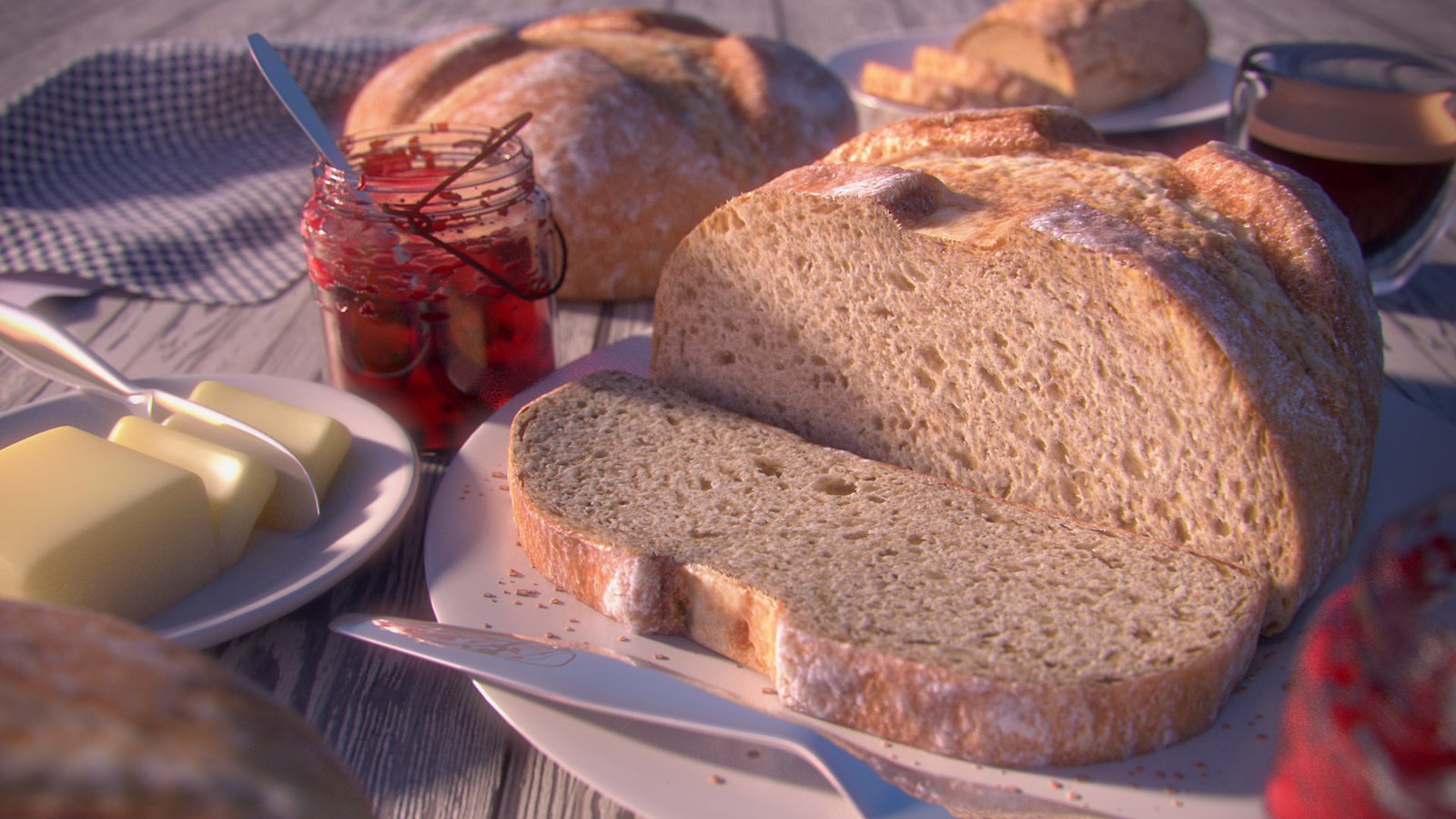
Finding the right guide for 3D software depends on your version, goals, and learning style. Beginners looking for the best Blender tutorials will find these books take different routes. Some focus on project work, while others offer broad references for tools like geometry nodes. If you want a fast portfolio, Blender 5.2 Project Method suits you best, while artists focused on world-building will prefer 3D Environment Design Blender.
As an Amazon Associate, we earn from qualifying purchases. This post contains affiliate links – if you buy through them, we may earn a commission at no extra cost to you.
1. Blender 5.2 Project Method

Best for: Students who want practical portfolio assets built in thirty days.
This manual targets readers who feel trapped following short online lessons without making original art. Its structured structure builds ten specific projects over thirty days to prepare you for job applications. Because it focuses strictly on practical production, you won’t spend endless hours on theory before making tangible 3D assets.
The book targets version 5.2 LTS, so its interface steps match modern software updates closely. However, committing to ten full portfolio builds in a month forces a brisk pace that leaves little room for slow experimentation. If you aren’t ready to produce professional portfolio items right now, this fast-paced roadmap won’t fit your current routine.
Good if:
- You want to complete ten distinct projects.
- You need a thirty-day schedule.
- You plan to build a job portfolio.
Skip it if:
- You prefer casual learning without set timelines.
- You use older software releases.
2. Blender 5.1 Mastery Guide

Best for: Creators who want deep coverage of lighting and movement loops.
This guide takes a thorough approach to 3D work by walking through interface setups, lighting, and materials. It stands out by guiding you through a perpetual motion loop, showing how animation and physics come together. That practical focus helps you see how standard tools function inside an active scene.
The content centers on the 5.1 update, ensuring the menu layouts match that specific release. Dedicated time spent on mechanical movement means less space for other specialty tasks like character rigging or digital clay sculpting. If your main goal is organic character art, this physics-heavy project choice won’t serve your needs.
Good if:
- You want to create looping animations.
- You enjoy clear steps for lighting and materials.
- You’re using the 5.1 software edition.
Skip it if:
- You only want character sculpting instructions.
- You already know the primary interface controls.
3. Learn Blender 5 Guide

Best for: Absolute beginners who need foundational steps for core 3D workflows.
Starting out in 3D can feel intimidating, but this handbook keeps things simple with direct instructions. It covers the core trio of digital production: building shapes, applying lighting, and producing final renders. By sticking to fundamental techniques, it avoids overwhelming you with confusing technical jargon.
Written for version 5, the instructions keep your workspace aligned with modern toolsets. The trade-off for this broad, beginner-level focus is that it stays away from advanced subjects like geometry nodes or complex simulation setups. Readers who want to tackle advanced technical topics right away will find this overview too elementary.
Good if:
- You have never opened 3D software before.
- You want straightforward instructions.
- You need to learn primary rendering concepts.
Skip it if:
- You want deep procedural node instruction.
- You already understand standard 3D interfaces.
4. Blender 5.2 Made Simple
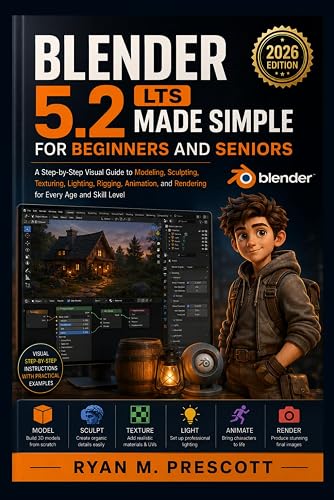
Best for: Readers wanting a visual manual that includes basic digital sculpting.
Visual learners often struggle with text-heavy software guides, but this handbook uses visual steps across multiple disciplines. It covers modeling, sculpting, texturing, lighting, rigging, animation, and rendering under one unified path. That broad scope lets you preview every stage of a typical production pipeline.
Targeted at version 5.2 LTS, it accommodates new users of any age, including older learners who want clear layouts. Spreading attention across sculpting, rigging, and animation means it offers a wide survey rather than an exhaustive dive into any single tool. If you need deep technical rigging instruction, this broad visual manual won’t provide it.
Good if:
- You learn best from clear visual examples.
- You want to try both sculpting and rigging.
- You work with the latest long-term support release.
Skip it if:
- You need deep procedural pipeline documentation.
- You prefer dense text without pictures.
5. 3D Environment Design with Blender 5

Best for: Artists looking to build realistic indoor and outdoor virtual worlds.
General 3D handbooks spread their time thin, but this publication focuses entirely on creating realistic digital environments. It sharpens your scene construction, material blending, and illumination skills to produce compelling settings. By zoning in on environmental art, it skips unrelated topics like character facial movement.
Designed around version 5, the techniques leverage modern rendering tools for world building. The narrow focus is great for digital world builders, but it means you won’t learn character rigging or complex motion cycles here. Skip this guide if your main goal involves character creation or physical movement.
Good if:
- You want to design large 3D environments.
- You need realistic lighting practices.
- You work in version 5.
Skip it if:
- You want to rig character skeletons.
- You need basic motion graphics instruction.
6. Beginner Guide Blender 5.1

Best for: Content creators making product imagery and quick social video clips.
This 2026 edition shows you how to design modern digital media assets without requiring prior graphic design experience. It details product visualization, social media renders, and basic movement to help you share your work online. The lessons directly address commercial digital display rather than technical movie pipelines.
Matched to version 5.1, the interface instructions align with recent updates. Emphasizing social posts and product shots means you won’t find deep character rigging or complex dynamic nodes inside. If you need an intensive guide for film production methods, this social-first manual won’t suit you.
Good if:
- You design social media content.
- You want to make clean product visuals.
- You have zero prior 3D experience.
Skip it if:
- You want advanced film animation pipelines.
- You work on older LTS program versions.
7. Blender 5.2 LTS Guide

Best for: Anyone who needs an easy, step-by-step 5.2 LTS production handbook.
Navigating long-term support software is easier when your handbook mirrors the exact interface layout. This manual gives new users a clear path through modeling, animation, rendering, and basic production setups. It keeps explanations simple so you don’t get lost in complex production jargon.
Because it targets version 5.2 LTS, it fits users who prefer stable software over experimental releases. Covering the full production line from mesh creation to rendering leaves less room for specialized advanced setups. If you want hyper-focused instruction on environment creation or procedural workflows, this general handbook won’t be enough.
Good if:
- You use the current long-term support software release.
- You want clear rendering workflows.
- You value straightforward, step-by-step instructions.
Skip it if:
- You need advanced node network layouts.
- You focus strictly on environment designs.
8. Blender 4.5 Part 1
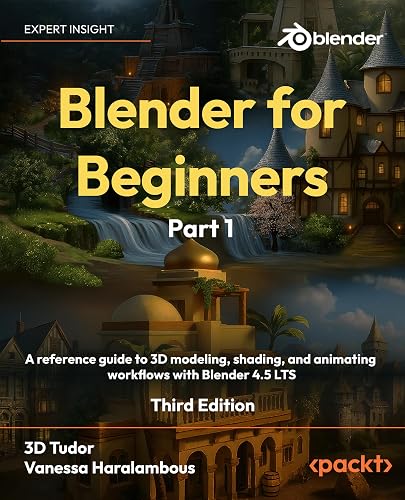
Best for: Learners who need foundational modeling and shading in version 4.5.
While many resources rush toward newer releases, this volume remains focused on the 4.5 LTS edition. It acts as an introductory reference for surface modeling, shading networks, and primary motion workflows. By focusing on foundational principles, it builds clean habits for organizing your workspace.
The trade-off here is structural, as this is explicitly labeled as Part 1 of a broader series. You get strong coverage of modeling and shading, but advanced rendering setups are saved for subsequent installments. If you want a single book that covers the whole pipeline from start to finish, this split volume won’t satisfy you.
Good if:
- You specifically run version 4.5 LTS.
- You want clear shading instructions.
- You prefer learning in separate, modular parts.
Skip it if:
- You need a single complete handbook.
- You already work in version 5.
9. Blender For Beginners

Best for: Beginners who want an easy introduction to modern geometry nodes.
Most beginner manuals skip procedural nodes entirely because the math and connection logic can confuse new artists. This guide breaks that barrier by combining standard modeling, materials, and lighting with an accessible look at geometry nodes. That inclusion helps you understand modern procedural asset creation without feeling lost.
The step-by-step layout keeps your practice manageable as you connect nodes and build scenes. However, introducing procedural geometry alongside materials and lighting means each subject receives a concise overview rather than exhaustive analysis. If you don’t intend to use procedural node systems, that specialized material won’t help you.
Good if:
- You want to try geometry nodes early on.
- You need an easy step-by-step pace.
- You want balanced coverage across materials and lighting.
Skip it if:
- You avoid procedural, node-based workflows.
- You only want physical sculpting tutorials.
10. Blender 2025 Guide

Best for: Students who want direct instructions for core 2025 animation methods.
This 2025 release gives new creators a reliable baseline for 3D modeling, rendering, and keyframe work. The step-by-step instructions ensure you won’t guess which menu option to click next. By emphasizing predictable, clean methods, it helps you build solid habits on your computer.
The book focuses firmly on core animation and modeling workflows for its target software year. Because it emphasizes baseline execution, it doesn’t spend time on niche topics like procedural node tools or environment world-building. If you want advanced procedural systems, this core tutorial won’t cover them.
Good if:
- You want straightforward instructions for 2025 tools.
- You need dependable animation fundamentals.
- You prefer clear, direct text guidance.
Skip it if:
- You want advanced procedural geometry systems.
- You prefer visual-only handbooks without technical steps.
Finding the Best Blender Tutorials
Many options on this list share common ground. Beginners looking at general introductions like Blender 5.2 LTS Guide, Learn Blender 5 Guide, and Blender 2025 Guide will find they cover nearly identical basics: modeling shapes, setting lights, and rendering scenes. Choosing between them usually comes down to which exact version you run on your machine. Specialized books break away from this shared baseline. Blender Project Method emphasizes a strict month-long schedule, while 3D Environment Design Blender ignores general subjects to concentrate entirely on building natural scenery.
Still Not Sure?
How much time can you commit each day?
If you have steady daily study time and want to see results quickly, an aggressive schedule keeps you motivated. A structured daily target forces you to build assets every session without stalling. For a clear month-long roadmap with ten finished builds, turn to the Project Method guide.
Which version of the software are you running?
Interface buttons and node menus change positions between major software updates, so working with the wrong reference can cause confusion. Checking the splash screen when your application opens helps you pick a guide that matches your layout. If your workstation runs the older long-term release, pick Blender 4.5 Part 1.
Do you want general basics or a specific specialty?
Starting with general basics gives you a broad view of 3D art, but it won’t help if your heart is set on digital worlds. Focusing on your exact creative interest makes studying much more engaging. If your main goal is building expansive digital landscapes and realistic lighting, choose 3D Environment Design Blender.
If you want a strict schedule to build a complete portfolio, get the Project Method guide. If you prefer building landscapes and lighting realistic scenes, pick 3D Environment Design Blender. Check your software version number first, then pick the guide that matches your goals.
Frequently Asked Questions
What does learning Blender require of you week to week?
Learning 3D creation demands consistent, hands-on practice at your computer rather than passive reading. You’ll need to spend several hours every week navigating viewports, testing lighting setups, and fixing geometry errors. Progress comes from repeating core commands until menu layouts and hotkeys become second nature.
Do you need extra add-ons or subscriptions to follow these guides?
No, you don’t need paid add-ons because the software comes complete with modeling, sculpting, and rendering engines built right in. You can check the official Blender Foundation system requirements to ensure your computer hardware supports modern rendering tasks without issues.
What should you do once you finish an introductory guide?
After completing an introductory manual, you’ll have mastered core tools like basic meshes, simple materials, and final rendering. When you outgrow those foundational chapters, your next step is picking an advanced focus like character rigging, sculpting, or procedural nodes to build deeper specialized skills.
Would an advanced specialty guide suit you better than a beginner manual?
Specialized guides can overwhelm you if you don’t know how to navigate the 3D viewport or apply basic transforms. Starting with an advanced book often leads to frustration because it skips foundational menu navigation. Master basic navigation first before investing your time in specialized texts.
Conclusion
Choose the path that sparks your curiosity and dive into your first project today. You don’t need to be perfect right away; just focus on finishing one small scene. Once you’ve built your confidence, you’ll find that creating your own unique 3D worlds becomes much easier than you’d ever imagined.