
As an Amazon Associate, we earn from qualifying purchases. This post contains affiliate links, and buying through one costs you nothing extra.
Finding the best render farm for blender for your needs isn’t about finding one perfect machine, but matching hardware to your specific workflow. Whether you prioritize core counts for complex simulations or raw GPU power for fast viewport rendering, your choice depends on the scale of your projects and your software habits. These workstations vary significantly in their architecture, balancing high-speed memory against massive storage arrays. If you’re a professional needing maximum render throughput, look at the multi-core servers, while those focused on high-end 3D animation will find more value in the specialized Threadripper builds.
1. Cloud Ninjas Blender Workstation

Best for: Someone who needs a balanced, high-performance machine for everyday professional rendering.
This workstation centers on the Threadripper 9970X with 24 cores, providing a solid foundation for both CPU-based rendering and multitasking in Blender. With 256GB of ECC memory, it handles heavy scenes without stability concerns, while the RTX 5090 GPU ensures fast performance for real-time viewport tasks.
The inclusion of dual-port 10GbE networking is a major benefit for teams that need to move large assets across a network quickly. However, this system isn’t for users who require extreme core counts for massive parallel simulations, as it prioritizes a mix of speed and professional reliability.
Good if:
- You work with complex, memory-intensive 3D scenes.
- You need high-speed network connectivity for file transfers.
- You want a reliable, professional-grade workstation setup.
Skip it if:
- You require a compact, space-saving desktop footprint.
- Your workflow relies primarily on CPU-only rendering tasks.
2. Adamant Custom 64-Core Liquid Cooled Workstation Computer PC AMD Threadripper

Best for: Professionals who demand the absolute highest multi-core rendering performance available.
Equipped with the 64-core Threadripper PRO 9985WX, this workstation is built for heavy-duty production environments where render time is the primary bottleneck. The 512GB of ECC RAM allows for the loading of exceptionally large datasets, and the 280mm liquid cooling system keeps the processor stable during long, sustained rendering jobs.
Good if:
- You run massive, complex simulations or multi-layered renders.
- You need the highest possible core count for your software.
- You prefer a liquid-cooled system for thermal management.
Skip it if:
- You have limited desk or floor space for a workstation.
- Your projects are smaller and don’t require massive RAM capacity.
3. Adamant Custom 32-Core Workstation Desktop Computer PC AMD Ryzen Threadripper

Best for: Users seeking a professional mid-range balance between high core counts and GPU capabilities.
This workstation uses the 32-core Threadripper PRO 9975WX, which offers a great middle ground for general 3D artists. The RTX 4500 Blackwell GPU provides specialized performance for professional applications, and the 64GB of ECC RAM is sufficient for most standard animation and modeling tasks.
Good if:
- You want professional, reliable components for 3D modeling.
- You need a balance of CPU power and professional GPU features.
- You value the stability of ECC memory for long renders.
Skip it if:
- You regularly work with extremely high-polygon, massive-scale scenes.
- You intend to use the machine primarily for gaming.
4. Cloud Ninjas Silent Owl AI Workstation Designed

Best for: Professionals who need high power in a compact, efficient workstation design.
The Silent Owl features the Core Ultra 9 285K, offering high clock speeds that excel in single-threaded tasks like modeling and interface responsiveness. Its 128GB of DDR5 memory and RTX 5080 GPU create a powerful environment for mid-to-high-tier Blender work without occupying the space of a full-sized server tower.
This system is built for performance in a smaller footprint, but it uses non-ECC memory, which is a consideration for those who prioritize maximum data integrity over raw clock speed.
Good if:
- You work in a space-constrained professional studio environment.
- You prioritize high clock speeds for modeling and viewport work.
- You need a modern, fast storage system for large project files.
Skip it if:
- Your production environment strictly requires ECC memory.
- You need the maximum core count available for background rendering.
5. Adamant Custom 16-Core CAD 3D Modelling Animation Rendering Workstation Computer

Best for: Entry-level artists or students who need a reliable, capable rendering workstation.
This build is anchored by the 16-core Ryzen 9 9950X, providing a strong starting point for 3D animation and CAD workflows. The 48GB of DDR5 RAM and RTX A400 GPU are designed to handle standard modeling and rendering tasks effectively, while the large 10TB HDD provides plenty of space for long-term project archiving.
Good if:
- You’re setting up your first dedicated rendering workstation.
- You need significant storage space for large asset libraries.
- You prioritize a liquid-cooled CPU for quieter operation.
Skip it if:
- You need high-end GPU performance for real-time ray tracing.
- Your workflow involves complex, multi-threaded simulation tasks.
6. PCSP T7920 Rendering & Virtualization Studio Workstation
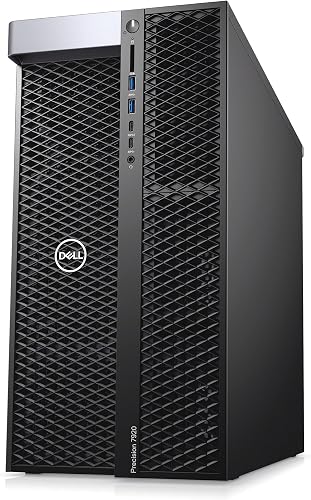
Best for: Teams or individuals doing heavy virtualization alongside their rendering tasks.
The PCSP T7920 uses dual Gold 6140 processors to deliver 36 cores and 72 threads of computing power. This architecture is specifically designed for server-like tasks, making it a unique choice for artists who need to run rendering nodes and virtual machines on the same hardware.
This workstation is a different beast compared to modern consumer-grade towers, relying on DDR4 memory and an older architecture. It’s best suited for those who already have a specific workflow that benefits from massive thread counts and server-class stability.
Good if:
- You need to run virtualization and rendering tasks simultaneously.
- You require a high thread count for parallel processing.
- You want a workstation built for 24/7 server-style reliability.
Skip it if:
- You prefer the latest CPU architecture and memory standards.
- You need high-end GPU performance for real-time viewport rendering.
7. Cloud Ninjas Shadow Leopard Workstation
Best for: Artists focusing on high-fidelity animation who need pro-grade GPU features.
This workstation features a 32-core Threadripper 9970X paired with the RTX PRO 4000 ADA card. This combination is highly effective for Blender users who need the specific driver support and stability provided by professional-grade graphics cards while maintaining high CPU core counts for rendering.
The inclusion of both 10GbE and Wi-Fi 7 networking makes this an incredibly well-connected machine. It’s a balanced, high-end professional tool that doesn’t sacrifice connectivity for raw processing power.
Good if:
- You use professional GPU drivers for specialized rendering tasks.
- You need high-speed connectivity for collaborative studio workflows.
- You want a balance of CPU cores and professional GPU performance.
Skip it if:
- You need the absolute highest core count for CPU-only simulations.
- You prefer a standard gaming-style GPU for your rendering.
8. Cloud Ninjas Threadripper Workstation

Best for: High-demand production artists who need massive local storage speed.
This build is a powerhouse, featuring a 24-core Threadripper 9960X and the powerful RTX 5090. What sets it apart is the massive storage configuration, including an 8TB PCIe Gen4 SSD and a 4TB Gen5 SSD, making it perfect for working with uncompressed 4K or 8K video and massive 3D assets.
With 256GB of ECC RAM, it’s clearly intended for high-stakes production where data loss isn’t an option. This is a premium machine for those who have outgrown storage bottlenecks and need a workstation that can handle massive files without stuttering.
Good if:
- You work with extremely large raw video or 3D files.
- You need the fastest possible read/write speeds for your storage.
- You require the stability of ECC memory for long-term projects.
Skip it if:
- Your projects are small and don’t require massive storage arrays.
- You don’t need the highest-tier GPU for your specific rendering.
9. Adamant Custom 24-Core CAD 3D Modelling Animation Rendering Workstation Computer

Best for: Modern 3D artists who want the latest Intel processor technology.
Using the 24-core Intel Core Ultra 9 285K, this workstation provides excellent performance for modern creative suites. The 8TB of NVMe storage and RTX PRO 4000 Blackwell GPU make it a capable machine for complex animation and rendering, all within a well-cooled liquid setup.
This is a modern, high-performance workstation that fits well into current studio pipelines.
Good if:
- You prefer the current Intel Core Ultra performance architecture.
- You need a large amount of high-speed NVMe storage.
- You want a professional GPU for reliable rendering.
Skip it if:
- You require the multi-core scaling provided by Threadripper platforms.
- You need more than 32GB of RAM for your 3D scenes.
10. Adamant Custom 16-Core CAD 3D Modelling Animation Rendering Workstation Computer
Best for: Animators who want a balance of performance and long-term storage capacity.
This system is built around the 16-core Ryzen 9 9950X3D2, offering a unique CPU choice for those who might also do some light gaming or software testing alongside their 3D work. You will find ample room for active and archived projects thanks to the 8TB SSD and 10TB HDD storage combination.
Good if:
- You need massive storage for both active and archived projects.
- You want a versatile workstation for mixed-use creative tasks.
- You prefer the latest high-performance consumer CPU architectures.
Skip it if:
- You need a powerful GPU for intensive real-time rendering.
- You’re working with extremely complex simulations requiring high RAM.
Choosing the Best Blender Render Farm
Many of these workstations share similar performance profiles, especially the builds using the Threadripper 9970X and 9960X. The choice between these often comes down to the specific GPU and storage configurations rather than the CPU itself. For instance, the Cloud Ninjas Shadow Leopard and the Cloud Ninjas Threadripper Workstation are both highly professional, but the latter focuses more on storage speed, while the former balances professional GPU features with networking flexibility. If you’re comparing the Adamant Custom 16-core models, the primary difference is the storage and specific GPU, making the decision easier once you know your specific file management needs. Standardizing your hardware choice to the ENERGY STAR guidelines for computing equipment can ensure your workstation remains efficient during long rendering sessions.
Still Not Sure?
How often will I really use it?
If you render only a few times a week, a high-end workstation like the Adamant Custom Ryzen will likely handle your needs perfectly. However, if you’re running renders 24/7, the server-grade components in the PCSP T7920 Studio provide the reliability you need to keep your production moving without interruption.
What do I already own that this has to work with?
Think about your current monitor setup and networking gear. If you already have a 10GbE network, the Cloud Ninjas Shadow Leopard is a natural fit. If you’re moving from a standard PC and need to store years of project files, the Adamant Custom workstation is a great way to consolidate your data.
What am I most likely to regret choosing?
The most common regret is choosing a machine with too little RAM for your typical scene complexity. If you work in high-end 3D animation, the 512GB ECC capacity of the Adamant Custom 64-Core Liquid will save you from future upgrades. For most professional artists, this ensures you won’t hit a wall mid-project.
Related guides
- I Tested Vital Farms Eggs: Honest Review
- 10 Best Addons for Blender to Improve Your Workflow
- 10 Best Blender Addons for Modeling: Our Expert Picks
Frequently Asked Questions
What does it ask of its owner week to week?
Most of these workstations are “set and forget,” but you should monitor your drive space and dust build-up. The liquid-cooled models like the Adamant Custom workstation require you to periodically check that the radiator fans are clear of debris to ensure your CPU maintains its optimal clock speed during long renders.
What has to be replaced or renewed to keep it working?
For the most part, these systems don’t require regular part replacements. However, if you’re using a workstation with a large HDD array, you should plan for periodic data backups to external drives.
What happens when it’s outgrown or used up?
When you eventually outgrow your workstation, you can often repurpose it as a dedicated render node. If you started with the Adamant Custom 32-Core, it could become a powerful background machine for a newer, faster system, especially since these Threadripper platforms offer excellent longevity and support for heavy, long-term computational tasks.
Would the more capable one on this list have suited me better?
Your ideal model depends entirely on your scene size. If you frequently hit memory limits or face long render times, the 64-core or 256GB RAM configurations are necessary to eliminate those bottlenecks. However, these high-end specifications may remain largely underutilized if you only render occasionally.
Conclusion
Choosing the right service doesn’t have to be a headache once you identify your project’s primary needs. Take a moment to run a few test frames on your top two choices to see how they handle your specific lighting setup. You’ll find that a little experimentation goes a long way toward smoother production days.