
As an Amazon Associate, we earn from qualifying purchases. This post contains affiliate links – if you buy through them, we may earn a commission at no extra cost to you.
Finding the blender best image program for blender skethes requires looking at how you prefer to learn. Some users thrive with a deep, technical manual, while others need a visual, project-based approach to get moving quickly. Your choice depends on whether you’re a complete beginner, a student looking for a workflow boost, or a professional refining your skills. The main split is between those who want a broad, all-in-one resource like the Blender 5.2 LTS User Guide and those who need focused, project-based help like the Blender 5.1 Mastery Guide.
1. Blender 5.2 LTS User Guide

Best for: Someone who wants a single, comprehensive reference for all features.
This manual provides a broad overview of the software. It covers everything from basic 3D modeling to complex pipeline tasks like geometry nodes and game asset creation.
If you’re a student or a professional, this book offers the breadth required to jump between different tasks. Beginners might find the sheer volume of information overwhelming without a project-based focus.
Good if:
- You want a complete reference for all software versions.
- You need details on professional workflows and asset creation.
- You prefer having one book for every potential task.
Skip it if:
- You only need to learn one specific feature.
- You prefer a small, quick-start guide.
2. Blender 5.1 Mastery Guide

Best for: A learner who needs to build real projects to stay focused.
This guide focuses on step-by-step project creation. By building a perpetual motion loop and mastering lighting and materials, you learn by doing. It emphasizes the interface and practical application rather than just theory.
This approach is best for those who get bored with traditional manuals. If you prefer to learn by following a specific creative path, this is a strong choice.
Good if:
- You learn best by building real objects.
- You want to master the interface through practice.
- You enjoy project-based learning paths.
Skip it if:
- You prefer a textbook-style reference.
- You want to learn every menu in order.
3. Blender 5.2 LTS Made Simple
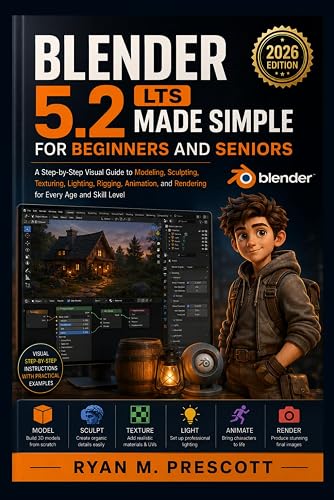
Best for: Beginners and seniors who want a clear, visual guide.
This guide uses a step-by-step visual method to teach modeling, sculpting, and rendering. It’s written to be accessible for every age and skill level. It breaks down complex 3D processes into simple, manageable steps.
The focus here is on clarity and visual instruction. It isn’t meant for advanced users seeking deep technical dives into Python automation or complex rendering pipelines.
Good if:
- You learn best with clear, visual aids.
- You’re a beginner or looking for a simple start.
- You want to cover the basics of rigging and animation.
Skip it if:
- You’re looking for advanced coding or scripting.
- You want a deep technical manual for professionals.
4. Blender 5 Best Practices

Best for: Users who want to optimize their current workflow.
This book is for those who already know the basics and want to achieve speed. It focuses on procedural assets and advanced techniques to help you work more efficiently. It’s built for optimization.
This is a technical guide for the intermediate or advanced user. If you’re a beginner, the lack of foundational step-by-step tutorials might be a barrier.
Good if:
- You want to speed up your production time.
- You have experience and want to learn advanced techniques.
- You focus on procedural asset creation.
Skip it if:
- You’re brand new to 3D software.
- You need a manual for basic modeling tools.
5. Blender 3D By Example

Best for: Users who want to learn the EEVEE rendering engine.
This is a project-based guide that highlights the latest rendering engines and the Grease Pencil tool. It uses examples to explain how to integrate different parts of the software. It provides a practical look at how to build scenes.
The example-driven approach is great for seeing how features work together in a real scene.
Good if:
- You want to learn the EEVEE engine.
- You’re interested in using the Grease Pencil.
- You prefer learning through practical examples.
Skip it if:
- You want a comprehensive reference manual.
- You only need to learn standard 3D modeling.
6. Blender 2D Animation Guide
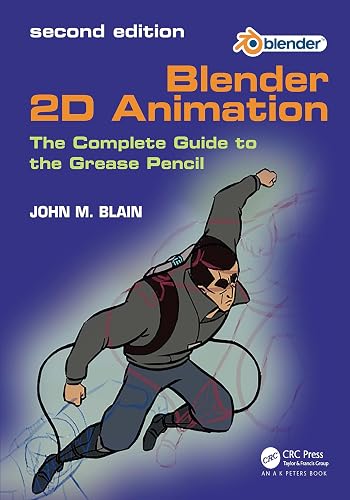
Best for: Artists specifically interested in Grease Pencil animation.
This book is a specialized manual for the Grease Pencil tool. It treats 2D animation within the 3D environment as the main subject.
If your primary goal is 2D animation, this keeps you from digging through unrelated 3D modeling chapters. However, it won’t help you if you want to learn 3D sculpting or complex rendering for product visuals.
Good if:
- You focus on 2D animation within the software.
- You want to master the Grease Pencil toolset.
- You want a guide that ignores irrelevant 3D tools.
Skip it if:
- You’re interested in 3D modeling or rendering.
- You want a general overview of the whole program.
7. Blender Dummy-Proof Guide

Best for: The absolute beginner who is intimidated by software.
This guide is written for people who have never touched 3D software before. It even includes AI and animation tutorials to get you started.
The “dummy-proof” style is great for removing anxiety. It isn’t a book for someone who already knows their way around a 3D interface. Advanced users will likely find the pace too slow for their needs.
Good if:
- You have zero experience with 3D software.
- You want a very gentle, simple introduction.
- You’re interested in basic animation and AI tools.
Skip it if:
- You have used other 3D software before.
- You want a fast-paced professional guide.
8. Blender 5.2 User Guide

Best for: Someone who wants a balance of workflow and practical tasks.
This guide covers a wide range of topics, including VFX and creative workflows. It bridges the gap between basic modeling and professional VFX work.
It’s a solid, middle-of-the-road choice for someone who wants to explore different areas. It doesn’t specialize in one area, which means it covers a lot of ground but might not go as deep as a specialized handbook.
Good if:
- You want to learn about VFX and creative workflows.
- You prefer a practical approach to 3D modeling.
- You want a broad overview of many features.
Skip it if:
- You have a very specific focus, like only 2D animation.
- You need an advanced technical masterclass.
9. Blender 5.2.1 LTS Guide

Best for: The professional looking for a technical masterclass.
This guide is for the user who wants to understand pipeline automation and geometry nodes. It’s highly technical and covers advanced rendering with Cycles. It’s built for those who want to master the software’s architecture.
The technical depth is excellent for pipeline work, but it isn’t for the hobbyist. If you just want to make a quick sketch, the depth here might be overkill.
Good if:
- You want to master pipeline automation.
- You’re interested in advanced geometry nodes.
- You need a masterclass on Cycles rendering.
Skip it if:
- You’re a casual user or beginner.
- You don’t need to automate your workflow.
10. Blender 5.2 LTS Handbook
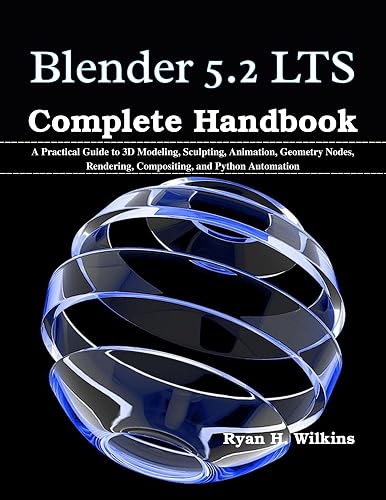
Best for: The user who wants a permanent reference on their desk.
This handbook covers Python automation, compositing, and geometry nodes. It’s structured as a practical tech companion. It’s designed for those who need to look things up quickly while working.
It’s a comprehensive reference, but its strength is as a handbook rather than a tutorial book. It’s best if you already have some experience and need a quick, reliable source for advanced tasks.
Good if:
- You want a desk reference for advanced features.
- You’re interested in Python automation.
- You need quick answers to complex workflow questions.
Skip it if:
- You’re looking for step-by-step beginner tutorials.
- You prefer a purely visual learning experience.
Best Image Programs for Blender Sketches
Many of these guides cover the same ground, particularly regarding standard modeling and rendering workflows. Books like the Blender 5.2 LTS User Guide and the Blender 5.2 LTS Handbook share a lot of content for users who need a broad reference. The choice between them often comes down to the style of the text—whether you prefer a structured manual or a quick reference handbook. For the beginner, the Blender 5.2 LTS Made Simple and the Blender Dummy-Proof Guide are very close in intent. They both prioritize accessibility. The difference is mostly in the tone and the specific projects they suggest for practice.
Still Not Sure?
How often will I really use it?
If you plan to use the software every day for professional work, you need a deep reference like the Blender 5.2.1 LTS Guide. For casual users who only open the program once a month, a simpler, visual book like Blender 5.2 LTS Made Simple is much easier to pick back up.
What do I already own that this has to work with?
Think about your current skill level and what you need to achieve. If you’re already comfortable with modeling but struggle with speed, look at Blender 5 Best Practices. If you’re starting from zero and have no 3D experience, the Blender Dummy-Proof Guide is the best place to begin.
What am I most likely to regret choosing?
Regret usually comes from buying a book that’s too technical for your current level. If you’re a beginner, choose a guide focused on foundational skills rather than advanced masterclasses. Always match the book’s stated goal—whether it is “masterclass” or “beginner-friendly”—to your actual goals to ensure you find the official Blender documentation helpful as a secondary resource.
Frequently Asked Questions
Which guide is best for learning 2D animation?
The Blender 2D Animation Guide is the top choice for this specific goal. It focuses entirely on the Grease Pencil tool, which is the heart of 2D work in the software. Other manuals cover it as a sub-topic, but this guide gives you the deep dive necessary for animation projects.
Do I need a technical guide to learn geometry nodes?
Yes, if you want to master them, the latest long-term support guides are better than general beginner books. Geometry nodes are a complex, technical feature. These guides provide the specific workflow explanations needed to understand how to build procedural assets and automate your pipeline.
Can a senior citizen learn to use this software easily?
Yes, the latest long-term support guide is specifically designed to be accessible for every age. It uses a step-by-step visual approach that avoids unnecessary jargon. By following the visual steps, you can learn at your own pace without feeling overwhelmed by the technical depth of the interface.
Is there a difference between the versions mentioned in these books?
Yes, the version numbers on the cover indicate the specific software build the book was written for. While the core tools remain similar, the LTS (Long Term Support) versions are more stable for professional work. Choose the book that matches the version you have installed to ensure the interface and features align with your screen.
Conclusion
Don’t feel pressured to pick the perfect resource right away. Just choose the one that feels most comfortable for your current projects and start creating today. You’ll find that your skills grow naturally as you practice, so don’t be afraid to experiment until you find the workflow that really clicks for you.