As an Amazon Associate, we earn from qualifying purchases. This post contains affiliate links – if you buy through them, we may earn a commission at no extra cost to you.
Finding the right way to manage blender best render presets for printing cycles depends on what you want to achieve with your 3D work. Some users focus on the technical side of printing, while others prioritize the visual quality of their renders. Your choice should match your skill level and your specific project goals. If you need technical precision for physical objects, look at the modeling guides; if you want cinematic visuals, look at the rendering and material books.
1. Blender Rendering with Cycles

Best for: Someone wanting a complete overview of the Cycles engine.
This book covers the core workflows needed to master lighting and HDRI setups. It’s designed for those who want to move beyond basic settings and achieve photorealistic results in their final output. The focus remains on the engine’s capabilities and how to configure them for high-quality images.
The guide is structured to help you understand how different settings interact during the render process. It isn’t intended for users who only care about the mechanical aspects of 3D printing. If your goal is to make your digital work look realistic, this is a solid starting point.
Good if:
- You want to learn advanced lighting techniques.
- You need to master HDRI workflows.
- You’re focused on photorealistic 3D output.
Skip it if:
- You’re looking for specific 3D printing advice.
- You prefer a project-based cookbook style.
2. Photorealistic Materials Blender Cycles

Best for: Users who want to make their textures look lifelike.
This book focuses on the materials and textures that bring a scene to life. It explains how to create production-ready projects by utilizing the power of the Cycles rendering engine. It’s a great resource if you struggle with making your surfaces look authentic.
The content assumes you want to push the rendering engine to its limits for professional results. It isn’t for users who only need basic material nodes or those who are just starting with the interface. You’ll get the most out of this if you already understand basic modeling.
Good if:
- You want to improve your texturing skills.
- You’re building production-ready 3D scenes.
- You want to master the Cycles engine materials.
Skip it if:
- You need a general guide to all Blender features.
- You’re purely focused on 3D printing.
3. Blender Cycles Materials Cookbook

Best for: Someone who likes learning through practical, step-by-step recipes.
This book provides a collection of recipes for creating various materials and textures. It is the third edition. It’s perfect for those who want to see how specific effects are built without reading long theory chapters.
Because it uses a cookbook format, you can jump to the material you need and follow the steps. It isn’t designed to teach you the entire pipeline from modeling to animation. If you want to build a library of material techniques, this is a very useful tool.
Good if:
- You learn best by following practical examples.
- You want a variety of material recipes.
- You need quick solutions for texture creation.
Skip it if:
- You want a deep dive into lighting theory.
- You need comprehensive animation instructions.
4. Blender Precise Modeling

Best for: Architects and engineers who need exact measurements for printing.
This book is tailored for those who use Blender for architecture and engineering. It emphasizes the precision required to move a design from the screen to a physical object. If you need your models to be accurate to the millimeter, this guide is built for your needs.
The focus here is on the modeling tools that ensure your mesh is ready for 3D printing. It isn’t for artists who prioritize organic sculpting or those who only want to learn rendering. This is for the person who needs their digital project to function in the real world.
Good if:
- You’re working on architectural projects.
- You need high precision for 3D printing.
- You’re doing engineering-based 3D design.
Skip it if:
- You’re primarily interested in artistic sculpting.
- You want to focus on complex lighting and rendering.
5. Blender for 3D Printing and Product Design

Best for: Beginners who want to start 3D printing from scratch.
This guide takes you through the entire process, from initial modeling to exporting your files for a printer. It covers sculpting, geometry nodes, and mesh optimization, which are vital for successful prints. It’s written to be beginner-friendly so you don’t get stuck on technical hurdles.
The book emphasizes real-world projects, ensuring that what you build can actually be printed. It isn’t for advanced users who have already mastered the basics of STL export and mesh repair. If you’re new to the world of additive manufacturing, this is your primary reference.
Good if:
- You’re a beginner to 3D printing.
- You want to learn about mesh optimization.
- You need a step-by-step guide for printable projects.
Skip it if:
- You’re already an expert in 3D modeling.
- You only care about high-end rendering settings.
6. Blender 5 Best Practices

Best for: Users who want to speed up their daily workflow.
This book covers advanced techniques to help you work with efficiency. It deals with procedural assets and optimization, which are key to maintaining performance in large scenes. It’s perfect for anyone who feels like their current process is too slow or messy.
By mastering these best practices, you can handle more complex modeling and animation tasks with ease. It isn’t for the person who is just opening Blender for the first time. If you want to professionalize your workflow, this is a great resource.
Good if:
- You want to optimize your modeling workflow.
- You’re interested in procedural asset generation.
- You want to master advanced Blender techniques.
Skip it if:
- You’re a total beginner.
- You’re only interested in 3D printing.
7. Blender 3D Incredible Models
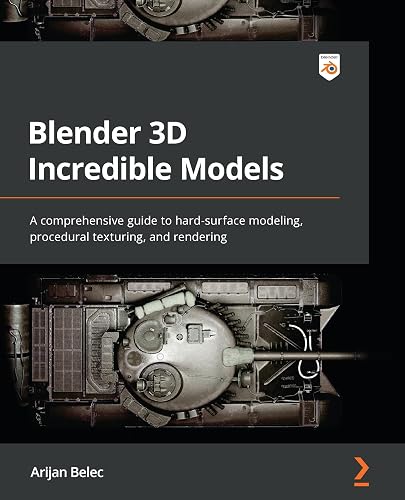
Best for: Artists focusing on hard-surface modeling and texturing.
This guide provides a comprehensive look at how to build and render hard-surface models. It covers everything from the initial shape to procedural texturing and the final render. It’s a great choice for those who want their models to look sharp and realistic.
The book ties together modeling and rendering, giving you a full view of the artist’s pipeline. It isn’t for those who want a light introduction to the software. You’ll need some patience to work through the comprehensive nature of these tutorials.
Good if:
- You’re interested in hard-surface modeling.
- You want a guide that covers the whole pipeline.
- You enjoy procedural texturing techniques.
Skip it if:
- You prefer short, quick-fix tutorials.
- You’re focused on soft, organic shapes.
8. Das Blender-Training Compositing

Best for: Those who want to integrate rendering with visual effects.
This book explores the entire pipeline, including the compositor and sequencer. It shows how Cycles rendering fits into a larger workflow involving visual effects and final output. It’s a great resource for anyone who wants to create polished, professional-looking final products.
The scope is broad, covering both the rendering engine and the post-processing tools. It isn’t for the user who only wants to model or only wants to print. If you want to bridge the gap between a raw render and a final, composited image, this is the book.
Good if:
- You want to learn about the Blender compositor.
- You’re interested in visual effects integration.
- You want to master the full rendering pipeline.
Skip it if:
- You only want to learn 3D printing.
- You prefer a narrow focus on one tool.
9. Blender 4.0 Precise Modeling

Best for: Users who need technical accuracy for engineering tasks.
Similar to the 5.0 version, this book focuses on the precision needed for architecture and engineering. It’s a reliable guide for ensuring your models are technically sound for 3D printing.
The book is structured to ensure that your technical requirements are met throughout the modeling process. It isn’t for artists who want to focus on creative, non-technical modeling. If your work requires exact measurements, this is a essential guide.
Good if:
- You need to perform precise architectural modeling.
- You’re working on engineering projects.
- You need to prepare models for 3D printing.
Skip it if:
- You’re looking for creative, abstract modeling.
- You only care about rendering aesthetics.
10. Blender 5.2 Zero Render

Best for: Beginners who want a clear path to their first render.
This book is designed to take you from zero knowledge to a completed render. It covers both modeling and animation in a step-by-step fashion. It’s perfect for the person who wants a structured learning path without getting overwhelmed by advanced features.
The book focuses on the basics of the render pipeline, ensuring you understand the fundamentals of getting an image out of the software. It isn’t for the advanced user who already knows how to navigate the interface. If you want a solid foundation, start here.
Good if:
- You’re a beginner starting from zero.
- You want a step-by-step guide to animation.
- You need to understand the basic render pipeline.
Skip it if:
- You’re an advanced user.
- You’re only interested in specialized 3D printing tools.
Where These Overlap
Many of these books share a common goal: helping you master the Blender interface to create high-quality output. Books like Blender Rendering with Cycles and Blender 5.2 Zero Render overlap significantly in their intent to teach the rendering pipeline. The main difference lies in the depth of technical detail versus the speed of the learning curve. For example, Blender Precise Modeling and Blender 4.0 Precise Modeling are very similar in their technical focus, so your choice there should simply depend on which version of the software you’re currently using. If you need general knowledge, the differences are minor; if you have a specific goal like 3D printing, the differences become very clear.
Still Not Sure?
How often will I really use these techniques?
If you’re working on daily professional projects, a comprehensive guide like Blender 3D Incredible Models will serve you well. If you’re just doing occasional hobby work, a cookbook like Blender Cycles Materials Cookbook allows you to learn small, useful skills without committing to a massive, long-term project.
What do I already own that this must work with?
If you’re already committed to a specific version like 4.0 or 5.2, look for the book that matches your software version to avoid confusion with interface changes. Blender 4.0 Precise Modeling is the safest bet for that specific version, while Blender 5.2 Zero Render is best for newer users.
What am I most likely to regret choosing?
You’ll regret choosing a book that’s too technical if you’re a beginner, or too basic if you’re an expert. If you want to print your models, don’t pick a rendering-only book. Instead, choose Blender 3D Printing Design to ensure your project is actually compatible with your physical printer.
ISO 10303 (also known as STEP) is the international standard for the computer-interpretable representation and exchange of product manufacturing information.
Related guides
- 10 Best Render Settings for Animation Blender to Optimize Speed
- 10 Best Blender Tutorials for 3D Printing: Our Expert Picks
Frequently Asked Questions
Which book is best for someone who has never used Blender?
Blender 5.2 Zero Render is the best choice for a complete beginner. It’s designed to take you from a blank screen to a final render in a step-by-step way. It avoids overwhelming you with advanced features until you have mastered the basics of the modeling and rendering pipeline.
Does the book I choose affect my 3D printing results?
Yes, choosing a book like Blender 3D Printing Design or Blender Precise Modeling is vital. The listing doesn’t mention the factors for successful 3D prints. Rendering-focused books will teach you about light and color but won’t help you fix broken meshes.
Can I use these render settings for all types of 3D printing?
Most rendering settings are for screen-based images, not physical objects. If you’re printing, you should focus on the modeling chapters in books like Blender 4.0 Precise Modeling. The render settings in Blender Rendering with Cycles are for digital art, not for the physical properties of your printer.
Are these books updated for the latest software versions?
Some titles, like Blender 5.2 Zero Render and Blender 4.0 Precise Modeling, are explicitly written for specific versions. Always check the version number in the title before you buy. Using a book written for an older version may mean the interface looks different, making it harder to follow the steps correctly.
Conclusion
Once you’ve finalized your settings, try printing a small test piece to see how your digital choices translate to the real world. It’s a great way to learn what works best for your specific printer. Don’t be afraid to experiment, as you’ll soon find the perfect balance for your future projects.