
As an Amazon Associate, we earn from qualifying purchases. This post contains affiliate links – if you buy through them, we may earn a commission at no extra cost to you.
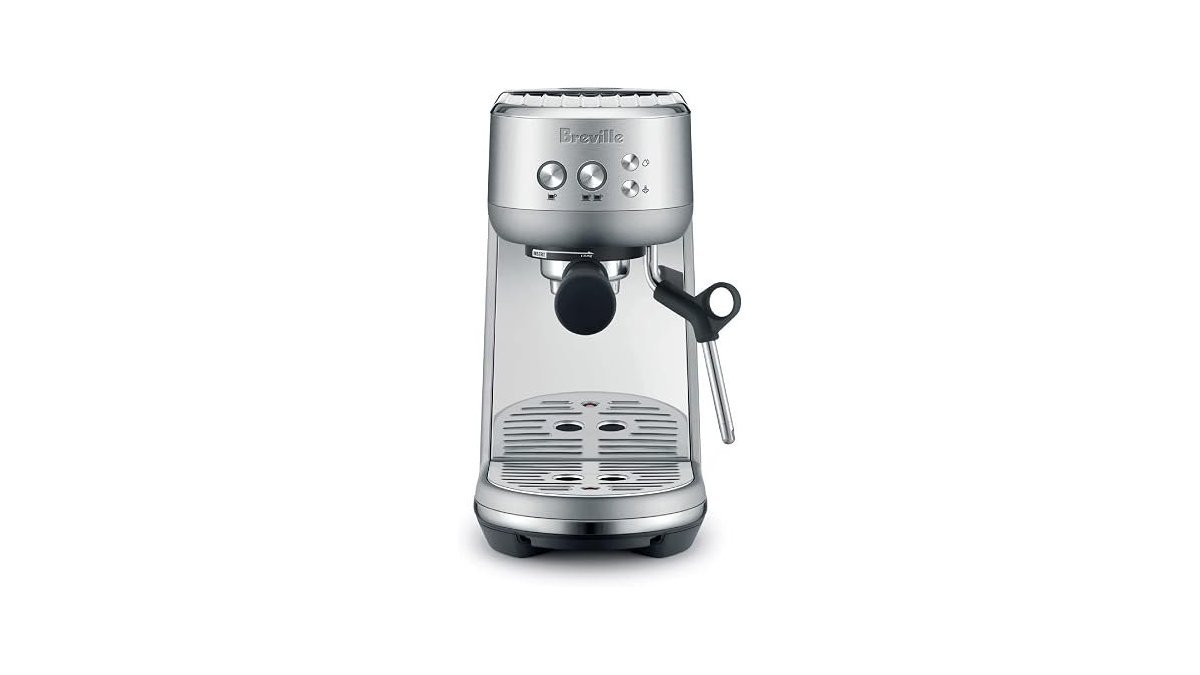
An espresso machine buyer guide should explain which specs change your morning routine and which are just marketing. Pump pressure claims rarely predict shot quality, and heat-up speed matters more than peak wattage. Matching a machine’s real capabilities to your skill level comes before spending anything. For most people starting out, the Breville Bambino BES450BSS earns its spot with a 3-second ThermoJet heat-up and automatic steam wand that removes the hardest learning curve.
What Actually Matters
Heat-Up Speed vs. Wattage
Listings boast about high wattage, but seconds to brew matter more than raw power for your morning. A machine might list 1400W yet still need minutes to stabilize temperature between shots. Check the stated preheat time in seconds, not just the wattage number. If it isn’t listed, assume longer waits.
Steam Wand Type Defines Skill Needed
Automatic wands texture milk hands-free at set temperatures, while manual ones demand practice to avoid burning or thin foam. This single feature decides how quickly you’ll get drinkable lattes. Beginners should check if the wand is automatic or manual before ordering. Manual wands offer control but require technique; automatic ones trade customization for consistency.
Pressure Claims Are Often Misleading
Many machines advertise 20-bar pumps, yet true espresso extraction happens around 9 bars. Higher numbers don’t mean better shots—they’re often just pump capacity, not brewing pressure. Look for mentions of pre-infusion or pressure profiling instead. These features gently saturate grounds before full pressure hits, reducing channeling and sourness. A 20-bar pump without pre-infusion may extract worse than a lower-pressure system designed properly.
Water Tank Size Sets Refill Frequency
Tank capacity determines how many drinks you can make before stopping. A 34 oz tank holds roughly four double shots, while 57.5 oz lasts much longer. Measure your typical morning output against the listed volume. Small tanks aren’t flaws—they’re trade-offs for compact size. Check the exact ounce count and decide if convenience or counter space matters more for your household.
1. Breville BES450BSS Bambino Espresso Machine

Best for: Beginners wanting fast, consistent results
The Breville Bambino BES450BSS uses a ThermoJet heating system that reaches extraction temperature in 3 seconds, eliminating the wait that kills morning routines. Its automatic steam wand textures milk hands-free at adjustable temperatures, removing the guesswork that frustrates new users learning latte art. Digital PID temperature control maintains precise heat during extraction, addressing the inconsistency that plagues entry-level machines.
Pros
- 3-second heat-up via ThermoJet system
- Automatic steam wand simplifies milk texturing
- PID digital temperature regulation ensures consistency
- Low-pressure pre-infusion reduces extraction errors
- Compact footprint fits tight kitchen spaces
Cons
- 54mm portafilter limits accessory compatibility
2. De’Longhi Stilosa Compact Manual Espresso Machine

Best for: Learners wanting full manual control
The De’Longhi Stilosa features a manual steam wand that demands active technique, forcing you to learn proper milk texturing rather than relying on automation. Its stainless steel boiler is engineered for longevity. Included filters and tamper enable immediate practice.
The trade-off is a slower start and steeper learning curve—there’s no PID mentioned, so temperature management falls partly on you. It’s not for someone who wants perfect lattes on day one without practice.
Pros
- Manual steam wand builds real barista skills
- Stainless steel boiler supports long-term durability
- Includes essential accessories for immediate practice
- Simple interface reduces electronic failure points
- Compact design suits dedicated learning stations
Cons
- No PID means less temperature precision
- Slower heat-up than thermojet systems
- Steep learning curve for milk texturing
3. Compact PID Espresso Machine

Best for: Precision seekers with limited space
The RIOSKY Compact PID Espresso Machine combines PID and NTC dual temperature control with a 45-second preheat, offering precision usually reserved for larger machines. Its 1400W boiler and pre-infusion function work together to stabilize extraction, while the touchscreen lets you save custom shot volumes for repeatability. Its 11.4 x 5.3 x 11.4 inch footprint delivers technical capability without dominating counters. The 57.5oz water tank also reduces refill breaks during busy sessions.
Pros
- PID + NTC dual control stabilizes temperature
- 45-second preheat enables quick morning use
- Touchscreen saves custom shot preferences
- 57.5oz tank minimizes refill interruptions
- Compact dimensions fit under standard cabinets
Cons
- The box lists a tamper with spoon and not a milk pitcher, so that is a second purchase.
4. CASABREWS CM5418 Compact Espresso Machine with Milk Frothing Steam Wand

Best for: Mid-range buyers wanting visual feedback
The CASABREWS CM5418 includes a built-in pressure gauge that shows real-time extraction pressure, letting you adjust grind and tamp based on visible feedback rather than taste alone. Its 20-bar pump and 1350W boiler provide ample power, while the 34oz removable tank balances capacity with compact size. The stainless steel construction and included frothing wand support both durability and milk-based drinks.
The listing explicitly warns that brewing must pause after steaming to avoid overheating protection—a cooldown period that interrupts workflow.
Pros
- Built-in pressure gauge enables visual tuning
- 1350W boiler provides strong extraction power
- Stainless steel build enhances durability
- 34oz tank balances size and capacity
- Includes all necessary brewing accessories
Cons
- Required cooldown after steaming disrupts flow
- Gauge requires interpretation, not automation
- Overheating protection triggers if misused
5. AYCHIRO 20 Bar Semi-Automatic Espresso Machine

Best for: Users preferring touch interface simplicity
The AYCHIRO Semi-Automatic uses a sleek touch panel for one-tap single or double shots, replacing physical buttons. Its 20-bar pump includes gentle pre-infusion to optimize extraction, while the dual-function steam wand handles both milk frothing and hot water dispensing. Removable water tank and drip tray simplify cleaning without disassembly. The matte black stainless steel finish resists fingerprints with minimal upkeep.
Touch panels lack tactile confirmation, so you can’t operate it by feel when distracted or half-asleep.
Pros
- Touch panel enables one-tap brewing simplicity
- Pre-infusion optimizes ground coffee extraction
- Dual-function wand handles steam and hot water
- Removable parts simplify daily cleaning
- Matte finish resists fingerprints and smudges
Cons
- No tactile feedback for blind operation
- Electronic interface may fail before mechanics
- Hidden settings limit advanced customization
6. Aromaster 1400W Espresso Machine with Milk Frother

Best for: High-volume households needing speed
The Aromaster 1400W features a dual-circuit system that switches between hot espresso and iced coffee modes instantly, eliminating wait times for temperature changes. Its 1400W heating element and PID + NTC control maintain consistency even during back-to-back brewing, while low-pressure pre-infusion balances flavor extraction. The 360° swivel steam wand with heat-resistant grip supports safe, repeated use. This machine targets users who make multiple drinks consecutively without sacrificing temperature stability.
The dual-circuit complexity adds potential failure points compared to single-boiler designs.
Pros
- Dual-circuit enables instant hot/iced switching
- 1400W element sustains back-to-back brewing
- PID + NTC control maintains temperature stability
- Heat-resistant steam wand grip ensures safety
- One-touch descaling simplifies maintenance
Cons
- Dual circuits increase potential failure points
- Iced mode adds unused complexity for some
7. XIXUBX Espresso Machine

Best for: First-time buyers in small spaces
The XIXUBX Compact includes a matched stainless steel frothing pitcher in the box, so beginners get everything needed for milk drinks without purchasing accessories separately. Its 22–30 second single-button brewing and auto-preheat cater specifically to rushed mornings, while PID temperature control prevents the burnt or sour shots that discourage beginners. The vertical footprint and noise-reduction design suit apartments and shared spaces. A 1-year warranty and video tutorials further lower the barrier to entry.
Pros
- Included frothing pitcher eliminates extra purchase
- 22–30 second brewing suits rushed mornings
- PID control prevents beginner extraction errors
- Vertical design saves valuable counter space
- Video tutorials support first-time users
Cons
- Bundled pitcher may limit advanced texture
- Fewer adjustments restrict growing skill levels
- Beginner focus caps long-term versatility
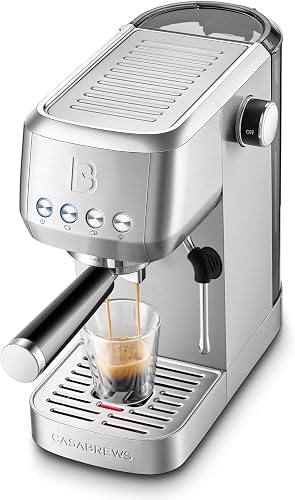
8. CASABREWS 3700 Essential Stainless Steel Espresso Machine with Steam Wand
Best for: Stainless steel purists wanting simplicity
The CASABREWS 3700 Essential offers a straightforward stainless steel design with a 43.9oz water tank, balancing material durability with practical capacity for multiple servings. Its 20-bar pump and 1350W heating system provide reliable extraction without complex electronics or screens. The detachable drip tray and tank simplify cleaning, while included filters and tamper cover basics. This machine appeals to buyers who value metal construction and mechanical simplicity over digital features.
Pros
- Stainless steel build ensures long-term durability
- 43.9oz tank supports multiple servings
- Simple mechanics reduce electronic failure risk
- Detachable parts enable thorough cleaning
- Includes essential brewing accessories
Cons
- Mandatory first-use cycle adds setup complexity
- No PID means less temperature assistance
- Relies heavily on user technique for consistency
Also worth considering is the Bar Compact Espresso Coffee Machines, which pairs adequate extraction pressure with a milk frother in a compact form factor similar to others here, though specific details on heat-up time or temperature control aren’t provided in the title alone.
Who Should Buy Which
The Breville Bambino BES450BSS suits most first-time buyers who want consistent results fast, thanks to its 3-second heat-up and automatic steam wand. Aromaster 1400W targets high-volume households needing instant hot-to-iced switching. XIXUBX Compact is ideal for absolute beginners in small spaces wanting everything included. CASABREWS 3700 Essential fits stainless steel purists who prefer mechanical simplicity over digital aids.
Mistakes That Catch Buyers Out
- Judging machines solely by advertised bar pressure ignores that pre-infusion and group head design matter more for actual extraction quality than peak pump capacity.
- Choosing automatic steam wands for convenience then resenting the lack of control later, or picking manual wands without committing to the weeks of practice they require.
- Assuming all stainless steel bodies indicate internal boiler quality when many use plastic internals clad in metal, so check boiler material specifications separately.
- Taking “fast heat-up” claims at face value without verifying whether the machine maintains temperature between consecutive shots or only reaches it initially.
The Breville Bambino BES450BSS remains the top recommendation for most due to its 3-second readiness and automated milk texturing. Before ordering any model, measure your available counter depth and cabinet clearance against the listed dimensions to ensure it physically fits your space.
Frequently Asked Questions
Does higher bar pressure make better espresso?
No. True espresso extraction occurs around 9 bars; higher numbers reflect pump capacity, not brewing pressure. Pre-infusion and temperature stability matter far more for flavor. Focus on machines mentioning these features rather than chasing the highest bar rating, which is often just marketing.
Can I use pre-ground coffee in these machines?
Yes, all listed machines accept pre-ground coffee via included filter baskets. However, results improve significantly with freshly ground beans due to reduced oxidation. Pre-ground works for convenience, but expect less crema and flavor nuance compared to grinding just before brewing.
How often do I need to descale?
Frequency depends on water hardness and usage volume, not a fixed schedule. Most machines include descaling functions or indicators. Use distilled or filtered water to extend intervals. Hard water areas may require monthly treatment, while soft water users might go several months between cycles.
Is a PID controller necessary for home use?
Not strictly necessary, but it greatly improves consistency by maintaining stable brew temperature. Machines without PID rely on thermostats that cycle wider, causing shot variation. Beginners benefit most from PID’s forgiveness, while experienced users can manage fluctuations manually. It’s helpful, not mandatory.
Conclusion
Don’t overthink the specs once you’ve picked a machine that fits your routine. You’ll learn more from pulling shots every morning than comparing features endlessly. Trust your taste, adjust as you go, and remember that great coffee comes from practice, not perfection.