
As an Amazon Associate, we earn from qualifying purchases. This post contains affiliate links – if you buy through them, we may earn a commission at no extra cost to you.
When considering the requirements for optimal modeling render times, there isn’t just one magic build that works for everyone. The right machine depends on whether your 3D workflow leans heavily on active viewport modeling, multi-threaded CPU rendering, or pure GPU ray tracing. System memory capacity, dedicated graphics power, and modern instruction pipelines are the true separators between these workstations. The Adamant Intel Ultra 9 stands out for builders who want the latest 24-core platform paired with modern architecture, while the PCSP P620 Workstation caters to professionals handling massive data scenes that demand huge multi-channel memory.
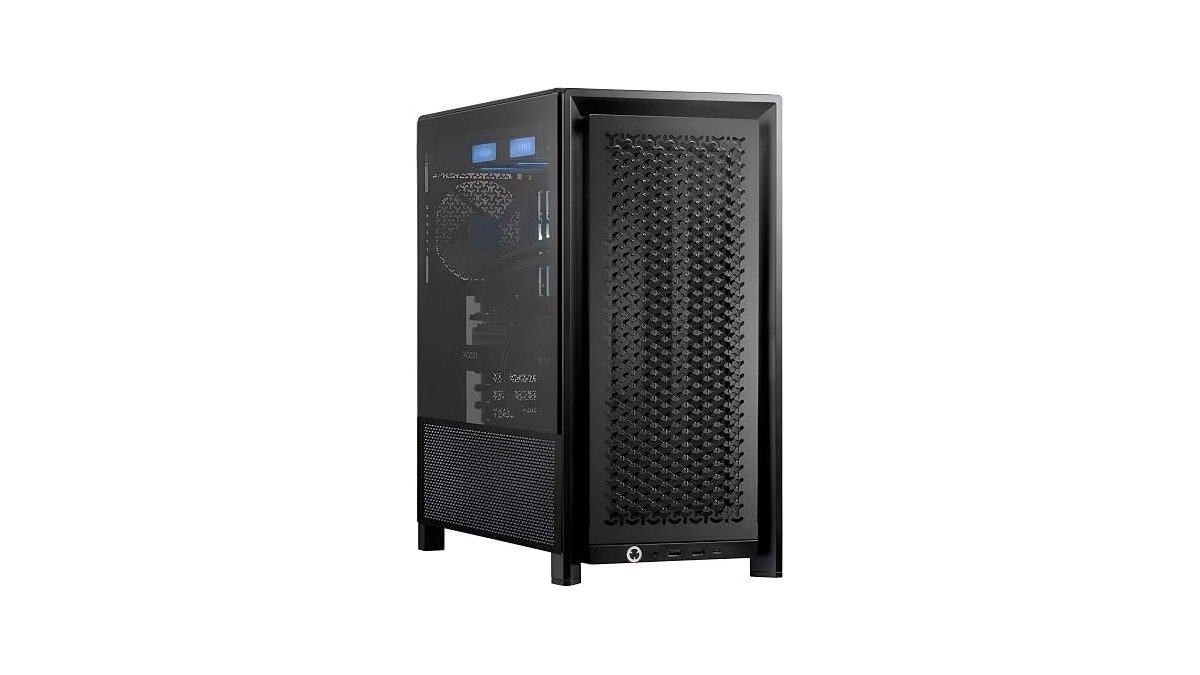
1. Adamant Custom 24-Core CAD 3D Modelling Animation Rendering Workstation Computer

Best for: Creators who need balanced single-core speed and modern rendering compute.
Modeling in viewport applications demands high clock frequency, while the final render pass eats through all the execution cores you can feed it. This system carries the 24-core Intel Core Ultra 9 285K processor running at 3.7GHz, backed by a 360mm AIO liquid cooler to manage sustained processing loads. It also mounts 32GB of high-performance DDR5 RAM on an ASUS Z890 PRIME motherboard, giving you quick responsiveness across heavy project files.
Graphics compute is handled by an NVIDIA RTX PRO 4500 Blackwell GPU, which changes your timeline calculations significantly when running GPU-accelerated rendering engines. Storage is served by a 2TB NVMe 990 PRO solid-state drive, letting you open detailed texture sets without bottlenecks. The listing doesn’t mention if the memory can be upgraded.
Good if:
- You rely on cutting-edge workstation GPU architectures for production rendering.
- You need fast project loading via a dedicated 2TB NVMe drive.
- You want long-term hardware reliability with 3 years of labor and parts warranty.
Skip it if:
- Your everyday scenes immediately require more than 32GB of RAM.
- You need a secondary bulk hard drive pre-installed for deep archival storage.
2. Adamant Custom 16-Core CAD 3D Modelling Animation Rendering Workstation Computer

Best for: 3D artists who prioritize high-cache responsiveness during active scene manipulation.
Smooth viewport frame rates keep your modeling flow natural, especially when scenes get packed with dense polygons. This build features the 16-core AMD Ryzen 9 9950X3D clocked at 4.3GHz, kept in check with a 360mm AIO liquid cooler. The processor architecture works alongside 32GB of DDR5 RAM on an ASUS X870 PRIME motherboard, ensuring your core 3D modeling tools respond swiftly to real-time adjustments.
Rendering passes tap into an RTX 4000 ADA GPU equipped with 20GB of video memory, giving you plenty of room for heavy scene textures and geometry. For your projects, it pairs a 1TB Samsung NVMe 990 PRO Gen4 drive with a massive 10TB HDD, letting you keep active project assets on fast silicon while archiving older renders on spinning disks. The listing doesn’t mention how quickly the 1TB storage fills up.
Good if:
- You want a large 20GB frame buffer on an ADA-generation graphics card.
- You need massive internal storage ready to go with the 10TB hard drive.
- You value the fast 4.3GHz base clock for responsive CAD and mesh manipulation.
Skip it if:
- You need more than 1TB of solid-state storage for active cache folders.
- Your render tasks need massive memory densities right out of the box.
3. PCSP P620 Professional Content Creation

Best for: Studios managing giant datasets, deep simulations, and multi-display setups.
When your 3D scenes carry millions of polygons alongside uncompressed volumetric data, standard system memory instantly runs out. This renewed workstation solves that bottleneck by providing a massive 192GB of DDR4 RAM paired with an enterprise AMD Threadripper 3945WX PRO processor. Running 12 cores and 24 threads at 4.0GHz, it handles multi-threaded background task execution while you keep working across other production applications.
Visual output and compute rely on two separate RTX 4000 graphics cards, offering a total of 8 display outputs for wide workspace management. You also get a 2TB NVMe SSD for your primary operating system and working project files under Windows 11 Pro. This machine isn’t for artists who need the raw single-thread throughput of modern DDR5 platforms, as it runs on older DDR4 memory architecture that won’t match newer processors in single-threaded viewport operations.
Good if:
- Your project files choke systems with standard consumer memory caps.
- You run expansive multi-monitor setups needing up to 8 display outputs.
- You want a dedicated Threadripper PRO platform for multi-task stability.
Skip it if:
- You require the latest DDR5 generation memory speeds.
- You prefer liquid-cooled hardware configurations over enterprise enclosures.
4. Adamant Custom 16-Core CAD 3D Modelling Animation Rendering Workstation Computer
Best for: Technical designers who want steady multi-core frequency for production cycles.
CAD drafting and continuous rendering cycles require stable processor clocks that won’t buckle during long export queues. This computer implements the 16-core AMD Ryzen 9 9950X running at a strong 4.3GHz base frequency, chilled by a 360mm AIO liquid cooler. Assembled on an ASUS X870 PRIME board with 32GB of DDR5 RAM, it delivers snappy operational behavior during geometric calculations and drafting exports.
The system mounts an RTX 4000 ADA graphics card with 20GB of VRAM, giving rendering engines the memory space needed to avoid fallback errors on complex scenes. The dual storage array includes a 1TB Samsung NVMe 990 PRO Gen4 SSD alongside a 10TB mechanical drive, giving you dedicated space for current work and long-term project archives. This machine isn’t for users who compile giant machine learning datasets alongside their 3D scenes, since 32GB of system RAM will limit extreme parallel workload scaling.
Good if:
- You run long render exports that benefit from a 4.3GHz base core clock.
- You require 20GB of professional GPU memory for dense ray-traced materials.
- You want Wi-Fi 7 and Bluetooth 5.4 wireless standards already installed.
Skip it if:
- You don’t want mechanical hard drives inside your primary workstation.
- You need extreme system RAM capacity from day one.
5. Adamant Custom 24-Core Editing Rendering Modelling AI Learning Workstation Computer

Best for: Power users needing immense RAM density and fast consumer compute cards.
Complex visual effects, machine learning, and intricate rendering pipelines quickly consume everyday memory capacities. This machine tackles that challenge directly by packing 192GB of DDR5 high-performance memory alongside the 24-core Intel Core Ultra 9 285K processor. Backed by a 360mm AIO liquid cooler and a Z890 TUF series motherboard, this configuration allows seamless multitasking across massive rendering datasets without hitting virtual memory paging files.
The render engine receives a serious boost from a GeForce RTX 5070 Ti card featuring 16GB of video memory, giving you rapid compute calculations for modern ray tracing. The system stores your operating environment on a 1TB NVMe 990 EVO PCIe 4.0 SSD, powered by an 850W 80 PLUS Bronze power supply. Note that this machine isn’t for professionals requiring enterprise-tier certified GPU drivers, since the consumer GeForce card targets different software optimization paths than professional ADA or Blackwell hardware.
Good if:
- You run massive production software requiring 192GB of fast DDR5 memory.
- You want the latest high-performance Intel Core Ultra 9 processor architecture.
- You combine AI workflow pipelines with your daily 3D rendering tasks.
Skip it if:
- You need dedicated professional-tier workstation graphics cards.
- You live in California and need direct off-the-shelf ordering without extra compliance steps.
Where These Overlap
These workstations share common hardware baselines designed for heavy compute tasks. Most Adamant builds run 850-watt power supplies, 360mm liquid cooling systems, and include modern Wi-Fi 7 wireless connectivity. The Adamant Ryzen 9 9950X3D and Adamant Ryzen 9 9950X are near-identical on their listings, sharing the same ASUS X870 platform, 32GB of DDR5 RAM, 1TB NVMe plus 10TB HDD setup, and professional-grade workstation graphics. The actual deciding factor between them comes down entirely to the CPU: the 9950X3D brings specialized cache architecture for software optimization, while the standard 9950X delivers steady clock performance across all standard threads.
Still Not Sure?
How much system memory do your daily projects actually fill?
If you routinely max out memory through high-resolution textures, visual effects layers, or parallel background apps, pick a machine built for capacity. A build with standard RAM will stutter when pushed past its ceiling. For extreme multitasking and massive scene files that dwarf standard consumer limits, choose the Adamant TUF Rendering Workstation.
Do you need large local archive storage built directly into the PC?
Artists generating daily final sequences accumulate terabytes of finished data very quickly. If you don’t use an external server, constantly offloading files interrupts your creative momentum. To keep your active projects on fast silicon while banking finished work internally, pick the Adamant Ryzen 9 9950X.
Does your pipeline rely on professional workstation graphics drivers?
Certain rendering environments specifically favor dedicated enterprise graphics hardware over consumer cards for driver stability. If your work relies on workstation validation rather than standard desktop software, you’ll want dedicated enterprise silicon. For a cutting-edge workstation GPU architecture paired with Intel’s latest multi-threaded platform, go with the Adamant Intel Ultra 9.
If your 3D workflow focuses on massive memory datasets and heavy concurrent workloads, choose the Adamant TUF Rendering Workstation. If you prefer high base processor frequencies matched with huge local storage and professional ADA graphics, the Adamant Ryzen 9 9950X fits the bill. Double-check your core render software requirements today so you can order the right machine with complete confidence.
Frequently Asked Questions
Does rendering depend more on CPU cores or GPU power?
Modern modeling tools rely on both components, but they divide the labor. Viewport calculations, geometry generation, and legacy renderers lean heavily on processor cores and clock frequencies. Meanwhile, real-time render engines use dedicated GPU hardware to accelerate ray tracing, making cards like the RTX 4000 ADA in the Adamant Ryzen 9 9950X essential for fast export speeds.
How much system RAM is required for high-detail 3D rendering?
While 32GB of RAM is sufficient for standard assets, complex scenes with layered 8K textures quickly exhaust that limit. When memory fills up completely, Windows swaps data to storage, causing severe timeline slowdowns. Production artists managing massive visual effects pipelines or heavy scene geometries should look toward 192GB setups like the Adamant TUF Rendering Workstation.
What power supply efficiency should a dedicated rendering workstation have?
Rendering puts heavy electrical loads on hardware for hours at a time, requiring reliable power delivery. Systems like the Adamant TUF Rendering Workstation include certified 80 PLUS power supplies to handle these long, demanding compute sessions safely.
Why do some workstations include both an SSD and an HDD?
Fast NVMe drives, like the Samsung 990 PRO series, drastically accelerate operating system tasks, application loading, and asset retrieval. However, complete 3D scene renders and raw assets consume immense storage space. Workstations like the Adamant Ryzen 9 9950X3D include a secondary 10TB mechanical drive specifically so you can archive large projects locally without filling the primary drive.
Conclusion
Ultimately, your choice should reflect the specific software you use every day. Don’t rush into a purchase without checking your preferred engine’s official hardware benchmarks first. Once you’ve narrowed down the specs that fit your budget, you’ll be ready to build a workstation that won’t hold your creative vision back.