Finding the right way to learn 3D modeling depends on your specific goals and how you like to study. There’s no single “best” path, as some learners prefer project-based building while others want a deep dive into technical workflows. Your choice of the best Blender YouTube channels for modeling in 2024 comes down to whether you want to focus on game assets, character animation, or technical optimization. If you want to build a portfolio quickly, look at the project-based guides; if you need to master specific tools like geometry nodes, look for the specialized manuals.
As an Amazon Associate, we earn from qualifying purchases. This post contains affiliate links – if you buy through them, we may earn a commission at no extra cost to you.
1. Blender 5.2 Project Method

Best for: Someone who wants to build a portfolio for job applications.
This guide focuses on moving away from repetitive tutorials by jumping straight into real-world projects. By completing 10 distinct projects, you gain experience that mirrors actual professional tasks rather than just following button clicks. It’s a practical approach for those who learn by doing.
The listing doesn’t mention the specific topics covered in these recommendations. It assumes you’re ready to produce work immediately. If you need a slower, conceptual introduction, you might find this pace too fast.
Good if:
- You have a 30-day timeline to build a portfolio.
- You’re tired of watching videos without creating anything.
- You want to simulate a professional production environment.
Skip it if:
- You’re a complete novice who needs to learn basic navigation first.
- You prefer watching videos over reading structured project steps.
2. Learn Blender 5 Guide

Best for: A total beginner starting their 3D journey from scratch.
This guide covers the essentials of modeling, rendering, and animation in one place. It’s designed to take you from a blank screen to a finished scene using step-by-step instructions. It provides a solid foundation for those who have never opened the software before.
It focuses on the basics, which might feel repetitive for someone who has already spent time in other 3D software.
Good if:
- You have never used any 3D software before.
- You want a single reference book for the entire workflow.
- You need clear instructions for basic rendering and animation.
Skip it if:
- You’re looking for advanced technical tips or workflow optimization.
- You’re already comfortable with the Blender interface.
3. Blender for 3D Printing and Product Design

Best for: Designers wanting to move their work from screen to physical reality.
This book bridges the gap between digital modeling and the requirements of 3D printing. It covers mesh optimization and STL export, which are critical for ensuring your models actually print correctly. It’s a specialized tool for creators interested in product design.
The techniques for mesh optimization in printing are often the opposite of what you need for high-performance game models.
Good if:
- You have your own 3D printer at home.
- You want to design functional products or prototypes.
- You need to learn how to prepare meshes for physical output.
Skip it if:
- You only care about digital rendering and animation.
- You’re focused on low-poly assets for game engines.
4. Low Poly 3D Modeling in Blender

Best for: Aspiring artists who want to create stylized game assets quickly.
Low poly modeling is a great entry point into the industry, and these tutorials teach you how to build assets from scratch. It emphasizes the creation of entire scenes, which helps you understand how individual models fit into a larger environment.
The listing doesn’t mention the specific techniques covered in these tutorials. The focus here is on efficiency and style, so it lacks the depth required for complex, high-resolution organic character work.
Good if:
- You want to pursue a career in indie game development.
- You like the aesthetic of low-poly art.
- You want to learn asset creation from the ground up.
Skip it if:
- You’re interested in high-detail character sculpting.
- You want to learn advanced lighting and simulation techniques.
5. Blender Game Creation

Best for: Gamers who want to build their own playable assets and worlds.
This guide covers the full pipeline for game development, including texturing and character design. It’s built for the practical beginner who wants to understand how a model functions inside an interactive world.
Its workflow is optimized for game engines, which have different requirements regarding topology and UV mapping than static designs.
Good if:
- You want to build assets for your own game projects.
- You need to learn texturing and character building together.
- You’re curious about how interactive worlds are constructed.
Skip it if:
- You’re only interested in static 3D printing.
- You prefer to work on architectural or product design.
6. Learning Blender Characters

Best for: Artists who want to specialize in bringing characters to life.
Character animation is a complex skill, and this hands-on guide walks you through the process of creating animated figures. It provides the specific techniques needed to rig and move characters effectively.
If you aren’t interested in the nuances of weight painting and character movement, you’ll find the content too narrow.
Good if:
- You love character design and storytelling.
- You want to learn how to rig and animate models.
- You’re interested in the animation pipeline.
Skip it if:
- You prefer modeling inanimate objects or architecture.
- You’re looking for a general overview of the software.
7. Blender 5 Best Practices

Best for: Intermediate users who want to speed up their daily workflow.
This guide is for those who already know the basics and want to work more efficiently. It covers advanced techniques for procedural assets and workflow optimization, which can save hours of manual labor in the long run.
If you don’t yet know how to navigate the interface or perform basic modeling, the advanced workflow tips will likely be confusing and irrelevant.
Good if:
- You feel your current modeling process is too slow.
- You want to master procedural assets.
- You’re ready to move beyond beginner tutorials.
Skip it if:
- You’re still learning the basics of the software.
- You don’t need to optimize your production pipeline.
8. Blender 5 User Guide
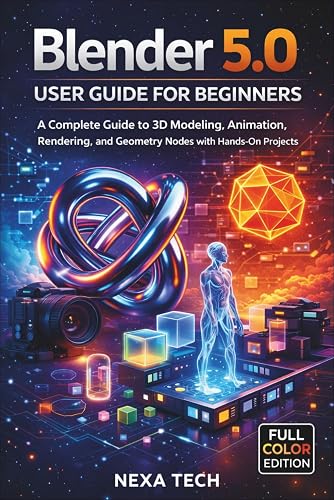
Best for: Users who want a broad, deep manual including geometry nodes.
This is a comprehensive resource for those who want to master both traditional modeling and modern procedural tools like geometry nodes. It’s a complete reference for anyone wanting to understand the full capabilities of the software.
Its broad scope means it covers many topics, which might feel overwhelming if you’re only looking for a simple path to one specific skill.
Good if:
- You want to learn about geometry nodes.
- You prefer having a complete reference manual on hand.
- You want to cover everything from rendering to modeling.
Skip it if:
- You’re looking for a short, project-focused guide.
- You only want to learn one specific niche like sculpting.
9. Practical Guide to Claude AI for Blender 3D

Best for: Tech-savvy users who want to use AI to speed up scripting.
This guide teaches you how to use AI to improve your workflow, specifically for scripting and modeling tasks. It’s a modern approach for those who want to leverage external tools to handle repetitive parts of the 3D pipeline.
If you want to learn every tool by hand without AI assistance, this guide won’t align with your goals.
Good if:
- You’re interested in AI-driven workflows.
- You want to automate scripting and export tasks.
- You enjoy integrating new technology into your art.
Skip it if:
- You prefer to do all modeling and scripting manually.
- You’re skeptical about using AI in your creative process.
10. Mastering Blender 2026

Best for: Someone who wants a long-term, step-by-step learning path.
This guide provides a structured path for creating stunning scenes. It focuses on the modern professional workflow, ensuring that what you learn is relevant to current industry standards.
It’s a long-term learning path, so it requires patience and a commitment to following the steps in order.
Good if:
- You want a clear, long-term learning path.
- You’re aiming for professional-level results.
- You enjoy a step-by-step approach to complex scenes.
Skip it if:
- You want to learn a specific niche quickly.
- You prefer jumping around between different topics.
How we picked the best Blender modeling YouTube channels
Many of these guides cover the same fundamental interface elements, as the software itself doesn’t change regardless of the goal. Whether you’re modeling for a game or for 3D printing, you must learn how to navigate the viewport, handle mesh data, and manage your files. If you’re a complete beginner, the differences between these books are less important than the simple act of starting with any structured resource. Most guides overlap on basic navigation and modeling tools, so the real choice is the specific outcome you want to achieve. If you’re undecided, choose the guide that matches the project you’re most excited to finish, as your personal interest will be the best motivator for learning the software’s complex tools.
Still Not Sure?
How much time can I realistically commit?
If you only have a few weeks, choose a project-based book like Blender 5.2 Project Method. These are designed to give you a finished result quickly. If you have months to learn, a comprehensive manual like Blender 5 User Guide will serve you better for a long-term education.
What do I already want to build?
Your goal should dictate your book. If you want to print your models, get the Blender 3D Printing Guide. If your dream is to make characters move on screen, choose Learning Blender Characters. Buying a book that aligns with your passion ensures you stay engaged when the work gets difficult.
Am I looking for a career or a hobby?
If you want to work in the industry, choose a guide that teaches professional workflows, such as Mastering Blender 2026. If this is just for fun, you might prefer the low-poly approach found in Low Poly Blender Modeling. Your end goal defines which technical depth you actually need.
To keep your 3D models accurate and professional, follow the industry guidelines for digital 3D modeling standards to ensure your work meets quality expectations. Beginners often find that focusing on a single, streamlined workflow helps them progress steadily rather than trying to learn every feature at once. Start with the guide that matches your immediate goal, and remember that consistent practice is the only way to master the software.
Related guides