
As an Amazon Associate, we earn from qualifying purchases. This post contains affiliate links – if you buy through them, we may earn a commission at no extra cost to you.
Finding the right machine in this buying coffee machine guide means matching your morning routine to what the hardware actually does. Many shoppers get stuck between espresso makers that demand skill and drip brewers that offer none, missing the middle ground where automation meets quality. We’ll explain which features change your daily cup and which are just marketing noise before recommending specific models. For most people, the Breville Barista Express remains the strongest starting point because its integrated grinder delivers fresh grounds directly into the portafilter without needing separate equipment.
What Actually Matters
Grinder Integration vs Separate Equipment
Built-in grinders save counter space and keep beans fresh by grinding only what you need immediately. Machines without one require buying a standalone grinder, adding another item to clean. Check whether the listing specifies burr type and adjustment settings, as blade grinders produce uneven particles that ruin extraction. If freshness matters more than convenience, integrated conical burrs beat pre-ground pods every time for flavor clarity.
Milk Frothing Method
Manual steam wands give full control over texture but require practice to avoid burning milk or creating large bubbles. Automatic frothers deliver consistent results with zero learning curve yet limit customization for latte art. Look for listings specifying temperature and texture adjustments if you want both ease and flexibility. Buyers who only drink black coffee can skip this feature entirely and prioritize brew strength controls instead.
Brew Volume and Carafe Type
Carafe capacity determines how many servings you make at once, but listed “cups” often equal five ounces rather than standard mugs. Glass carafes sit on warming plates that can scorch coffee if left too long, while thermal options maintain heat without cooking. Measure your typical morning consumption and check if the machine offers programmable auto-brew for waking up to fresh coffee. Single-serve machines eliminate waste but lack batch brewing for households with multiple drinkers.
Automation Level vs Control
Fully automatic machines handle grinding, dosing, tamping, and brewing with button presses, removing human error from the process. Semi-automatic models require manual tamping and timing, demanding skill but rewarding it with better shots once dialed in. Read whether the listing mentions assisted tamping or weight-based dosing as middle-ground features. Beginners should prioritize guided systems; experienced baristas need manual override to adjust variables shot by shot.
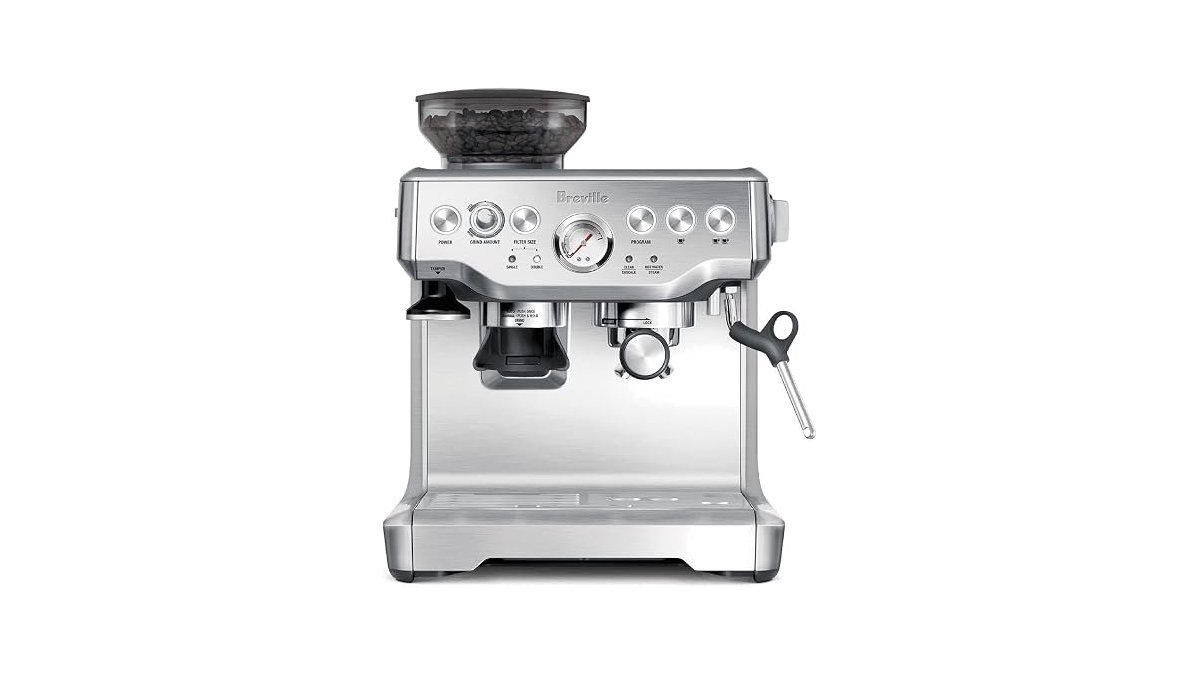
1. Breville BES870XL Barista Express Espresso Machine

Best for: Home baristas wanting integrated grinding
The Breville Barista Express includes an integrated precision conical burr grinder that doses directly into the portafilter. This keeps beans fresh until extraction but locks you into one grinder. Digital temperature regulation via PID maintains precise water temperature throughout brewing, supporting balanced extraction across different roast profiles. Low pressure pre-infusion gradually increases pressure at the start, drawing out flavors evenly before full extraction begins.
Pros
- Integrated conical burr grinder ensures freshness
- PID temperature control supports consistent extraction
- Manual steam wand enables latte art creation
- Pre-infusion promotes balanced flavor extraction
- Includes two free specialty coffee bags upon registration
Cons
- Requires manual tamping and milk texturing skill
- Learning curve for dialing in grind settings
- Fixed grinder limits future upgrade path
2. Ninja Luxe Café Pro 4-in-1 Espresso Machine

Best for: Beginners wanting guided automation
Ninja Luxe Café Pro uses Barista Assist Technology to guide users through grinding, dosing, and tamping with real-time temperature and pressure adjustments based on selected drink type. Weight-based dosing and an integrated tamper remove guesswork from puck preparation, making it accessible for first-time espresso buyers. The Dual Froth Pro system combines magnetic whisk with automatic steamer for hands-free microfoam, letting you prep milk and walk away. Built-in conical burr grinder offers 25 settings tailored to specific drinks from espresso to cold brew.
Pros
- Barista Assist guides beginners through each step
- Hands-free frothing produces consistent microfoam
- Weight-based dosing eliminates measurement errors
- Cold pressed espresso option for smooth iced drinks
- 25 grind settings cover espresso to cold brew
Cons
- Limited manual override for advanced users
- Larger footprint than compact espresso machines
- Preset programs restrict customization range
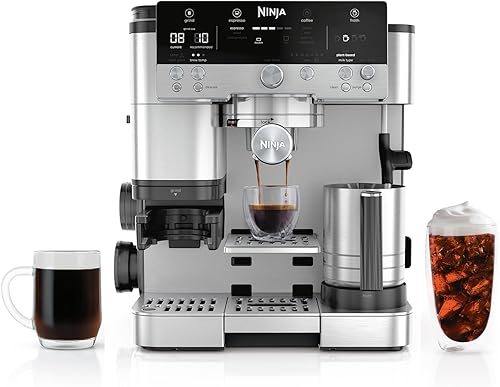
3. Ninja Luxe Café Premier 3-in-1 Espresso Machine
Best for: Households needing multiple brew styles
Ninja Luxe Café Premier offers double or quad shot espresso, classic/rich/over-ice drip coffee, and cold pressed espresso or cold brew in six sizes. Barista Assist Technology provides guided grinding, weight-based dosing, assisted tamping, and real-time temperature and pressure adjustments per drink. Dual Froth System includes four preset foam programs plus manual option, covering steamed milk through cold foam without extra tools. Built-in conical burr grinder with 25 settings adjusts precisely for each brew style.
Pros
- Three brew styles replace multiple appliances
- Four froth presets plus manual option
- Assisted tamping ensures consistent puck density
- Six brew sizes from single cup to full carafe
- Real-time adjustments per selected drink type
Cons
- Multi-function design may compromise espresso focus
- Not ideal for purists wanting dedicated espresso machine
- Assisted tamping limits manual technique development
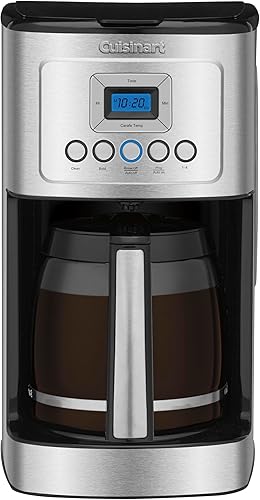
4. Cuisinart Coffee Maker
Best for: Programmable drip coffee lovers
Cuisinart DCC-3200 offers 24-hour programmability with adjustable carafe temperature (Low/Medium/High) to keep brewed coffee at preferred serving warmth without scorching. Brew strength control switches between regular and bold settings, catering to taste preferences without changing beans or ratios. 14-cup capacity equals approximately five ounces per cup, so measure actual mug size before assuming yield matches household needs. Brew Pause feature interrupts cycle to pour early, resuming automatically afterward.
Pros
- Adjustable warming plate prevents overheating
- Brew strength control customizes extraction intensity
- 24-hour programmability enables wake-up brewing
- Brew Pause allows mid-cycle pouring
- Auto-off timer enhances safety and efficiency
Cons
- No espresso or milk drink capability
- Non-removable reservoir complicates cleaning
5. Keurig K-Duo Hot & Iced Single Serve & Carafe Coffee

Best for: Pod and ground coffee flexibility
Keurig K-Duo Gen 2 brews both K-Cup pods and loose grounds using shared 72oz reservoir, serving single-cup and carafe needs without refilling. MultiStream Technology saturates grounds evenly for fuller flavor extraction in hot or iced modes. Brew Over Ice adjusts temperature to minimize ice melt while preserving strength, unlike standard hot brew poured over cubes. Strong Brew and Extra Hot functions intensify flavor or raise temperature for single servings based on preference.
This machine isn’t for buyers avoiding pod waste or wanting true espresso pressure. Programmable carafe auto-brew schedules batch coffee up to 24 hours ahead, but single-serve side lacks scheduling. Front-facing panel simplifies selection, though pod dependency creates environmental impact absent in ground-only machines. 12-cup glass carafe is designed to limit dripping, yet still sits on warming plate rather than thermal insulation.
Pros
- Dual compatibility with pods and grounds
- Shared 72oz reservoir reduces refill frequency
- Brew Over Ice optimizes temperature for iced drinks
- Strong Brew and Extra Hot customize single cups
- Programmable carafe enables scheduled batch brewing
Cons
- No true espresso pressure extraction
- Single-serve side lacks programmable scheduling
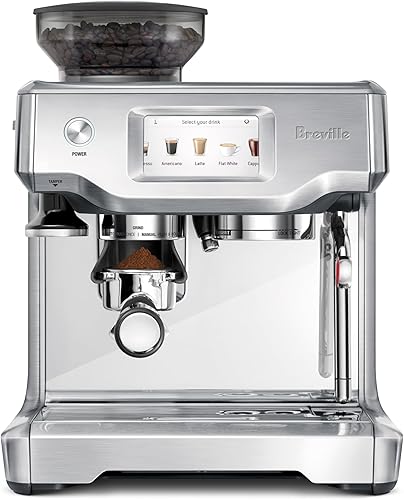
6. Breville BES880BSS Barista Touch Espresso Machine
Best for: Touchscreen-guided espresso making
Breville Barista Touch simplifies café drinks into three touchscreen steps: Grind, Brew, Milk, with adjustable strength, texture, and temperature saved for up to eight personalized profiles. Automatic steam wand textures milk to specified parameters, enabling latte art without manual technique mastery. ThermoJet heating system reaches extraction temperature in three seconds, eliminating warm-up wait common in traditional boilers. Integrated precision conical burr grinder doses on demand with single touch, maintaining freshness while reducing prep steps.
Pros
- Touchscreen saves eight personalized drink profiles
- Automatic steam wand enables hands-free texturing
- ThermoJet heats to extraction temperature almost instantly
- Integrated grinder doses on demand with single touch
- Pre-infusion and PID support balanced extraction
Cons
- Touchscreen may frustrate analog-preference users
- Presets limit manual variable adjustment
7. Ninja Coffee Maker
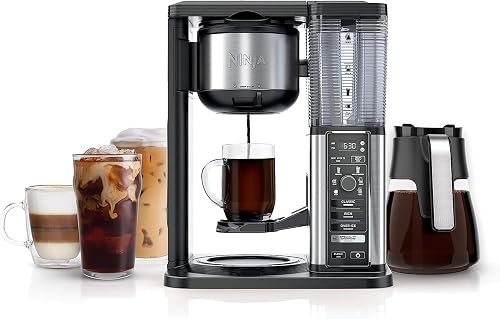
Best for: Built-in frother without espresso
Ninja CM401 includes fold-away frother that turns hot or cold milk into silky foam without separate steam wand or handheld device. Four brew styles (Classic, Rich, Over Ice, Specialty) produce concentrated base for lattes and macchiatos using grounds, not pods. Six brew sizes range from single cup to full carafe, accommodating travel mugs through batch brewing. Removable 40oz water reservoir carries easily to sink for filling, unlike fixed-tank designs.
Pros
- Fold-away frother eliminates extra equipment
- Four brew styles create coffee concentrate base
- Six sizes cover single serve through full carafe
- Removable reservoir simplifies filling and cleaning
- Dishwasher-safe parts reduce maintenance effort
Cons
- No true espresso pressure extraction
- Frother lacks milk temperature control
- Specialty drinks approximate rather than replicate café
8. Breville BES878BSS Barista Pro Espresso Machine

Best for: Fast heat-up with LCD guidance
Breville Barista Pro achieves extraction temperature in three seconds via ThermoJet heating system, transitioning instantly from espresso to steam without waiting. LCD display shows grinding and extracting progress animations, providing visual feedback for beginners learning dose and timing. Digital temperature regulation maintains water within +/- 2°C of target, ensuring repeatable extraction across sessions. Manual steam wand allows hand-textured microfoam for latte art, balancing automation speed with artisan control.
Pros
- ThermoJet reaches operating temperature without delay
- LCD guides grinding and extraction visually
- PID holds temperature within +/- 2°C
- Manual steam wand enables latte art
- Pre-infusion supports balanced flavor extraction
Cons
- Manual milk texturing requires skill development
- No automatic frothing option
- Visual guidance doesn’t replace practice need
9. Breville BES450BSS Bambino Espresso Machine

Best for: Compact kitchens needing espresso
Breville Bambino fits small countertops while delivering third-wave specialty coffee via 54mm portafilter holding 19 grams for full flavor. ThermoJet heating system reaches optimum extraction temperature in three seconds, matching larger machines’ readiness without bulk. Automatic steam wand textures milk hands-free to correct temperature, removing technique barrier for beginners. Low pressure pre-infusion gradually increases pressure to draw out flavors evenly during extraction.
Pros
- Compact footprint fits tight spaces
- ThermoJet matches the readiness of larger models
- Automatic steam wand simplifies milk texturing
- 54mm portafilter holds 19g for full flavor
- PID ensures precise temperature regulation
Cons
- No integrated grinder requires separate purchase
10. Mr. Coffee Programmable Coffee Maker 5 Cups with Auto Pause

Best for: Small-space personal brewing
Mr. Coffee 5-Cup brews up to 25oz (two standard 12oz cups) in compact form factor fitting any kitchen size. Brew Later feature schedules ahead-of-time brewing for wake-up freshness without full-carafé waste. Auto Pause interrupts cycle to pour mid-brew, resuming automatically afterward. Auto shut-off after two hours prevents safety hazards and energy drain if forgotten. Reusable filter and filtration system ensure pure taste without paper waste.
Pros
- Compact design fits smallest kitchens
- Brew Later enables scheduled personal brewing
- Auto Pause allows mid-cycle pouring
- Auto shut-off enhances safety after 2 hours
- Reusable filter eliminates paper waste
Cons
- Only 25oz capacity limits household use
- No brew strength or customization options
Who Should Buy Which
The Breville Barista Express suits committed learners wanting integrated grinding and manual control in one footprint. Ninja Luxe Café Pro serves beginners needing guided automation with cold brew capability. Cuisinart DCC-3200 fits programmable drip drinkers prioritizing scheduling and strength control over versatility. Keurig K-Duo Gen 2 works for pod-dependent households wanting occasional ground brewing. Breville Bambino accommodates tight spaces without sacrificing core espresso performance. Mr. Coffee 5-Cup serves solo users minimizing waste and counter footprint. Choose based on daily volume, skill willingness, and whether milk drinks matter.
Mistakes That Catch Buyers Out
Assuming listed “cup” capacity equals standard mug size leads to underestimating batch needs when five-ounce measurements don’t match twelve-ounce reality. Choosing built-in frothers over steam wands because they seem easier backfires when lack of temperature control produces inconsistent texture for different milk types. Ignoring grinder integration trade-offs forces later purchases of standalone equipment when built-in units can’t be upgraded independently.
For most people starting their buying coffee machine guide journey, the Breville Barista Express offers the best balance of integrated grinding and manual learning potential. Before ordering, measure your countertop depth to ensure the machine fits your available space.
Frequently Asked Questions
Can I use pre-ground coffee in these machines?
However, pre-ground loses aroma quickly after opening, diminishing flavor compared to fresh grinding. Check individual listings for ground-compatible ports, as some models seal hoppers against air exposure. Drip machines universally accept grounds without modification.
How often should I descale my coffee machine?
Descaling frequency depends on water hardness and usage volume, not calendar dates alone. Most machines include indicator lights or alerts when scale buildup affects performance. Using filtered water extends intervals between descaling cycles significantly.
Do automatic frothers work with oat and almond milk?
Automatic frothers generally handle plant-based milks, but results vary by brand and protein content. Oat milk froths closest to dairy due to higher fat and protein, while almond milk often separates or produces thin foam. Check manufacturer specifications for non-dairy compatibility, as some systems specify approved alternatives. Manual steam wands offer more control for adjusting technique per milk type.
What’s the difference between PID and thermostat temperature control?
PID controllers continuously adjust heating elements to maintain exact target temperature within narrow tolerance, preventing swings during extraction. Simple thermostats cycle on/off around setpoint, causing fluctuations that affect shot consistency. PID matters most for espresso where ±2°C impacts flavor balance; drip coffee tolerates broader variance.
Conclusion
Your mornings will taste better once you stop guessing and start brewing. Pick the setup that fits your counter space, then head to a local shop to try a few beans before you buy. You’ll notice the difference in your very first cup.