
Yes, you can make cold brew coffee at home using just coarse grounds and cold water. The only thing that changes the result is your steep time. Grab a jar and start now, because it needs 12 to 24 hours to finish.
When cold brew works at home
Your setup decides if this method fits your kitchen. Here’s how common situations play out.
| Your situation | Answer | Why |
|---|---|---|
| You have a glass jar | Yes | Glass won’t absorb flavors |
| You want it in an hour | No | Cold water extracts slowly |
| You like strong concentrate | Yes | It steeps into a rich base |
| You only have fine espresso grind | No | Fine grounds turn it bitter |
| You don’t own a filter | Yes | A clean cloth works too |
| You need hot coffee right now | No | This process takes half a day |
What actually makes cold brew work
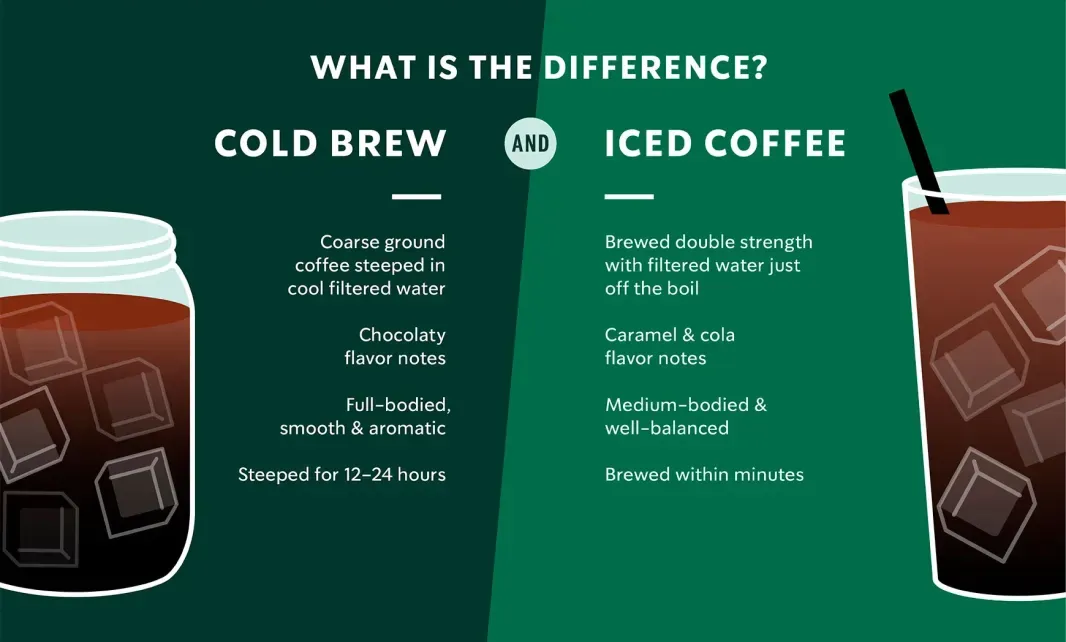
Time replaces heat in this process. Hot water pulls flavor from coffee beans in minutes, but cold water moves much slower. That slow movement is why you can make cold brew coffee at home without any special equipment.
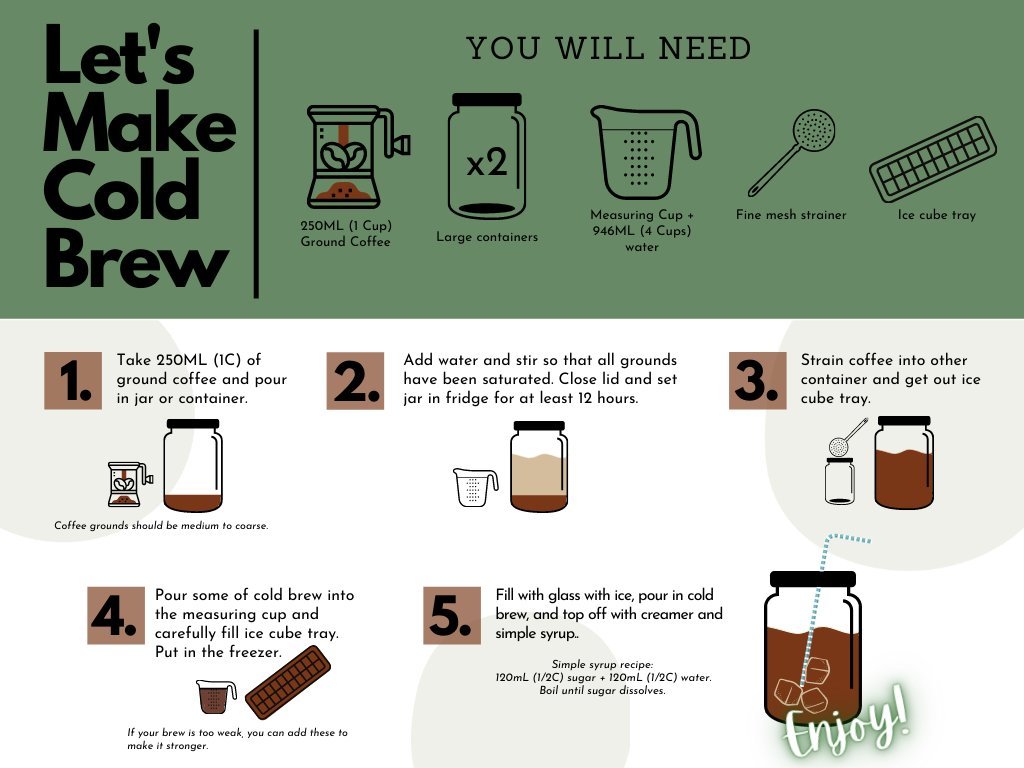
You’ll need coarsely ground coffee, filtered water, and a container with a lid. The ratio matters more than anything else. Use one part coffee to four parts water by weight for a strong concentrate. If you prefer a ready-to-drink cup, use one part coffee to eight parts water.
The grind size keeps things balanced. Coarse grounds look like raw sugar or sea salt. They let water flow around them evenly over many hours. Fine powder clumps together and over-extracts, releasing harsh, bitter compounds into the water.
Room temperature speeds up extraction slightly compared to the fridge. If you leave the jar on the counter, check it after 12 hours. In the refrigerator, give it 18 to 24 hours.
If you want a strong base for milk drinks, steep it 24 hours; if you drink it black, pull it off at 12 hours.
Steps to brew it right
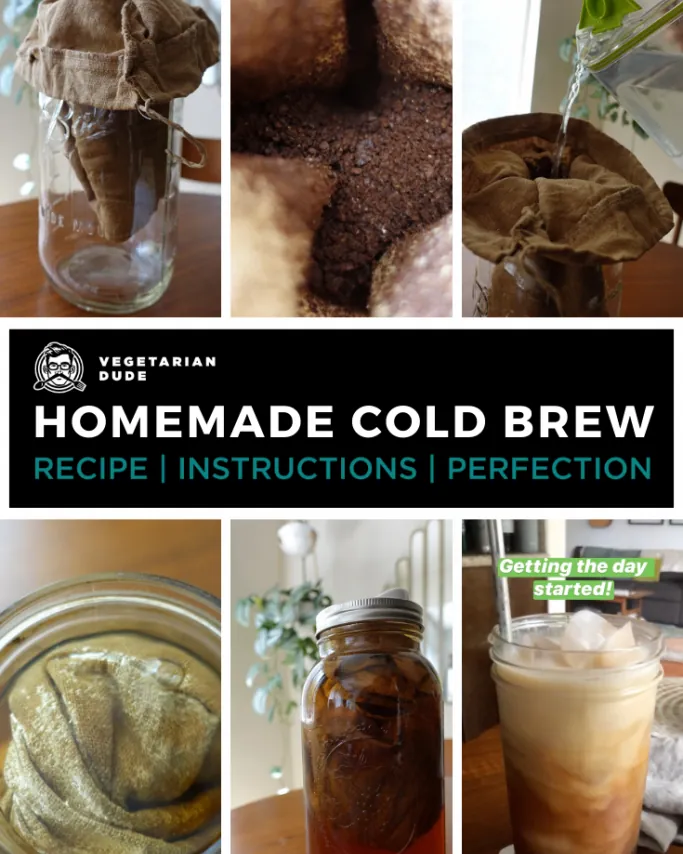
Follow these steps to get a smooth batch every single time. These amounts assume a standard 32-ounce glass mason jar.
- Weigh your coffee. Measure 3 ounces (about 85 grams) of whole beans. Grind them on the coarsest setting until they look like raw sugar.
- Add the grounds. Pour the coarse coffee into your clean glass jar. Don’t pack it down.
- Pour the water. Add 24 ounces of cold filtered water. Stir gently with a wooden spoon so every ground gets wet.
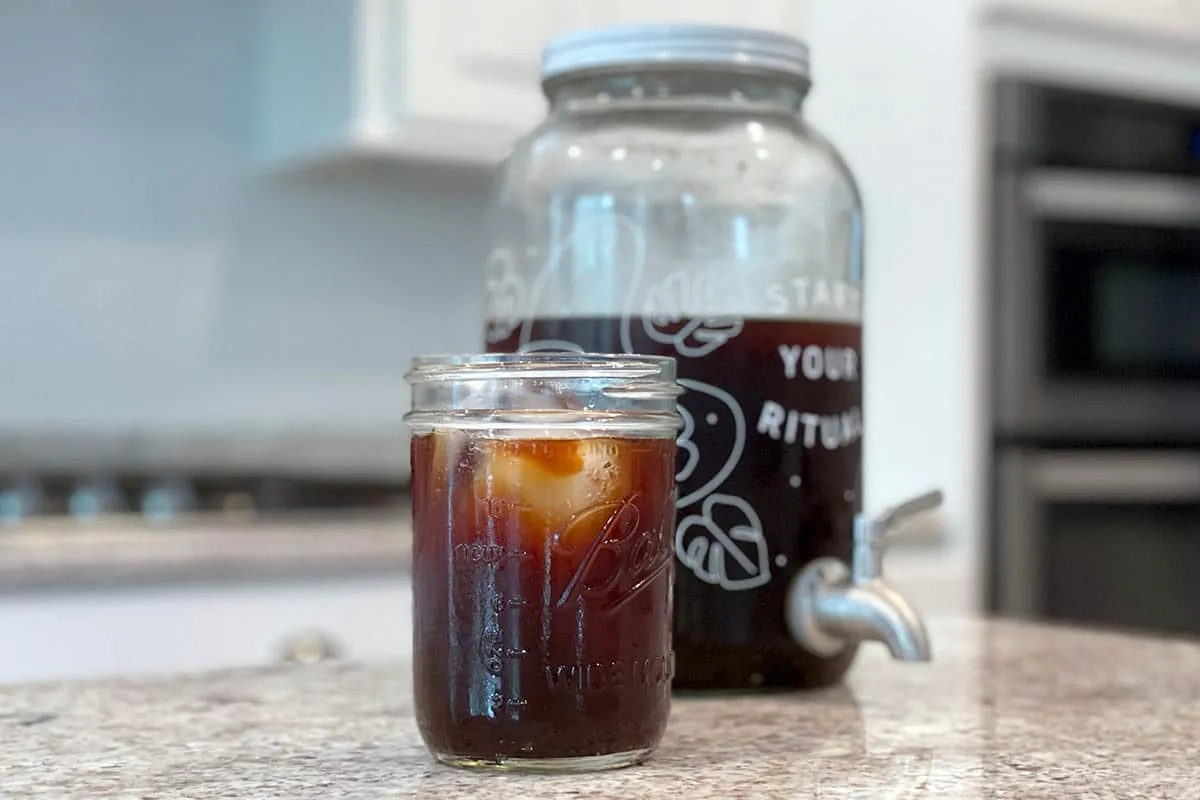
- Cover and wait. Put the lid on tight. Leave it on the counter for 12 to 16 hours, or in the fridge for 18 to 24 hours. The sign it’s working is a dark, cloudy liquid.
- Strain the batch. Pour it through a fine-mesh sieve lined with a paper filter or cheesecloth. Take your time here. Rushing pushes grit through.
- Store it safely. Pour the clear liquid into a sealed bottle and put it straight into the fridge. The US Food and Drug Administration advises keeping perishable homemade beverages below 40°F (safe refrigeration guidelines) to prevent bacterial growth.
Skipping the coarse grind ruins it
Using pre-ground coffee meant for drip machines makes it harder to get a smooth batch. That medium grind extracts too quickly for a long cold steep, often leaving you with a harsh, muddy taste instead of a smooth one. You’ll pour it down the sink and waste both coffee and time.
Before you add water, rub a pinch of the dry grounds between your fingers. They should feel gritty and rough like sand. If they feel soft like flour, start over with whole beans and grind them on a wider setting.
When to buy it instead
Some signs mean you shouldn’t try brewing this yourself. Stop and switch methods if you see these issues.
- You lack a grinder that reaches a coarse setting, because pre-ground drip coffee tends to turn out bitter without careful adjustments.
- Your fridge stays above 40°F, since warm storage lets bacteria grow quickly.
- You need caffeine in under 12 hours, as rushing the steep time leaves it weak.
- You can’t strain out fine sediment, because drinking grit ruins the texture.
A local roaster or grocery store handles these limits properly. Buying their prepared bottles saves your time when your kitchen tools fall short.
Frequently asked questions
Can I use regular pre-ground coffee?
No, standard pre-ground coffee is too fine for this method. It creates a bitter, muddy drink. You need a coarse grind, similar to raw sugar, for proper extraction.
How long does homemade cold brew last?
It stays fresh for 7 to 10 days in a sealed container in the fridge. Toss it if it smells sour or flat before that time passes.
Is it safe to leave it on the counter?
Yes, steeping at room temperature for 12 to 16 hours is safe. Move it to the fridge immediately after straining to keep it fresh.
Why does mine taste bitter?
Bitterness means your grounds were too fine or it steeped too long. Switch to a coarser grind next time, or strain it two hours earlier.
Does it have more caffeine than hot coffee?
Yes, the concentrate has more caffeine per ounce than hot drip coffee. Dilute it with equal parts water or milk before drinking to match a normal cup.
What happens if I steep it for 48 hours?
It turns overly bitter and woody. The sweet spot is 12 to 24 hours. Anything past 24 hours pulls out harsh flavors you can’t fix.
Do I need a special cold brew maker?
No, any glass jar with a lid works perfectly. Dedicated makers just include built-in filters, which you can replace with cheesecloth or paper.
Can I heat it up to drink hot?
Yes, you can warm the diluted concentrate gently on the stove. Don’t boil it, or you’ll lose the smooth flavor that makes it worth brewing.
Starting your first batch
Grab a jar and measure your coarse grounds right now. You’ll have a smooth, strong concentrate waiting in 12 to 24 hours, and you’ll know it worked when the liquid looks dark. If it has been left out too long, wasn’t kept cold enough, or shows visible spoilage, throw it out and ask a local roaster for help.