
As an Amazon Associate, we earn from qualifying purchases. This post contains affiliate links – if you buy through them, we may earn a commission at no extra cost to you.
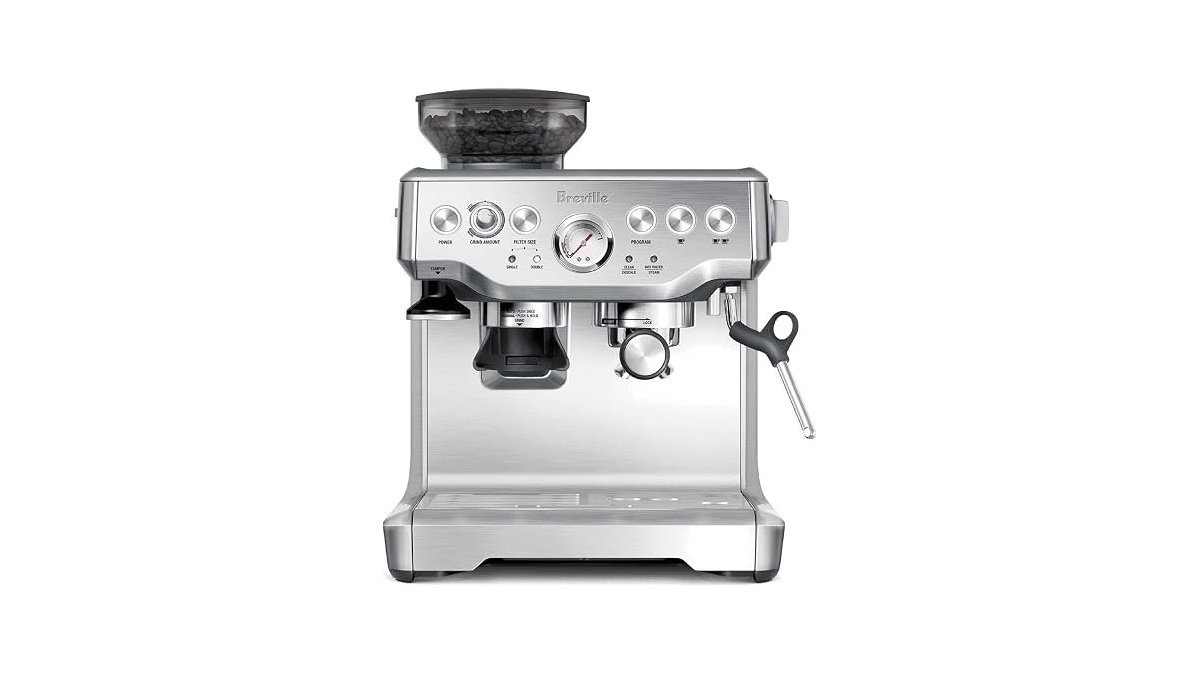
Finding the right coffee machine buying guide is tough because listings mix technical specs with marketing fluff. Most buyers don’t know if they need a built-in grinder, a pod system, or just a simple drip brewer until they’ve used one. This page breaks down what those features actually change in your morning routine before recommending anything. We’ll explain the trade-offs between automation and control so you can match a machine to your real habits. For most people starting out, the Breville BES870XL Barista Express remains the standard pick because its integrated conical burr grinder delivers fresh grounds directly into the portafilter for consistent extraction.
What Actually Matters
Grinder Integration vs. Separate Equipment
Built-in grinders save counter space and reduce workflow steps, but they lock you into one grinding mechanism forever. A separate grinder lets you upgrade later without replacing the whole machine, yet it adds another appliance to clean and store.
Milk Texturing Automation Level
Automatic steam wands produce consistent microfoam with minimal skill, while manual wands require practice but offer full texture control for latte art. The trade-off isn’t just convenience versus quality; it’s about whether you want to learn a technique or get predictable results immediately.
Brew Method Versatility
Machines that handle espresso, drip, and cold brew replace multiple appliances but often compromise on each method’s specialization. A dedicated espresso maker extracts better shots than a hybrid, yet you lose the ability to make a full carafe for guests. Count how many distinct brew modes the listing specifies and whether each uses appropriate pressure and temperature parameters, because some “espresso” functions on combo machines merely push hot water through grounds at insufficient pressure for true extraction.
Footprint vs. Capacity Trade-offs
Compact machines fit small kitchens but typically have smaller water reservoirs and portafilters that limit batch size. Larger units offer more capacity and features but consume significant counter space permanently. Measure your available width and depth before choosing, then compare the listed reservoir volume against your daily cup count to ensure you won’t refill mid-morning, since a machine that’s too small becomes frustrating regardless of its other capabilities.
1. Breville BES870XL Barista Express Espresso Machine

Best for: Learning espresso with integrated grinding
The Breville BES870XL Barista Express features an integrated conical burr grinder that delivers fresh grounds directly into the portafilter.
Digital temperature regulation via PID maintains water at the precise extraction temperature throughout the shot. Low pressure pre-infusion gradually increases pressure at the start to draw out flavors evenly, preventing channeling that causes sour or bitter notes.
Pros
- Integrated conical burr grinder ensures fresh grounds every shot
- PID temperature control maintains stable extraction heat
- Manual steam wand allows full microfoam texture control
- Grind size dial adjusts for different bean densities
- Low pressure pre-infusion promotes even flavor extraction
Cons
- Requires learning curve for dialing in shots
- Steam wand needs manual skill development
2. Ninja Luxe Café Pro 4-in-1 Espresso Machine

Best for: Multiple brew styles with guided assistance
The Ninja Luxe Café Pro combines espresso, drip, cold brew, and hot water functions, using Barista Assist Technology to automate grinding, dosing, and tamping.
Cold pressed espresso functionality brews at lower temperature and pressure specifically for iced drinks, extracting smoother flavors without excess acidity. The built-in conical burr grinder offers 25 settings calibrated per drink type, which simplifies switching between methods but means adjustments are tied to presets rather than continuous variables.
Pros
- Four brew methods replace multiple countertop appliances
- Barista Assist guides beginners through each step
- Hands-free frothing system textures milk automatically
- Cold press function optimizes extraction for iced drinks
- Onboard accessory storage reduces countertop clutter
Cons
- Automated guidance limits advanced manual control
- Integrated grinder settings tied to drink presets
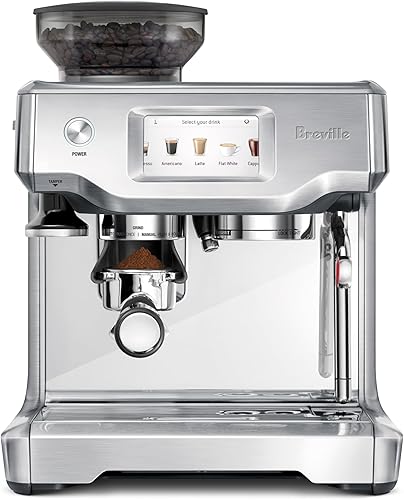
3. Breville BES880BSS Barista Touch Espresso Machine
Best for: Touchscreen simplicity with fast heat-up
The Breville BES880BSS Barista Touch uses a touchscreen display to simplify café drinks into three steps: grind, brew, and milk, allowing users to adjust strength, texture, and temperature digitally.
ThermoJet heating achieves extraction temperature in 3 seconds.
Pros
- Touchscreen saves eight personalized drink profiles
- ThermoJet heats to extraction temp in 3 seconds
- Auto steam wand textures milk hands-free
- Integrated grinder delivers precise dose on demand
- PID regulation ensures stable brewing temperature
Cons
- Auto steam wand limits manual texture control
4. Breville BES450BSS Bambino Espresso Machine

Best for: Small kitchens needing fast espresso
The Breville BES450BSS Bambino retains professional extraction features like PID temperature control and low pressure pre-infusion. The 54mm portafilter holds 19 grams, holding 19 grams for full flavor.
ThermoJet heating reaches optimum extraction temperature in 3 seconds. The automatic steam wand delivers hands-free microfoam at the right temperature, removing the learning curve associated with manual texturing.
Pros
- Compact design fits tight countertop spaces
- ThermoJet heats in 3 seconds for quick use
- Automatic steam wand simplifies milk texturing
- PID control maintains precise extraction temperature
- 54mm portafilter matches commercial basket size
Cons
- Auto wand limits advanced texture customization
5. Ninja Specialty Drip Coffee Maker

Best for: Households using both pods and grounds
The Ninja DualBrew Pro CFP301 accepts both K-Cups and ground coffee through separate pathways, letting users choose convenience or freshness per cup without owning two machines.
An independent hot water system operates separately from the coffee dispenser to prevent cross-contamination, offering two temperature settings for tea, oatmeal, or instant soups.
Pros
- Brews both K-Cups and fresh ground coffee
- Independent hot water prevents flavor cross-contamination
- Fold-away frother saves space when not in use
- Thirteen brew sizes cover cups to full carafes
- Specialty brew mode creates coffee concentrate
Cons
- Frother less capable than dedicated steam wand
- Not designed for true espresso pressure extraction
6. BLACK+DECKER 12-Cup Drip Coffee Maker with Vortex Brewing

Best for: Simple daily drip without complexity
The BLACK+DECKER 12-Cup Vortex focuses on straightforward drip brewing with digital controls and rubberized buttons that resist wear from daily use.
Sneak-A-Cup temporarily stops flow so you can pour mid-brew without dripping. The front-facing water window shows exact fill levels to prevent overflow or weak batches from incorrect ratios. However, the glass carafe doesn’t retain heat like thermal versions, meaning coffee cools faster on the warming plate and may develop burnt notes if left sitting beyond thirty minutes.
Pros
- Sneak-A-Cup allows pouring mid-brew without mess
- Front-facing water window prevents fill errors
- 24-hour programmable auto brew for wake-up coffee
- Rubberized buttons withstand daily pressing
- Two-hour auto shutoff adds safety protection
Cons
- Glass carafe loses heat faster than thermal
- No brew strength or style customization
- Basic feature set lacks specialty options
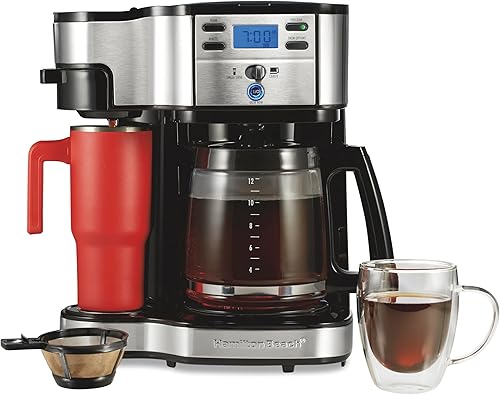
7. Hamilton Beach 2-Way Programmable Coffee Maker & Single Serve Coffee
Best for: Brewing single cups or full pots separately
The Hamilton Beach 2-Way Programmable offers two completely separate brewing systems with individual water reservoirs, so single-serve and carafe sides operate independently without shared components.
AutoPause & Pour interrupts carafe brewing to grab a cup without dripping. Bold and regular strength settings adjust extraction intensity.
Pros
- Separate reservoirs prevent flavor cross-contamination
- Mesh scoop eliminates single-serve pod waste
- AutoPause & Pour allows mid-brew carafe access
- Bold/regular settings adjust extraction strength
- Both single-serve and full-carafe brewing share a single countertop spot
Cons
- Incompatible with K-Cup pods entirely
- Dual systems double cleaning requirements
- Grounds-only limits convenience-focused users
8. Cuisinart Single Serve SS-10

Best for: Pod users wanting programmable features
The Cuisinart Single Serve SS-10 pairs pod compatibility with programmable LCD controls including auto on/off and adjustable temperature settings rarely found in basic pod machines. Five cup-size settings accommodate everything from espresso-style concentrates to large travel mugs. The built-in charcoal water filter improves taste by reducing chlorine and impurities before brewing begins.
Pros
- Adjustable temperature control optimizes per pod type
- Auto-rinse prevents residue between brews
- Built-in charcoal filter improves water quality
- Reusable filter enables ground coffee option
- Five size settings cover espresso to travel mug
Cons
- Pod extraction caps quality below fresh grounds
- Limited to single-serve only, no carafe
9. AeroPress Original Coffee Press

Best for: Portable brewing with full manual control
The AeroPress Original Coffee Press combines French press immersion, pour-over filtration, and air-pressure extraction in one lightweight device that weighs under a pound and packs flat for travel. Air pressure and micro-filtration produce smooth coffee in under two minutes.
Full control over brew time, temperature, and grind size allows personalization that preset machines can’t match, making it ideal for learners exploring how variables affect flavor. The included paper micro-filters ensure grit-free results unlike metal-filter presses, though ongoing filter expenses accumulate over years of daily use.
Pros
- Three brew methods in one portable device
- Full manual control over all brewing variables
- Micro-filters produce smooth grit-free coffee
- Lightweight and shatterproof for travel
- A finished cup is ready almost immediately
Cons
- Manual process requires active attention
- No steam wand for milk-based drinks
10. Chefman CraftBrew Espresso Machine

Best for: First-time espresso buyers on limited budgets
The Chefman CraftBrew CM5418 offers 15-bar pump pressure and a built-in steam wand at an entry point that makes espresso experimentation accessible without major investment. Touch controls and a built-in timer let users adjust shot volume for lungo or ristretto styles.
Pros
- 15-bar pump enables proper espresso extraction
- Touch controls adjust shot volume precisely
- Removable 1.5L reservoir simplifies filling
- Auto descale alert after 500 cycles
- Compact footprint fits small kitchens
Cons
- Descale alert appears after 500 brewing cycles, so heavier use means frequent maintenance stops
Coffee Machine Buying Guide for Who Should Buy Which
The Breville BES870XL Barista Express suits learners wanting integrated grinding and manual skill development without buying separate equipment. Beginners prioritizing guided automation across multiple brew styles should consider the Ninja Luxe Café Pro instead. Those with tight counter space needing fast heat-up and automatic milk texturing will find the Breville BES450BSS Bambino ideal, while touchscreen preference points toward the Breville BES880BSS Barista Touch. Households split between pods and grounds benefit from the Ninja DualBrew Pro CFP301’s dual compatibility, whereas pure drip drinkers wanting simplicity should choose the BLACK+DECKER 12-Cup Vortex. Travelers and experimenters gain the most from the AeroPress Original Coffee Press’s portability and full manual control.
Mistakes That Catch Buyers Out
- Assuming “espresso” on combo machines means true 9-bar extraction when many merely push hot water through grounds at lower pressure for concentrated coffee instead.
- Choosing built-in grinders for convenience without realizing they lock you into one mechanism forever, preventing future upgrades without replacing the entire machine.
- Judging machines by wattage alone when thermal stability depends more on boiler mass and PID control than raw power consumption figures.
- Overlooking reservoir placement and access in tight kitchens, leading to daily frustration when rear-mounted tanks can’t be refilled without moving the unit.
For most home brewers, the Breville BES870XL Barista Express delivers the best balance of integrated grinding and manual learning potential. Before ordering, measure your countertop depth and verify the machine’s clearance requirements including steam wand swing radius to ensure it actually fits your space without obstruction.
Frequently Asked Questions
Do I need a built-in grinder?
Not necessarily. Built-in grinders save space and ensure freshness but prevent future upgrades without replacing the whole machine. If you already own a quality grinder or plan to upgrade later, a machine without integration gives you flexibility. Consider whether saving counter space outweighs being locked into one grinding mechanism permanently before deciding.
Can pod machines make real espresso?
No. True espresso requires 9 bars of pressure forcing water through finely ground coffee, which most pod machines can’t achieve regardless of marketing claims. They produce concentrated coffee that mimics espresso’s strength but lacks the crema and extraction characteristics of genuine espresso. Accept this limitation if choosing pods for convenience over authenticity.
How important is PID temperature control?
Very important for consistent extraction. Without PID, water temperature fluctuates during brewing, causing sour or bitter notes from under- or over-extraction. Machines lacking PID rely on thermostats that cycle on and off, creating significant temperature swings.