
As an Amazon Associate, we earn from qualifying purchases. This post contains affiliate links – if you buy through them, we may earn a commission at no extra cost to you.
Picking the right espresso maker buying guide is hard because listings mix up features that don’t matter with ones that do. You’ll see pump pressure numbers next to grinder settings and wonder which part actually changes your morning cup. This page explains what separates a good machine from one that just looks busy on the counter. For most people, the Ninja Luxe Café Pro is the pick, simply because its 25 grind settings and hands-free frothing cover every drink without needing separate tools.
What Actually Matters
Built-In Grinder vs. Separate Tools
A grinder inside the machine saves counter space. Machines without one need a separate grinder but let you upgrade later. Check how many grind settings are listed before ordering.
Pump Pressure Numbers
Listings often present higher pump pressure as better for extraction. A bigger number doesn’t mean stronger coffee. Look for pre-infusion instead, which wets the grounds gently first.
Milk Frothing Method
Automatic frothers steam milk into microfoam unattended. Manual steam wands take practice but give you total control over texture for latte art. Decide if you want ease or control before buying.
Boiler Setup
A single boiler means you can’t brew espresso and steam milk at the exact same time. Dual boilers let you do both together. Check boiler count if speed matters.
1. Ninja Luxe Café Pro 4-in-1 Espresso Machine

Best for: People who want every drink made automatically.
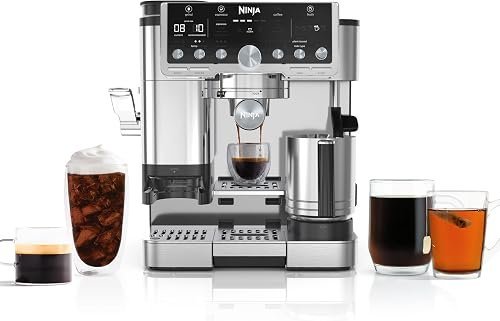
This machine handles four different drink types using Barista Assist Technology to guide you through each step. The built-in conical burr grinder offers 25 settings for cold brew or espresso. The Dual Froth Pro system uses a magnetic whisk and automatic steamer for hands-free milk prep.
It includes an integrated tamper, baskets, and stored descaling powder. The cold pressed espresso function brews at lower pressure for smoother iced drinks.
Pros
- 25 grind settings handle any coffee style easily
- Hands-free frothing makes two drinks at once
- Integrated tamper keeps the counter clean
- Onboard storage holds all included accessories
Cons
- XL milk jug makes enough for two drinks at once, so three lattes means refilling.
2. Nespresso Vertuo Coffee and Espresso Machine by De’Longhi

Best for: Drinkers who want zero mess or effort.
Pod machines trade grinding and tamping for convenience. Capsules and buttons remove variables that cause bad shots. The listing points directly to the user manual for setup, which tells you the process relies entirely on following their specific instructions rather than your own barista skills.
Pros
- No grinding or tamping required
- Consistent results from sealed capsules
Cons
- Limited to proprietary brand capsules
- No manual control over extraction variables
3. De’Longhi Stilosa Compact Manual Espresso Machine

Best for: Beginners wanting a traditional manual experience.
The stainless steel boiler provides durability despite the compact size. It includes a portafilter, a measuring scoop that doubles as a tamper, and filters for single or double shots.
Pros
- Stainless steel boiler built for long life
- Includes single and double shot filters
- Compact design fits small kitchens easily
- Manual wand teaches real texturing skills
Cons
- Requires learning curve for milk frothing
- Scoop tamper lacks heavy tamping pressure
4. Chefman Crema Deluxe Espresso Machine with Double Boiler

Best for: Busy mornings needing simultaneous brewing and steaming.
The double boiler system lets you froth milk and brew espresso simultaneously. The 15-bar pump brews while the second boiler handles steam. That dual setup is the deciding factor for anyone making back-to-back milk drinks.
It features a conical burr grinder with 30 precision settings that dispenses directly into the 58mm portafilter.
Pros
- Dual boiler allows simultaneous brew and steam
- 30-setting grinder dispenses into portafilter
- The 58mm portafilter comes with single and double shot baskets.
- 3-liter tank reduces constant refilling needs
Cons
- 3-liter water reservoir listed, so a high-volume office setup has to plan around refills.
5. Nespresso Essenza Mini Coffee and Espresso Machine by De’Longhi

Best for: Tiny kitchens needing basic espresso quickly.
This machine runs on 1150 watts and holds 110ml of water in its tank. Those numbers tell you exactly what it is: a highly focused device meant to pull one or two shots before needing a refill.
Pros
- Extremely small footprint saves space
- 1150 watts provides fast heating
- Simple operation requires no skill
Cons
- 110ml tank needs frequent refilling
6. Espresso Machine with Grinder

Best for: Tinkerers who want precise temperature control.
PID temperature control lets you choose between 194°F, 198°F, and 205°F to match specific beans. The 20-bar pressure system uses pre-infusion technology to wet the grounds evenly before full pressure hits, reducing channeling. You get 44 grind settings and a 0.1-second precision dosing timer.
Anti-static technology and a bean hopper air blower keep the grinding process cleaner than usual. It ships with a standard 51mm portafilter, though the listing notes you can upgrade to an aftermarket 58mm version.
Pros
- PID control offers three exact temperatures
- 44 grind settings allow fine adjustments
- Pre-infusion reduces uneven extraction channeling
- Anti-static tech minimizes ground coffee mess
Cons
- Ships with 51mm rather than 58mm portafilter
- Complex settings overwhelm casual coffee drinkers
7. Bialetti Moka Express Squid Game©

Best for: Stovetop brewing without electricity or pumps.
This aluminum pot makes 6 espresso shots, holding 9 oz (270 ml) of liquid. It works by boiling water on a gas stove, pushing steam up through the coffee grounds.
You fill the boiler to the safety valve, add ground coffee without pressing it down, and turn off the heat when it gurgles. It must only be rinsed with clean water, as detergents or dishwashers will damage the aluminum and alter the taste.
Pros
- Works entirely without electricity
- Aluminum body heats quickly on gas
- Rinsing only makes cleanup very fast
- Unique design stands out visually
Cons
- Can’t be washed with soap or dishwasher
- Induction cooktops require separate adapter plate
8. CASABREWS PFAS-Free Espresso Machine with Milk Frother Steam Wand
Best for: Health-conscious buyers wanting simple operation.
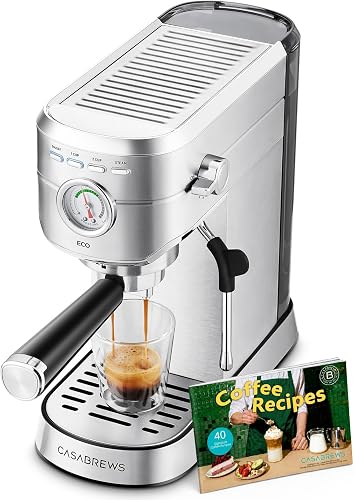
The fully PFAS-free internal water path ensures no toxins touch your water during brewing. The 20 BAR professional pump includes a built-in pressure gauge so you can watch extraction happen in real time. You get a 34oz removable water tank for multiple cups.
The steam wand textures milk for lattes, but there’s a strict rule: you can’t brew coffee immediately after frothing. The machine must cool down first to prevent triggering Over-Heating Protection Mode, indicated by flashing lights. Buyers who want to make a cappuccino and then instantly pull another shot for a friend shouldn’t choose this.
Pros
- PFAS-free water path avoids plastic contact
- Solid aluminum portafilter aids heat stability
- Built-in pressure gauge guides extraction visually
- 34oz tank limits constant refilling
Cons
- Requires cooldown between steaming and brewing
- Flashing lights interrupt workflow if rushed
9. Breville BES840BSXL Infuser Espresso Machine

Best for: Enthusiasts seeking third-wave specialty results.
Digital PID temperature control adjusts in 2°F increments, giving you exact command over extraction heat. Low pressure pre-infusion gradually increases pressure at the start, drawing flavors out evenly for a balanced taste. The 1650W element powers the high-pressure steam wand for faster heat-up and proper microfoam. Auto purge automatically clears the heat system after steaming so your next shot extracts correctly.
Volumetric control lets you choose one shot, two shots, or manual pouring at the touch of a button. It includes single and dual wall filter baskets plus a stainless steel jug. However, it doesn’t have a built-in grinder, meaning you must buy one separately.
Pros
- PID adjusts in precise 2-degree increments
- Auto purge prevents temperature surfing delays
- Pre-infusion draws flavors out evenly
- High power element creates fast steam
Cons
- Requires purchasing a separate coffee grinder
10. Philips 3300 Series Fully Automatic Espresso Machine with integrated milk
Best for: Users wanting completely automated daily drinks.
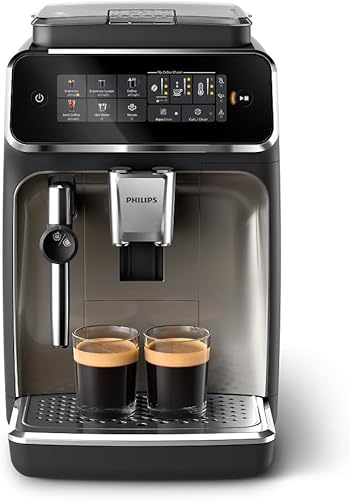
This super-automatic machine grinds, tamps, and brews at the push of a button using a full color display. You select from five presets like espresso, lungo, or iced coffee, and adjust strength and volume to your liking. The classic milk frother handles dairy and plant-based alternatives automatically. The SilentBrew design operates 40% quieter, which changes early mornings if others are sleeping nearby.
The AquaClean filter means you won’t need to descale for up to 5,000 cups when changed as prompted. Descaling frequency depends heavily on water hardness, so checking your local supply is vital before trusting that number. Buyers who enjoy the hands-on ritual of tamping and pulling manual shots shouldn’t buy this.
Pros
- Automates grinding, tamping, and brewing steps
- Five presets cover hot and iced options
- AquaClean filter extends time between descaling
- Quieter operation suits early morning use
Cons
- Removes manual control from the process
- Automated systems have more parts to maintain
Three other machines deserve a brief mention. The XIXUBX Espresso Machine offers a compact white design with a milk frother for tight spaces. The Chefman Supreme Bar Espresso Machine mirrors the Crema Deluxe with a 15-bar pump, 30 grind settings, and a 3L tank in stainless steel. The Lavazza Serve Espresso Coffee Machine uses specific BLUE capsules with simple touch controls and a tiny 5.3-inch width for single-serve needs.
Who Should Buy Which
If you use your machine hardest every morning making multiple milk drinks, the Chefman Crema Deluxe handles simultaneous brewing and steaming. First-time buyers who want to learn should grab the De’Longhi Stilosa for its manual control and stainless steel boiler. If you want the fewest things to go wrong, the Philips 3300 Series automates everything and limits descaling. Replacing a machine that left you guessing? The Breville BES840BSXL Infuser gives exact 2°F PID adjustments. For pure simplicity, the Ninja Luxe Café Pro does it all guided.
Mistakes That Catch Buyers Out
- Judging a machine solely by its maximum bar pressure instead of checking if it has pre-infusion for even extraction.
- Choosing a built-in grinder for convenience when you already own a better standalone one that will now gather dust.
- Assuming a “compact” espresso maker holds enough water for your household without checking the actual reservoir milliliter count.
- Taking a “5,000 cups without descaling” claim at face value without realizing your home’s hard water will shorten that drastically.
For most people, the Ninja Luxe Café Pro remains the strongest choice because its 25 grind settings and automatic frothing cover every drink type. Before you order anything, measure your available counter space and check your local water hardness.
Frequently Asked Questions
Do I really need a built-in grinder?
No, you don’t. A built-in grinder saves counter space and keeps everything in one unit. But if it breaks, the whole machine stops working. Buying a separate grinder means you can upgrade your burrs later without replacing your entire espresso maker.
What does pre-infusion actually do for espresso?
Pre-infusion wets the coffee grounds gently before full pressure hits them. This stops channeling, where water finds one weak path and ignores the rest of the puck. The result is a more balanced flavor and richer crema compared to machines that blast full pressure immediately.
Can I use regular tap water in these machines?
You can, but mineral buildup may clog the internal pipes. Hard water forces you to descale much more often, regardless of what a filter claims. Using filtered water protects the heating elements and keeps the tasting notes of your coffee intact longer.
Why can’t I brew right after steaming milk?
Single boiler machines heat water to a much higher temperature for steam than for brewing. If you pull a shot immediately after steaming, the water is too hot and burns the coffee. You must wait for the machine to cool down or purge the excess heat first.
Is a 51mm or 58mm portafilter better?
A 58mm portafilter is the commercial standard, offering more space for water to flow evenly through the grounds. A 51mm basket is smaller and common on home machines. Both work, but 58mm gives you access to a wider variety of professional aftermarket accessories and tampers.
Conclusion
Don’t overthink the specs when you’re ready to buy. Just pick a machine that fits your morning routine and start brewing. You’ll learn more from pulling real shots than reading reviews, so get comfortable experimenting with beans until you’ve found your perfect cup.