
As an Amazon Associate, we earn from qualifying purchases. This post contains affiliate links – if you buy through them, we may earn a commission at no extra cost to you.
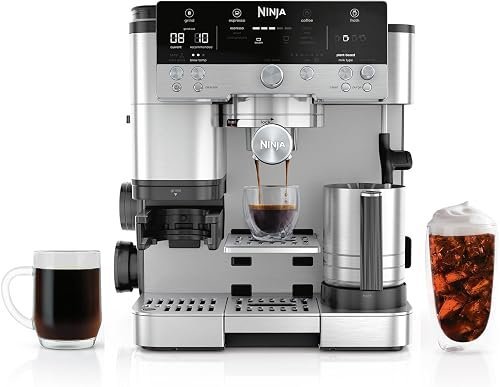
This coffee maker buying guide 2025 clears up picking the right machine. You don’t need a degree in engineering to make good coffee at home. The confusion comes from mixing up what a machine does with how it does it. A grinder built into the housing doesn’t guarantee better flavor if the water temperature drifts during the brew cycle. For most people, the Ninja Luxe Café Premier is the pick because its Barista Assist Technology automates grinding, dosing, and tamping.
What Actually Matters
Built-In Grinders vs. Separate Ones
A grinder inside the machine saves counter space but locks you into one grinding method. Burr grinders crush beans evenly, while blade grinders chop them unevenly. An uneven grind makes some cups bitter and others weak. Check the listing to see if it specifies “burr” or “blade” before you order.
Pod Convenience vs. Ground Coffee Control
Pods drop into a slot and brew fast, yet they limit you to whatever roasts fit that plastic shell. Ground coffee lets you choose any bean on earth, but it demands measuring and cleanup. If you drink different roasts every week, pods will frustrate you quickly.
Programmable Timers vs. Manual Brewing
A timer wakes you up to a finished pot, which matters if your mornings are rushed. Manual brewers give you total control over steep time and water flow, but they require you to stand there. The trade-off is convenience against precision.
Carafe Material: Glass vs. Thermal
Glass carafes sit on a hot plate that keeps cooking the coffee after brewing stops. Thermal steel carafes hold heat without adding energy, preserving the flavor you just extracted. A warming plate left on too long turns bright notes bitter.
1. Ninja Luxe Café Premier 3-in-1 Espresso Machine
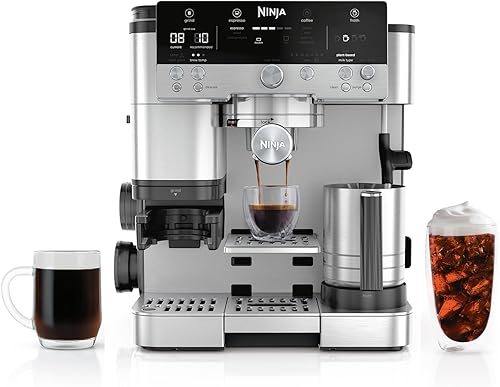
Best for: People who want espresso, drip, and cold brew automatically.
This machine tackles the built-in grinder question by using a conical burr grinder with 25 settings, meaning you aren’t locked into a single texture. It brews espresso, drip coffee, and cold brew from one housing, guided by Barista Assist Technology that handles weight-based dosing and assisted tamping. The Dual Froth System combines a spinning whisk with an automatic steamer so you can walk away while milk froths.
Pros
- Conical burr grinder offers 25 precise settings.
- Makes espresso, drip, and cold brew.
- Hands-free frothing creates microfoam automatically.
- Includes hard water testing kit and cleaning supplies.
Cons
- Many accessories require regular washing.
- Too complex for plain black coffee drinkers.
2. Breville BES870XL Barista Express Espresso Machine

Best for: Home baristas wanting manual control over espresso extraction.
This machine uses an integrated precision conical burr grinder that delivers grounds directly into the portafilter. Unlike automated systems, it uses low pressure pre-infusion that gradually increases pressure to draw out flavors evenly. Digital temperature regulation (PID) ensures water hits the grounds precisely right every time.
Pros
- PID digital temperature regulation ensures precise extraction.
- Low pressure pre-infusion balances flavor evenly.
- Intuitive grind size dial adjusts for any bean.
- Steam wand creates hand-textured microfoam.
Cons
- Requires practice to master manual extraction.
- Not suited for push-button convenience seekers.
3. Cuisinart Coffee Maker
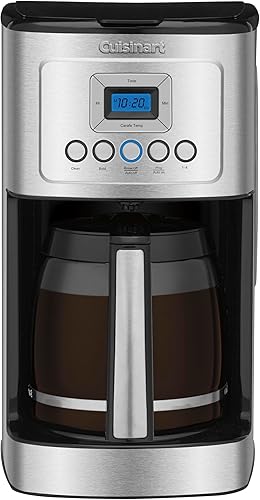
Best for: Households needing large batches with adjustable warming temperatures.
This machine uses a glass carafe with an adjustable warming temperature feature. You set the warming plate to Low, Medium, or High, which controls how much the hot plate cooks the coffee after brewing. It holds 14 cups, where each cup equals approximately 5 oz depending on your brewing technique.
Pros
- Adjustable warming plate prevents overcooked coffee.
- 14-cup capacity serves large households easily.
- 24-hour programmability automates morning routines.
- Brew Pause allows pouring mid-cycle.
Cons
- Glass carafe relies entirely on warming plate.
- Five-ounce cups mean smaller actual servings.
4. Keurig K-Duo Hot & Iced Single Serve & Carafe Coffee

Best for: Homes split between pod convenience and ground coffee pots.
This brewer solves the pod versus ground coffee problem by accepting both K-Cup pods and loose grounds in one machine. MultiStream Technology saturates grounds evenly to extract full flavor whether you’re brewing hot or over ice.
Pros
- Brews both K-Cup pods and ground coffee.
- Shared 72oz reservoir reduces constant refilling.
- Brew over ice adjusts temperature to prevent melting.
- Programmable carafe brews a full day in advance.
Cons
- Relies heavily on plastic pod system.
- Not suited for strict ground-coffee purists.
5. Cuisinart Automatic Grind & Brew 12-Cup Coffee Maker with Blade

Best for: Drip lovers wanting freshly ground beans without separate equipment.
This machine uses a blade grinder to automatically grind whole beans right before brewing. That means faster prep but potentially less uniform particle size compared to burr models. It includes a unique grind-off feature, letting you bypass the grinder entirely when you prefer pre-ground blends.
Pros
- Blade grinder processes beans immediately before brewing.
- Grind-off option accepts pre-ground coffee easily.
- Permanent gold-tone filter eliminates paper waste.
- Charcoal water filter improves incoming water quality.
Cons
- Blade grinder produces less uniform grounds.
- Unsuitable for those needing precise grind consistency.
6. Hamilton Beach 2-Way Programmable Coffee Maker & Single Serve Coffee
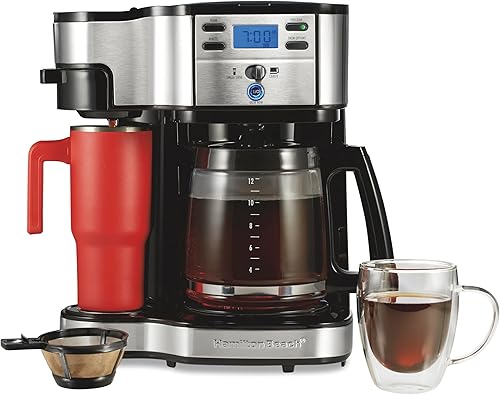
Best for: Users wanting single cups and full pots without plastic pods.
This machine refuses pods and brews only ground coffee on both sides. You use the included single-serve mesh scoop to add grounds directly, brewing up to 14 oz into a travel mug or up to 12 cups into a carafe.
Pros
- Brews single cups and 12-cup pots simultaneously.
- Uses ground coffee exclusively, eliminating plastic pods.
- Two separate water reservoirs simplify filling.
- AutoPause & Pour interrupts brewing for quick cups.
Cons
- Absolutely incompatible with K-Cup style pods.
- Requires manual measuring for every single brew.
7. Veken 34oz French Press Coffee Maker

Best for: Manual brewing fans who want plastic-free contact surfaces.
This press uses thickened high borosilicate glass that resists thermal shock up to 360°F. A 4-level filtration system stacks a spiral plate, cross plate, and two fine mesh screens to trap tiny particles. Ounce markings printed on the exterior pair with an included scoop to guide your ratios.
Pros
- Zero plastic contacts the brewing liquid.
- Four-layer stainless steel filter blocks sludge.
- Borosilicate glass resists thermal shock to 360°F.
- Printed ounce markings simplify precise measuring.
Cons
- Requires complete manual operation every time.
- Glass carafe needs careful handwashing.
8. Ninja Hot & Iced XL Coffee Maker with Rapid Cold

Best for: Drinkers who switch between hot coffee and rapid cold brew.
This model focuses on temperature versatility. Thermal Flavor Extraction delivers even saturation and precise temperature control across four brew styles: Classic, Rich, Over Ice, and Cold Brew. The cold brew function produces smooth coffee in as little as 10 minutes, avoiding the overnight wait traditional methods demand.
Pros
- Rapid cold brew finishes in 10 minutes.
- Auto-metering reservoir measures water automatically.
- Four distinct brew styles cover hot and iced.
- A permanent filter is included with the machine.
Cons
- Can’t brew espresso or pressurized drinks.
9. Mr. Coffee Programmable Coffee Maker 5 Cups with Auto Pause

Best for: Small kitchens needing basic programmable drip coffee.
When counter space dictates the choice, this compact design fits anywhere while holding 25 oz, which brews enough for a couple’s morning mugs. It still includes a Brew Later feature to set your timing ahead of waking up.
Pros
- Compact footprint fits extremely small kitchens.
- Brew Later feature schedules morning coffee.
- Auto shut-off activates safely after two hours.
- A reusable filter is included.
Cons
- 25 oz capacity limits output significantly.
- Only serves a solo drinker or a pair at most.
10. Technivorm Moccamaster 79112 KBT Coffee Brewer
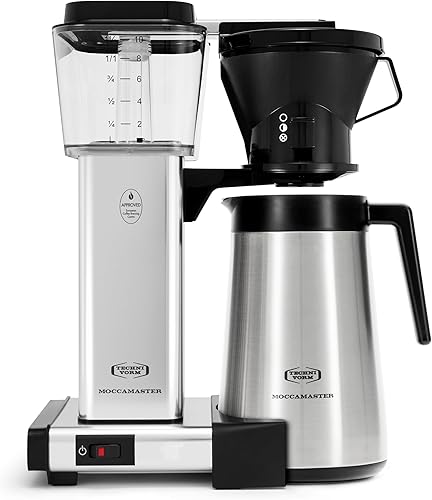
Best for: Purists demanding certified brewing standards and thermal carafes.
This brewer addresses the glass versus thermal carafe decision with a stainless steel thermal carafe that keeps coffee hot longer without a warming plate. A manual adjust brew basket lets you customize the flow rate yourself. The construction is sturdy and durable, backed by a 5-year warranty that covers long-term use.
Pros
- Stainless steel thermal carafe preserves flavor perfectly.
- Brews full 40 oz in 4 to 6 minutes.
- Manual brew basket allows flow customization.
- Backed by comprehensive 5-year manufacturer warranty.
Cons
- Manual adjust brew basket requires user intervention during brewing
Who Should Buy Which
If you pull multiple shots daily and want automation, the Ninja Luxe Café Premier handles grinding and tamping for you. First-time buyers wanting traditional espresso should learn on the Breville BES870XL Barista Express, as its PID control forgives early mistakes. Pick the Veken 34oz French Press if you want manual brewing without electricity. If your old drip machine failed your family, the Cuisinart DCC-3200 replaces it with adjustable warming. For pod-and-pot homes, the Keurig K-Duo Gen 2 covers both. Small kitchens belong to the Mr. Coffee 5-Cup.
Mistakes That Catch Buyers Out
- Judging a machine solely by its total cup count without realizing manufacturers often define a “cup” as 5 oz instead of a standard 12 oz mug.
- Choosing a built-in blade grinder for convenience when you drink light roasts that actually require the uniform particles of a burr grinder.
- Assuming every “cold brew” button performs the same slow steep, when some machines merely run hot coffee over ice rapidly.
- Taking the loudest claim about “barista-quality” foam at face value without checking if the machine uses a manual steam wand or an automatic whisk.
The Ninja Luxe Café Premier remains the pick for most people because its Barista Assist Technology automates the hardest steps. Before ordering anything, measure your available counter depth and check your cabinet height clearance to ensure the machine physically fits where you plan to use it.
Frequently Asked Questions
How often should I descale my coffee maker?
Descaling frequency depends entirely on your water hardness, not a fixed calendar schedule. Hard water leaves mineral deposits that block heating elements and alter brewing temperatures. Certain Ninja models ship with hard water testing kits. Test your tap water first to establish your baseline.
Does a higher wattage machine brew better coffee?
Wattage determines how fast water heats up, not how well it extracts flavor. Proper extraction relies on maintaining a stable temperature throughout the entire brew cycle. Machines with digital temperature regulation achieve this stability regardless of their total power draw. Don’t judge brewing capability purely by electrical specifications.
Can I put whole beans in any coffee maker?
Only machines explicitly built with integrated grinders accept whole beans. Pouring beans into a standard drip basket meant for grounds will damage the filter and produce no coffee. If your chosen machine lacks a grinder, you must purchase a separate grinding device to process whole beans before brewing.
Why does my coffee taste bitter after sitting?
Bitterness develops when brewed coffee sits on a glass carafe’s heated warming plate for too long. The continuous heat essentially cooks the extracted liquid, breaking down pleasant flavor compounds. Switching to a thermal carafe prevents this by insulating the coffee without adding external energy. Drink glass-carafe coffee promptly.
Are reusable filters better than paper ones?
Reusable metal filters allow more natural oils and fine particles into your cup, creating a heavier body. Paper filters absorb those oils and trap fines, resulting in a cleaner, brighter tasting beverage. Neither is objectively superior; the right choice depends entirely on whether you prefer rich texture or absolute clarity.
Conclusion
Good coffee starts with a simple choice, not a complicated setup. Once your new machine arrives, don’t rush the first cup. Run plain water through it twice to clear out any factory dust. Then brew slowly, taste closely, and you’ll find your rhythm.