
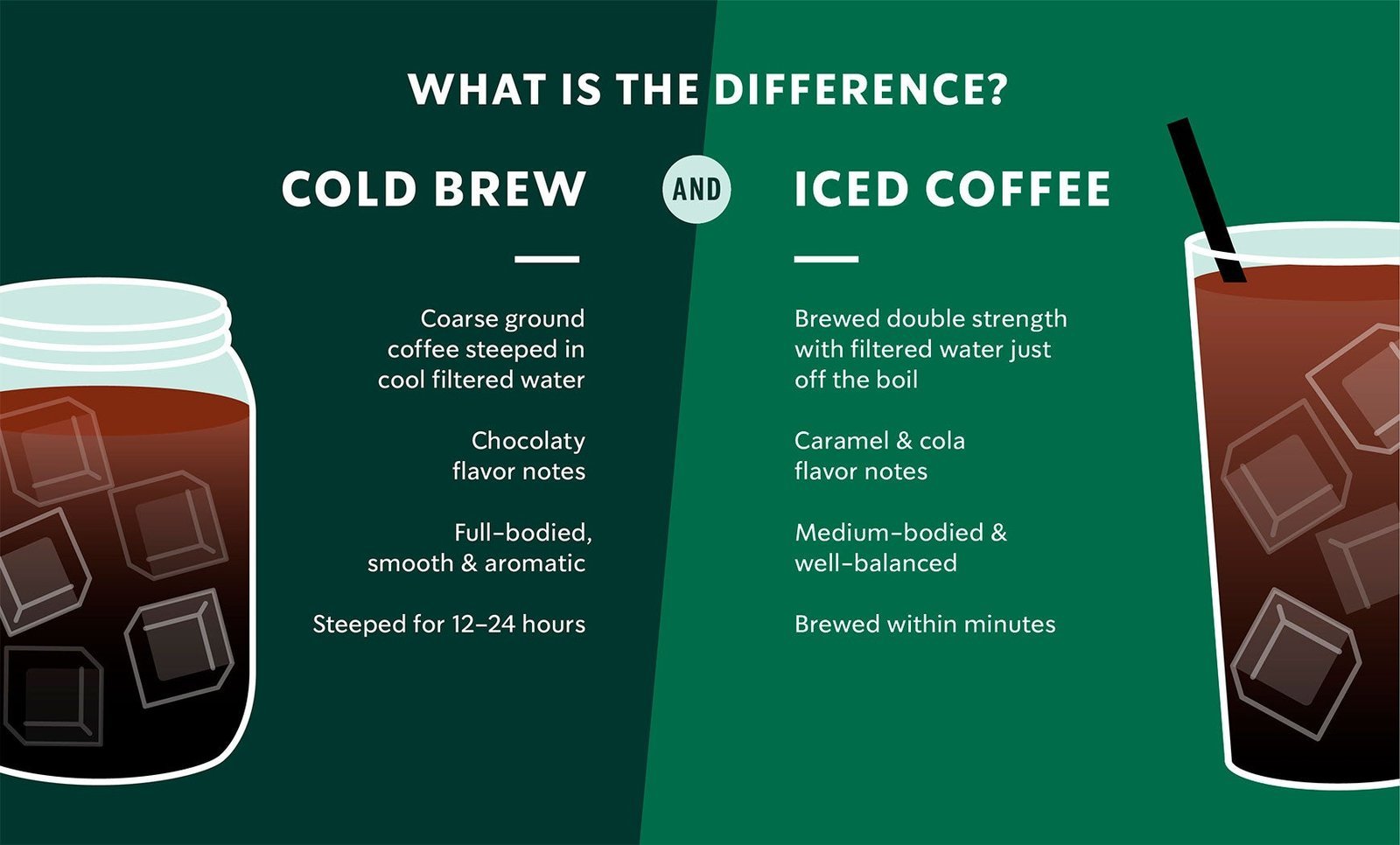
Iced coffee and cold brew are both refreshing caffeinated beverages, but they’re fundamentally different drinks created through distinct brewing processes. While iced coffee is simply hot-brewed coffee that has been cooled down, cold brew is never exposed to heat, relying instead on a long steeping process to extract flavor. Understanding these differences will help you decide which preparation method suits your personal palate and daily routine.
Key Takeaways
Photo: www.seriouseats.com on Google
- Iced coffee is brewed hot and chilled, while cold brew steeps in cold water for 12 to 24 hours.
- Cold brew is generally less acidic and smoother than traditional iced coffee.
- You can make both styles at home using basic kitchen equipment like a French press or a pour-over cone.
- Iced coffee offers a brighter, more complex flavor profile due to heat-based extraction.
- Cold brew concentrate can be stored in the refrigerator for up to two weeks.
Distinguishing Iced Coffee and Cold Brew
The primary distinction between these two drinks lies in the thermal energy used during the extraction phase. Hot water, used for iced coffee, dissolves coffee solids quickly and releases aromatic compounds that create a vibrant, acidic, and sometimes fruity cup. Because the water is hot, the process takes only a few minutes to complete.
Conversely, cold brew uses time as a substitute for heat. By steeping coarse coffee grounds in room-temperature or cold water for an extended period, the extraction process becomes much slower. This method avoids the chemical changes that occur at high temperatures, resulting in a cup that’s markedly lower in acidity and bitterness. According to the National Coffee Association, the cold-brewing method produces a distinct flavor profile that many drinkers find more palatable if they have sensitivities to acidic foods.
Comparing Brewing Methods
| Feature | Iced Coffee | Cold Brew |
|---|---|---|
| Water Temp | Hot (195°F–205°F) | Room Temp or Cold |
| Time Required | 3–5 Minutes | 12–24 Hours |
| Flavor Profile | Bright, Acidic, Bold | Smooth, Sweet, Low-Acid |
| Caffeine Level | Typically Higher | Varies by Dilution |
Is Iced Coffee Cold Brew?
No, iced coffee isn’t cold brew, and using the terms interchangeably can lead to disappointing results if you’re looking for a specific flavor experience. If you order an iced coffee at a cafe, you’re almost certainly getting a standard drip coffee poured over ice. If you want the low-acid, syrupy body of cold brew, you must specifically request it. The extraction science behind these methods ensures they remain unique categories in the specialty coffee world.
Why Choose Iced Coffee?
Photo: www.simplyrecipes.com on Google
Iced coffee is the superior choice when you crave the complex, nuanced flavors of a high-quality single-origin bean. The hot water extracts delicate floral and citrus notes that are often lost during the long, slow steeping of cold brew. It’s also the most convenient option if you need a drink immediately, as you can simply brew a cup of coffee and pour it over ice.
- Flash-chilled coffee (brewed hot directly onto ice).
- Standard drip coffee cooled in the fridge.
- Pour-over methods served over ice cubes.
Benefits of Cold Brew
Cold brew is the ultimate choice for those who want a mellow caffeine kick without the sharp bite of acidity. Because it creates a highly concentrated liquid, it’s incredibly versatile. You can drink it straight, dilute it with water, or mix it with milk to create a creamy, latte-like beverage at home.
Pro Tip: Always use a coarse grind for your cold brew to ensure the filter doesn’t clog and the final cup remains free of gritty sediment.
How to Make Iced Coffee
To make the best iced coffee, you should use the “flash-chilling” technique. This involves brewing a concentrated amount of hot coffee directly over a vessel filled with ice. The rapid cooling locks in the aromatics before they have a chance to evaporate.
- Measure your coffee grounds using a 1:15 ratio.
- Brew the coffee using half the required water hot.
- Fill the carafe with enough ice to make up the remaining water volume.
- Pour the hot coffee over the ice to chill instantly.
Steps for Perfect Cold Brew
Making cold brew is a passive process that requires very little active effort but significant patience. The goal is to create a flavorful concentrate that you can keep in your fridge for several days of easy pouring.
- Combine one cup of coarsely ground coffee with four cups of cold, filtered water.
- Stir gently to ensure all grounds are fully saturated.
- Cover the container and let it steep at room temperature for 18 hours.
- Strain the mixture through a fine-mesh sieve followed by a paper filter.
- Store the resulting concentrate in a sealed glass bottle.
Troubleshooting Your Brew
Photo: www.joyridecoffee.com on Google
If your coffee tastes thin or watery, you likely used too much ice or diluted your concentrate too aggressively. If it tastes bitter or astringent, your grind size might be too fine, or you may have steeped the cold brew for too long. Always adjust your coffee-to-water ratio one variable at a time until you find the balance that works for your specific beans.
Warning: Never leave your cold brew steeping for longer than 24 hours at room temperature, as the grounds can begin to impart woody or harsh flavors into the liquid.
Frequently Asked Questions
Which has more caffeine?
Generally, cold brew has more caffeine because it uses a higher ratio of coffee grounds to water. However, because it’s a concentrate, the final caffeine content depends entirely on how much water or milk you add when serving. Iced coffee is typically served at full strength, so it may feel stronger depending on the dilution of your cold brew.
Can I heat up cold brew?
Yes, you can heat up cold brew. It will still retain its lower acidity levels compared to coffee that was originally brewed hot. Simply add boiling water or microwave the concentrate to reach your desired temperature. It’s a great way to enjoy a smooth, low-acid hot cup of coffee without the bitterness associated with traditional drip methods.
Does cold brew taste like iced coffee?
No, they taste quite different. Iced coffee retains the bright, sharp, and slightly fruity characteristics of hot-brewed coffee. Cold brew is much smoother, often described as having chocolatey or nutty undertones with very little perceived acidity. If you find standard coffee gives you heartburn, you’ll likely prefer the taste and physical effect of cold brew.
How long does it last?
Cold brew concentrate can be stored in an airtight container in the refrigerator for seven to fourteen days. For the best flavor, try to consume it within the first week. Iced coffee is best consumed immediately; if you keep it in the fridge, it will lose its aromatic complexity and may start to taste stale or “flat” after just twenty-four hours.
Conclusion
You now have the knowledge to distinguish between these two popular methods and choose the right one for your morning routine. Experiment with different coffee roasts and grind sizes to see how they impact the final flavor profile. Start by trying a small batch of cold brew tonight so you can enjoy a smooth, refreshing cup tomorrow morning.