
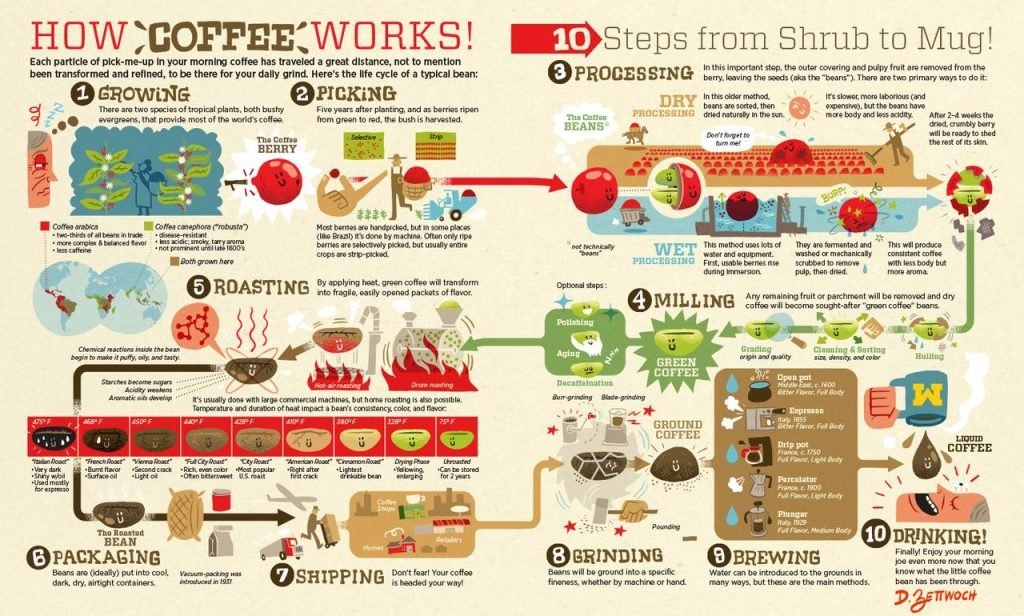
Coffee starts as a cherry on a tree and ends as a roasted bean, and you see how coffee is processed in steps by moving from fresh fruit to stable green seeds. It involves removing the pulp, drying the inner beans, and then heating them until they reach the color and flavor you enjoy.
Key stages in coffee production
| Stage | What it does | What you notice when it goes wrong |
|---|---|---|
| Harvesting | Picks ripe red cherries | Green beans taste sour |
| Depulping | Removes fruit skin/pulp | Mold grows on beans |
| Fermentation | Breaks down sticky mucilage | Off-flavors or vinegar taste |
| Drying | Lowers moisture to 11% | Beans rot in storage |
| Milling | Removes dry parchment layer | Uneven roast or dust |
| Roasting | Develops final coffee flavor | Burnt or grassy profile |
Note: Moisture levels are confirmed by the National Coffee Association guidelines.
Methods for turning cherries into beans
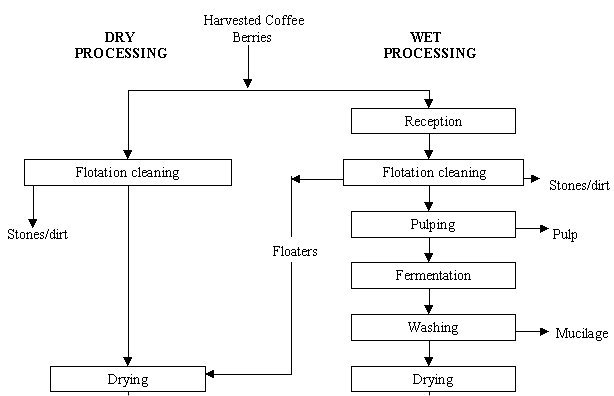
- Sort the harvested cherries by density in water tanks, removing floaters that are usually unripe or damaged.
- Remove the outer fruit skin using a depulping machine, which exposes the seeds covered in a slippery layer of mucilage.
- Ferment the beans in tanks for 12 to 48 hours, depending on the ambient temperature and humidity, to break down the sticky mucilage layer naturally.
- Wash the fermented beans with clean water to remove all remaining fruit residue, ensuring the surface is clean, which takes about 20 minutes of rinsing.
- Spread the beans on raised beds or patios to dry in the sun until moisture reaches 11%, a process that takes 7 to 14 days.
- Remove the final dry parchment skin using a hulling machine, which reveals the raw green coffee bean ready for shipping and roasting.
Why process problems ruin the cup
The processing method dictates the final acidity and body of your coffee because it controls how much fruit sugar stays with the bean. If the fermentation step lasts too long, the sugars break down into acetic acid, which makes the coffee taste like vinegar rather than fruit. Conversely, if you dry the beans too quickly under harsh sun without turning them, the outer layer cracks while the center stays damp. This uneven drying leads to defects, while “quakers” are specifically immature beans that fail to brown during roasting and taste like dry straw or grass. If you encounter a metallic or chemical taste, it often points to dirty fermentation tanks or water contamination. Monitoring the moisture content is the most critical check; if it stays above 12%, the beans will develop mold during shipping.
What you can change, and what you cannot
Things you control
- The roast profile you choose for your specific bean type.
- How long you store the beans before grinding for freshness.
- The grind size you select for your specific brewing device.
- The water temperature during brewing, usually 195°F to 205°F.
Things fixed by design
- The inherent acidity levels based on the bean’s origin.
- The processing method chosen at the farm to suit local weather.
- The density of the bean, which changes how much heat it absorbs.
Professional roasting requires specific equipment and ventilation to avoid fire risks; never attempt to roast large amounts in a home oven.
Getting more out of your beans
Store your roasted coffee in an airtight container away from direct sunlight to prevent oxidation, which ruins flavor in about 2 weeks. If you buy more than you use in 14 days, you can freeze the beans in vacuum-sealed bags for up to 3 months. Always grind your coffee immediately before brewing, as the increased surface area leads to rapid loss of aroma. If your beans look oily, use them within 7 days because the oils are already oxidizing. For the best result, check the “roasted on” date rather than a “best by” date to ensure you’re getting peak freshness.
Frequently asked questions
Photo: vinanhatrang.com on Google
Can you process coffee at home?
Yes, you can process small amounts of coffee at home if you have access to fresh, ripe cherries, but it’s labor-intensive and requires careful monitoring of moisture to prevent mold growth during the drying phase.
Why does coffee smell like fruit?
Coffee smells like fruit because the bean absorbs natural sugars from the cherry pulp during the fermentation stage, which then caramelizes into complex aromas during the roasting process at high temperatures.
How long does coffee stay fresh?
Roasted coffee stays fresh for about 2 to 4 weeks if kept in a cool, dark, and airtight place, though the peak flavor usually occurs within the first 10 days after the roast date.
Is it safe to eat raw coffee beans?
Yes, it’s physically safe to eat raw green coffee beans, but they’re extremely hard, taste like raw legumes or grass, and lack the complex flavors developed during the high-heat roasting process.
What happens if coffee isn’t fermented?
If coffee isn’t fermented, the sticky mucilage layer remains on the bean, which leads to uneven drying, increased risk of rot, and a muddy, underdeveloped flavor profile that lacks the expected clarity of acidity.
Does the processing method change the caffeine?
No, the processing method doesn’t significantly change the caffeine content, as the amount of caffeine is determined primarily by the coffee species and the growing conditions rather than the post-harvest handling.
Coffee processed, in short
The way a farm handles these steps determines whether the final cup tastes bright and clean or flat and dull. By understanding the path from the tree to the roast, you can better select beans that fit your preferred flavor profile and keep them fresh until the moment you brew.