
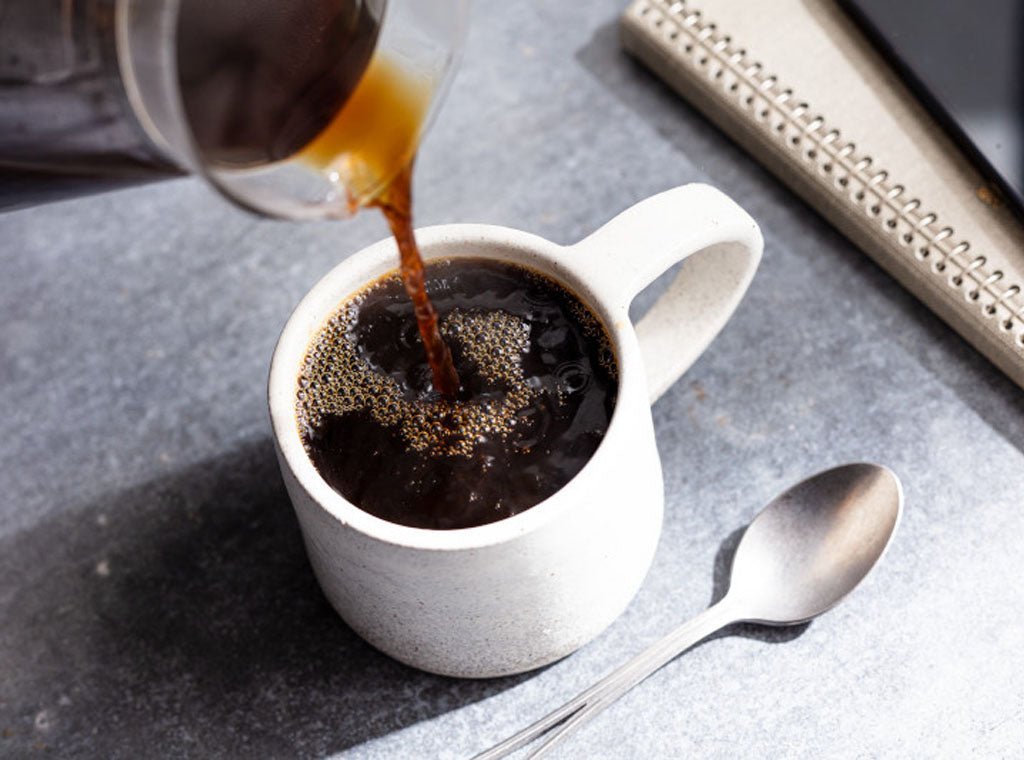
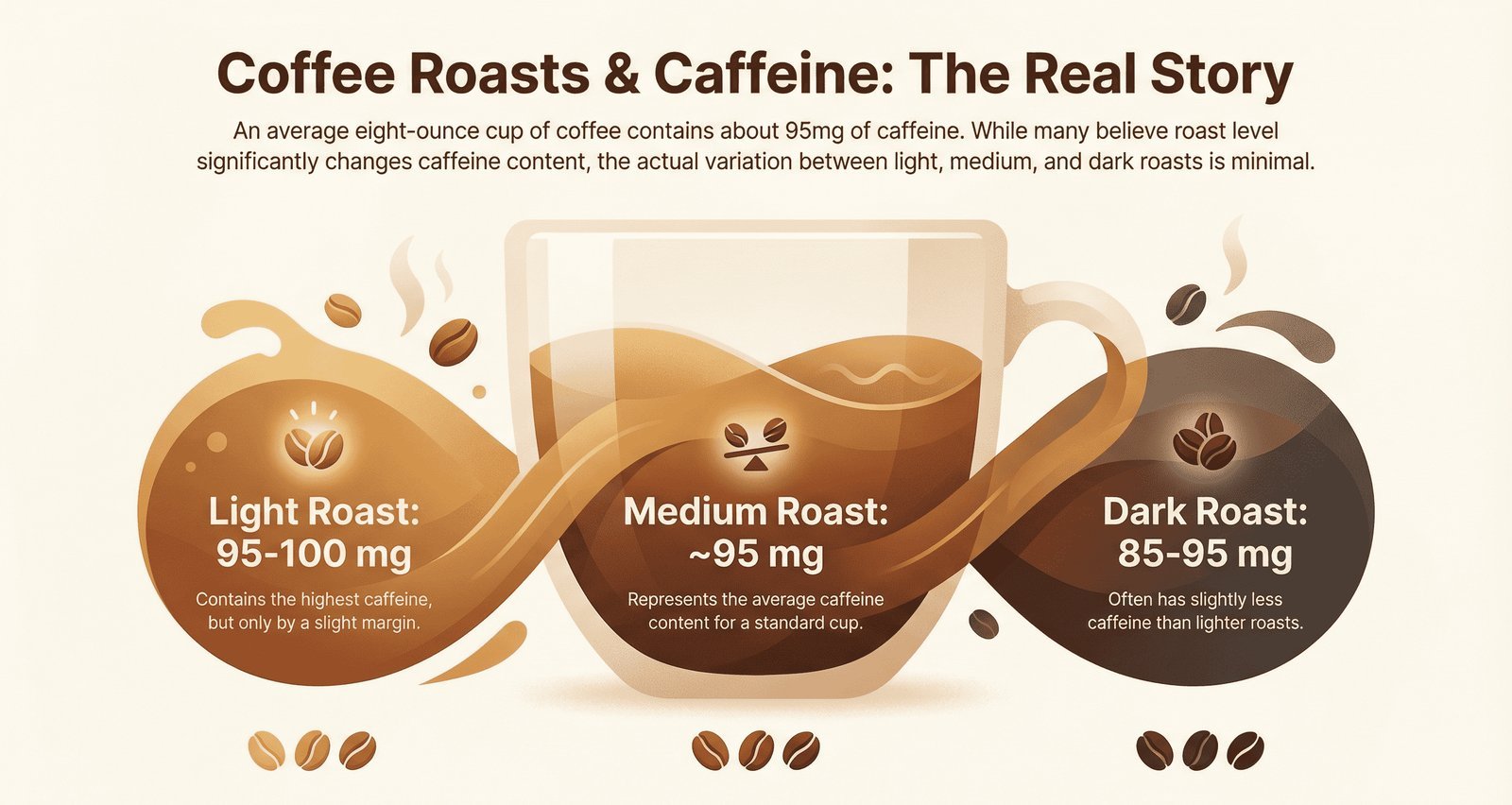
If you are wondering how much caffeine is in a medium roast coffee, an 8-ounce cup typically contains about 95 milligrams. Because caffeine is stable during roasting, the final amount depends primarily on the ratio of grounds to water.
The main factor deciding your results is the measurement method. If you use a scoop to measure beans, you’ll get less coffee than if you use a scale, because the beans have different densities. The most common mistake is using a standard kitchen cup instead of a digital scale to weigh your coffee grounds. This leads to inconsistent strength every single time you brew.
Brewing your medium roast coffee
- Weigh 15 grams of medium roast coffee beans for every 250 milliliters of water to ensure a consistent strength.
- Grind the coffee to a medium-coarse consistency, similar to the texture of sea salt, using a burr grinder.
- Heat your water to between 195°F and 205°F, as this range extracts the most flavor without burning the grounds.
- Pour the water slowly over the grounds in a circular motion, ensuring all grounds are saturated during the first 30 seconds.
- Allow the coffee to steep or drip for a total of 4 minutes before removing the grounds or serving. Tip: If your coffee tastes too bitter, reduce the steep time by 30 seconds or use a coarser grind size. Tip: If you find the coffee too weak, increase your coffee-to-water ratio by adding 2 grams of beans for every 250 milliliters of water.
If you’re using a professional espresso machine or a commercial drip brewer, you must follow the manufacturer’s maintenance schedule to ensure the water temperature and flow rate remain accurate.
How long it takes
The total time needed depends heavily on the brewing method you choose for your medium roast.
If your brew takes significantly longer than these times, your grind is likely too fine, which causes the water to move through the filter too slowly.
How to tell when it’s done
You’ll know the coffee is ready when the liquid has a clear, aromatic profile and the grounds at the bottom of your filter or press have settled into a flat, moist bed. For hot brewing, the USDA FoodData Central nutrient database confirms that brewing parameters determine the final concentration of stimulants. A reliable visual test is to look for the “bloom,” where the coffee grounds expand and bubble immediately upon the first contact with hot water. If the grounds don’t bubble, the coffee is likely stale and will lack both flavor and the expected caffeine content.
Mistakes that ruin it
- Using boiling water: Pouring water directly from a rolling boil scorches the coffee, leading to an unpleasant, burnt flavor profile. Always let the kettle sit for 60 seconds after boiling before you begin your pour.
- Storing beans in the freezer: Condensation forms inside the bag every time you remove it from the cold, which introduces moisture that degrades the beans. Keep your coffee in an airtight container in a cool, dark cupboard instead.
- Ignoring water quality: Since a cup of coffee is over 98% water, using tap water with heavy chlorine or mineral content will mask the natural notes of your medium roast. Use filtered water to ensure the flavor of the bean remains the star of the show.
Frequently asked questions
How much caffeine is in a medium roast coffee?
Yes, you’ll get more caffeine if you increase the amount of dry coffee grounds used per cup of water. Because caffeine is a chemical compound present in the bean, using 20 grams of coffee instead of 15 grams will naturally result in a higher total caffeine content in your mug.
Why does my medium roast taste sour?
Sourness usually happens because the coffee is under-extracted, meaning the water didn’t pull enough flavor from the grounds. You can fix this by using a finer grind, increasing the water temperature slightly, or letting the coffee steep for an extra 30 seconds to balance the acidity.
Is it safe to drink coffee every day?
Yes, most healthy adults can safely consume up to 400 milligrams of caffeine per day, which is roughly four 8-ounce cups of brewed coffee. This limit is widely accepted by health organizations, but you should monitor your own physical response to caffeine to ensure it doesn’t affect your sleep.
How long does ground coffee stay fresh?
Ground coffee begins to lose its flavor and aroma over several hours to days as it oxidizes in the air.
What happens if I use water that’s too cold?
Using water below 190°F results in a weak, flat, and sour cup of coffee because the heat is insufficient to extract the oils and solids. If your coffee lacks depth, check your water temperature with a thermometer to ensure it stays within the recommended 195°F to 205°F range.
Final Thoughts
Ultimately, the best way to gauge your intake is to pay attention to how you feel after your morning cup. If you’re sensitive to stimulants, you shouldn’t hesitate to experiment with a slightly smaller scoop of grounds. You’ll find the perfect balance that keeps you energized without feeling jittery all day.
Related guides