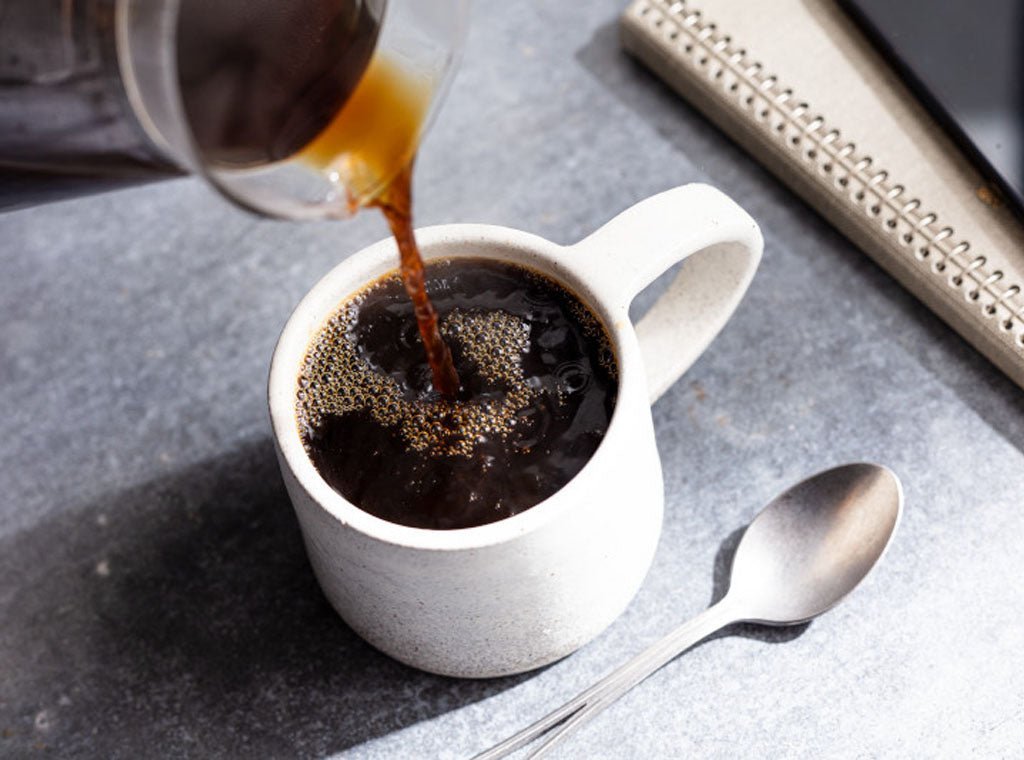
If you are wondering how much caffeine in a medium roast cup of coffee, an eight-ounce drip brew made with Arabica beans contains roughly 95 to 140 milligrams.
The short version
- An 8 oz cup of drip medium roast provides between 95 and 140 mg of caffeine.
- A standard 1:16 brew ratio uses 15 grams of medium roast coffee to yield 8 fluid ounces.
- Robusta beans carry roughly double the caffeine of Arabica beans when brewed under identical conditions.
- Cold brew extraction pulls roughly 150 to 200 mg per 8 oz serving using coarse medium grounds.
- A single 1 oz espresso shot contains about 63 mg of caffeine from fine medium roast.
Why roast heat preserves caffeine levels
Caffeine is a very stable chemical compound. Roasting heat reaches roughly 410°F to 430°F for medium profiles, which isn’t hot enough to break down the caffeine molecule. Caffeine sublimes only at much higher temperatures. Instead of losing stimulant, the coffee bean loses water weight and expands in physical size as it roasts.
This physical change means bean density shifts. If you measure grounds by weight, dark roast beans have slightly more caffeine per gram because each bean lost more moisture and weighs less. If you measure by volume with a kitchen scoop, dark roast delivers less caffeine because the beans are less dense and pack less mass into the same volume. An honest limit is that this varies by bean origin—check the label for the specific variety. According to the FDA caffeine intake guidance, healthy adults can safely consume up to 400 milligrams of caffeine per day.
When the answer is different
Water volume, bean species, and extraction methods change total stimulant output.
| Situation | What changes | What to do instead |
|---|---|---|
| 100% Robusta beans | Caffeine doubles per gram | Reduce grounds by half |
| Immersion cold brew | High ratio increases caffeine | Dilute 1:1 with water |
| Single espresso shot | Concentrated in 1 oz | Treat as 63 mg |
| Decaf medium roast | Retains 2-5 mg caffeine | Drink freely past noon |
| Dark roast measured by scoop | Less mass per volume | Add extra scoop grounds |
| Large 16 oz mug | Double the liquid output | Count as two servings |
How to do it properly
- Weigh out exactly 15 grams of whole medium roast beans on a kitchen scale for an 8-ounce cup.
- Grind your beans to a medium-coarse texture that looks like sea salt to prevent over-extracting bitter compounds.
- Heat 250 grams of fresh filtered water to a temperature between 195°F and 205°F on your stovetop kettle.
- Place a paper filter into your brewer and rinse it with hot water to wash away loose paper fibers.
- Add the 15 grams of dry coffee grounds and tap the brewer gently to create a level, flat bed.
- Pour 45 grams of water over the bed and wait 30 seconds for the grounds to bloom evenly.
- Pour the remaining 205 grams of water steadily in slow concentric circles until your scale reads 250 grams.
- Let all water draw down through the filter within 3 minutes total time before serving your hot coffee.
The mistakes that ruin it
- Using a tablespoon scoop instead of a scale ruins your dose, leaving you with wildly inconsistent caffeine amounts every morning.
- Brewing past four minutes can over-extract bitter compounds, making the liquid unpleasantly astringent without increasing the caffeine content.
- Letting brewed liquid sit on a hot burner accelerates the degradation of flavor compounds, leading to a stale, bitter taste within twenty minutes.
Frequently asked questions
Can medium roast coffee cause jittery side effects?
Yes, drinking two or three strong mugs back-to-back delivers over 300 milligrams of stimulant quickly. If your body breaks down caffeine slowly, stick to one cup per morning; if you tolerate stimulants well, you can enjoy a second cup after lunch.
Why does light roast taste stronger than medium roast?
Light roast tastes brighter and more acidic on the tongue, but it contains nearly the same caffeine as medium roast. The crisp herbal acidity tricks your taste buds into thinking the liquid is significantly stronger than it actually is.
How long does caffeine from medium roast stay in blood?
About 4 to 6 hours represents the average active half-life in a healthy adult body. The liver gradually metabolizes the compound, but traces stay present up to 10 hours after you drink your morning mug.
Is medium roast coffee safe for a sensitive stomach?
Yes, medium roast is gentler on digestion than light roast because the slightly longer heat development reduces harsh chlorogenic acids. However, this brew isn’t for people with active acid reflux who must avoid caffeinated drinks entirely.
What happens if I brew medium roast with boiling water?
Water at a rolling boil pulls out unpleasant bitter tannins from the ground beans without adding more caffeine. The drink tastes acrid, flat, and burnt. Keep your hot water temperature between 195°F and 205°F for balanced flavor.
How much caffeine in a medium roast cup of coffee?
Yes, drip machines and pour-overs extract around 100 mg per cup, while a French press extracts slightly more due to full submersion. You gain a richer mouthfeel with immersion, but the trade-off is more muddy sediment at the cup bottom.
Final Thoughts
If you’re sensitive to jitters, try switching to a light roast for a slightly higher energy boost or decaf if you’re cutting back. It’s worth experimenting with different brewing times to see how they change your morning experience. You’ll eventually find the perfect balance that keeps you feeling your best.