
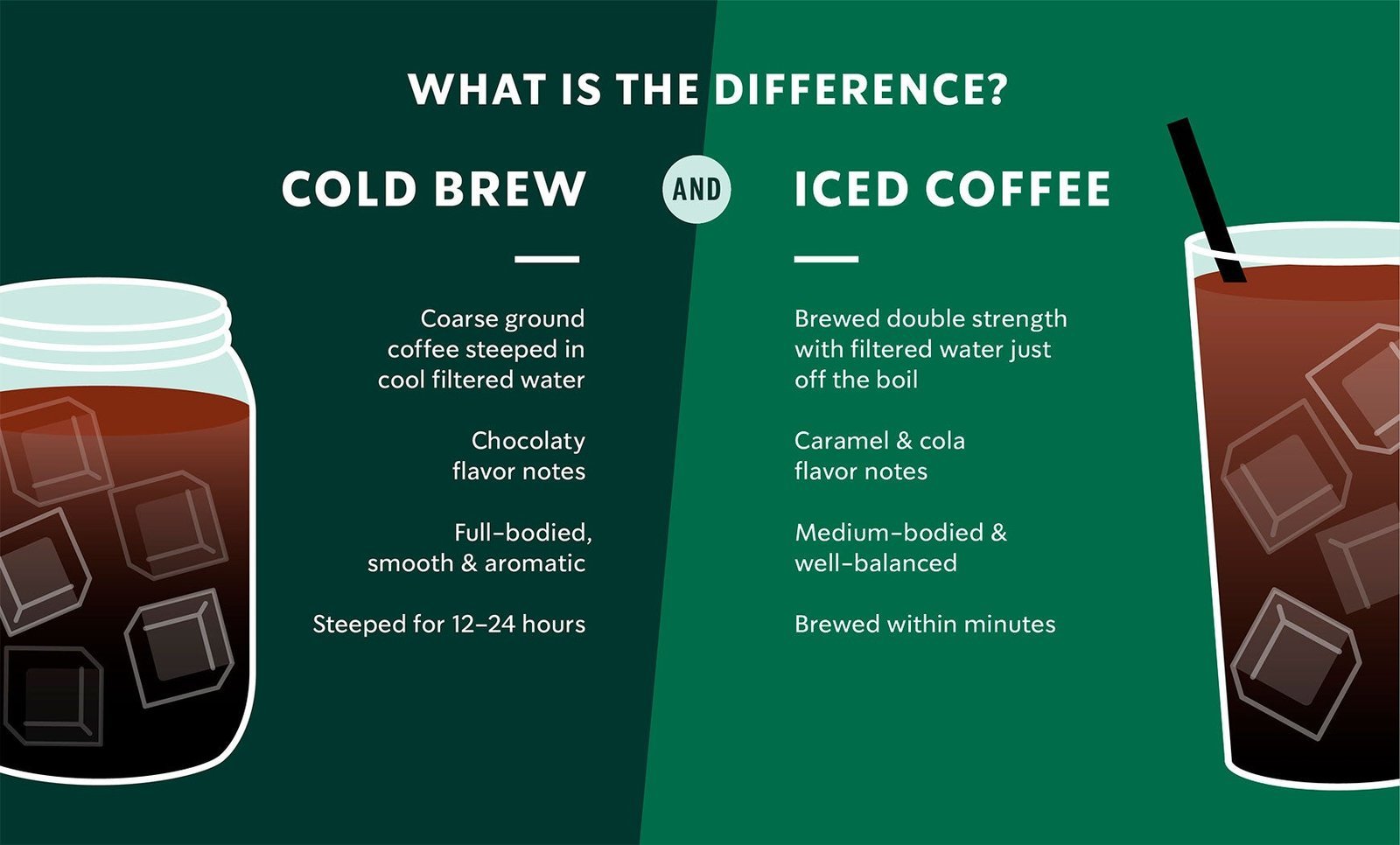
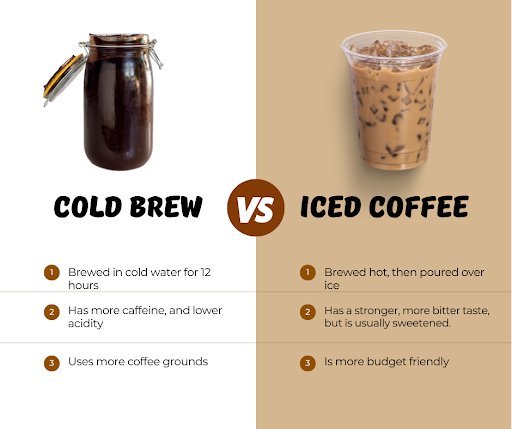
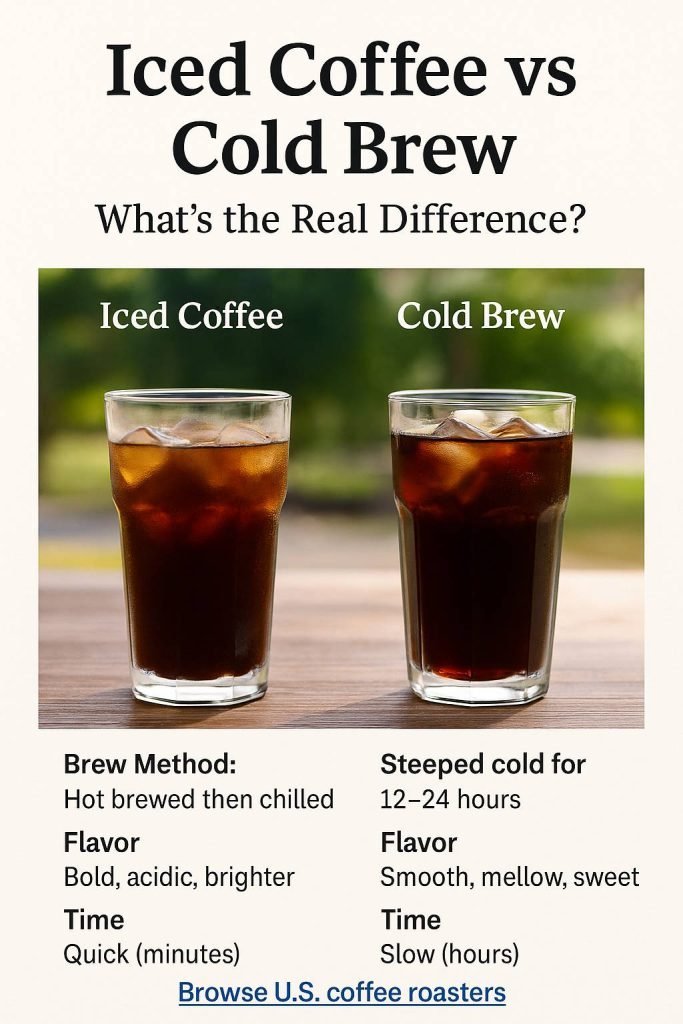
No, iced coffee and cold brew aren’t the same thing because they use different brewing methods and temperatures. Iced coffee is hot-brewed and cooled, while cold brew is steeped in cold or room-temperature water for many hours to extract the flavor.
How to choose between iced coffee and cold brew
Photo: www.joyridecoffee.com on Google
- Iced coffee starts as hot drip or espresso, which is then poured over ice or chilled in the refrigerator.
- Cold brew never touches hot water, as it relies on time rather than heat to pull oils and caffeine from the grounds.
- Iced coffee often tastes acidic and sharp, while cold brew is naturally smoother and less bitter.
- You should use a coarse grind for cold brew to prevent over-extraction during the long 12 to 24-hour steeping process.
- If you want a quick drink, choose iced coffee; if you want a concentrated, low-acid flavor, choose cold brew.
Why these methods produce different results
The physical process behind coffee extraction changes based on the temperature of the water used. Hot water, which is standard for iced coffee, acts as a solvent that quickly breaks down the compounds in coffee beans. This heat extracts volatile acids and oils that provide the bright, floral, or fruity notes many people enjoy. Because the extraction happens in minutes, the flavor profile remains complex and lively.
Cold brew operates on a different principle entirely. Because the water is cold, it lacks the energy to pull out the same acidic compounds found in hot-brewed coffee. Instead, the process relies on a much longer contact time between the water and the grounds, typically lasting 12 to 24 hours. This slow immersion results in a cup that’s chemically different, often showing lower acidity and a heavier, more chocolatey body.
Situations where the brewing method matters
| Situation | What changes | What to do instead |
|---|---|---|
| Sensitive stomach | High acidity in hot coffee | Use cold brew for lower acid |
| Time is short | Brewing takes 12-24 hours | Brew hot coffee over ice |
| Flavor complexity | Cold brew lacks brightness | Use a hot pour-over method |
| High caffeine needs | Extraction rates vary | Use a higher grounds ratio |
| Storage space | Cold brew needs big jars | Brew single-serve hot coffee |
Proper preparation of your coffee
- For iced coffee, brew your coffee double-strength using your standard machine and 2 tablespoons of grounds per 6 ounces of water.
- Pour the hot coffee directly over a full glass of ice cubes immediately to lock in the flavor before it oxidizes.
- For cold brew, combine 1 cup of coarsely ground coffee with 4 cups of filtered, room-temperature water in a large glass jar.
- Stir the mixture gently to ensure all the grounds are wet, then cover the jar with a tight lid.
- Let the jar sit on your counter or in the fridge for 12 to 24 hours, depending on your preferred strength.
- Strain the liquid through a fine-mesh sieve or a paper filter into a clean container to remove all the sediment.
- Serve the cold brew concentrate over ice, adding water or milk until it reaches the strength you enjoy most.
Common mistakes that ruin coffee
- Using a fine grind for cold brew makes the coffee taste muddy and makes it nearly impossible to strain out the grit.
- Leaving iced coffee out at room temperature for more than two hours leads to rapid bacterial growth and spoilage.
- Diluting cold brew concentrate with too much water at the start ruins the strength you worked hours to achieve.
- Using tap water with a strong chlorine taste masks the delicate notes of the coffee beans in both methods.
Frequently asked questions
Can I heat up cold brew?
Yes, you can heat up cold brew in the microwave or on the stove. Treat it like a concentrated liquid, so add a little hot water to dilute the strength to your liking before you start heating it.
Is cold brew stronger than iced coffee?
Cold brew is usually stronger because it’s made as a concentrate with a high ratio of coffee grounds to water. You can adjust the strength of either drink by changing the amount of water or milk you add at the end.
Does cold brew have more caffeine?
Cold brew often contains more caffeine because of the high coffee-to-water ratio used during the long steeping process. The exact amount of caffeine depends on your specific bean choice and how long you let the grounds steep in the water.
How long does cold brew stay fresh?
Cold brew stays fresh for about 7 to 10 days when stored in an airtight container in the refrigerator. Always check the container for any signs of mold or off-smells before you pour a serving to ensure it’s still safe.
Is cold brew better for acid reflux?
Cold brew is often better for people with acid reflux because the cold extraction process pulls fewer acidic compounds from the beans. If you find hot coffee bothers your stomach, try switching to cold brew to see if the lower acidity helps.
Does the bean roast matter?
The roast matters for both methods, as light roasts offer more fruitiness while dark roasts provide a deeper, roasted flavor. You can use any roast you prefer for either method, but darker roasts generally stand up better to the dilution of ice.
Conclusion
Your choice between these two methods depends on whether you prefer the bright, sharp notes of hot-brewed coffee or the smooth, heavy body of a long-steeped cold brew. Both methods are safe when handled properly and kept at the right temperature, so you can experiment with different beans and ratios until you find the exact flavor profile that fits your daily routine.