
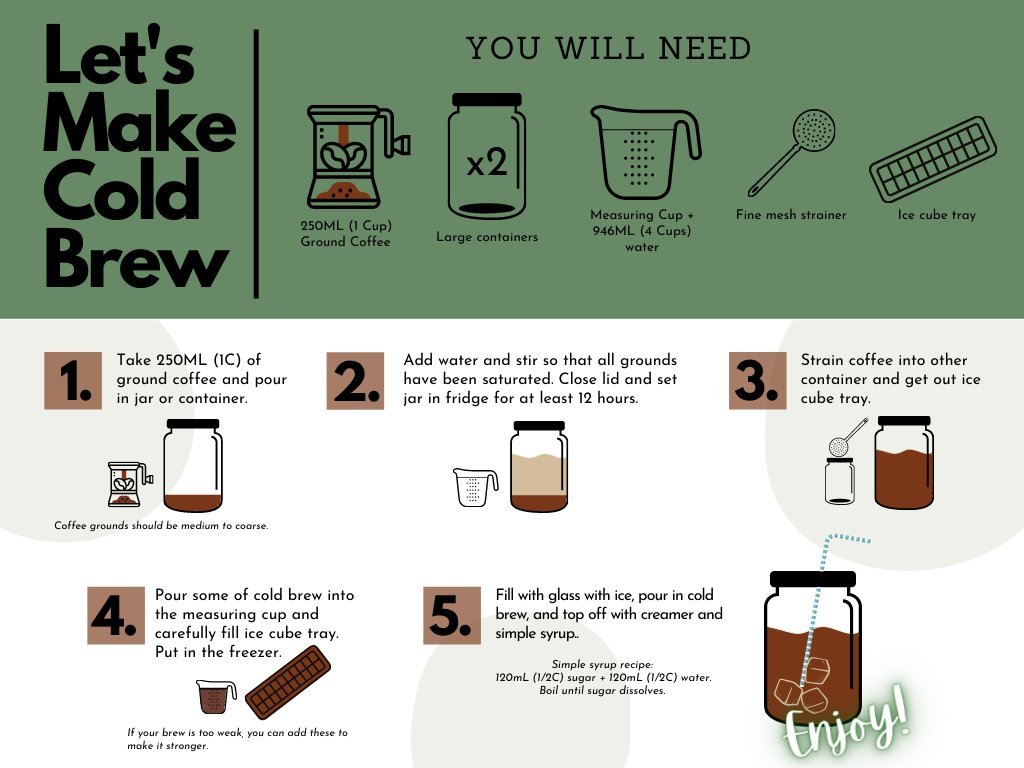
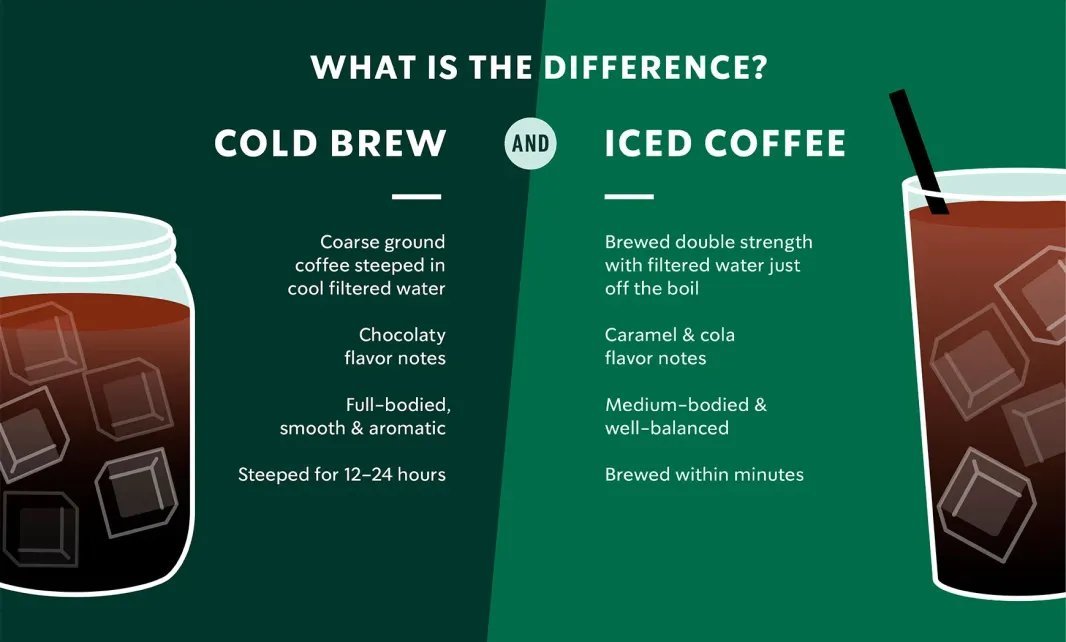
Cold brewed coffee is made by steeping coarse coffee grounds in room temperature or cold water for 12 to 24 hours. Because the process avoids heat, the grounds release fewer bitter oils and acids, resulting in a smooth, concentrated liquid that you can dilute with water or milk.
What you need to make cold brewed coffee
| Part or input | What it does | What you notice when it goes wrong |
|---|---|---|
| Coffee beans | Provides the flavor | Tastes sour or muddy |
| Coarse grind | Allows slow extraction | Becomes bitter or silty |
| Filtered water | Extracts the flavor | Off-tastes from tap water |
| Large jar | Holds the mixture | Leaks or breaks |
| Fine strainer | Removes the grounds | Gritty texture in cup |
You can check the official USDA food safety guidelines to ensure your equipment and workspace remain sanitary during the long steeping process.
Steps for the brewing process
- Grind 1 cup of whole coffee beans to a coarse consistency, similar to sea salt, to ensure the water filters through evenly.
- Combine the grounds with 4 cups of cold, filtered water in a large glass jar, stirring gently to make sure all grounds are wet.
- Cover the jar with a lid or a clean cloth to keep out dust, then let it sit at room temperature for 12 to 24 hours.
- Place a fine-mesh strainer over a clean pitcher or bowl and line it with a paper coffee filter or a piece of cheesecloth.
- Pour the coffee mixture slowly through the filter, letting it drip completely until only the damp, spent grounds remain in the filter basket.
- Store the resulting concentrate in a sealed container in the refrigerator, where it stays fresh for up to two weeks if kept chilled throughout.
Why the extraction method matters
The extraction process relies entirely on time rather than heat to pull flavor from the beans. Conversely, if it tastes overly bitter or astringent, you likely used a grind that was too fine or let the mixture steep for longer than the recommended 24-hour limit.
What you can change and what you cannot
Things you control
- The ratio of coffee to water based on your preferred strength.
- The total steeping time within the 12 to 24-hour window.
- The type of roast, which changes the flavor notes significantly.
- The temperature of the water, though cold water is the standard.
Fixed by design
- The absence of heat, which prevents the development of complex, hot-brewed aromatics.
- The need for a coarse grind to prevent over-extraction and bitterness.
- The requirement for clean, food-grade storage to prevent bacterial growth.
Habits for better results
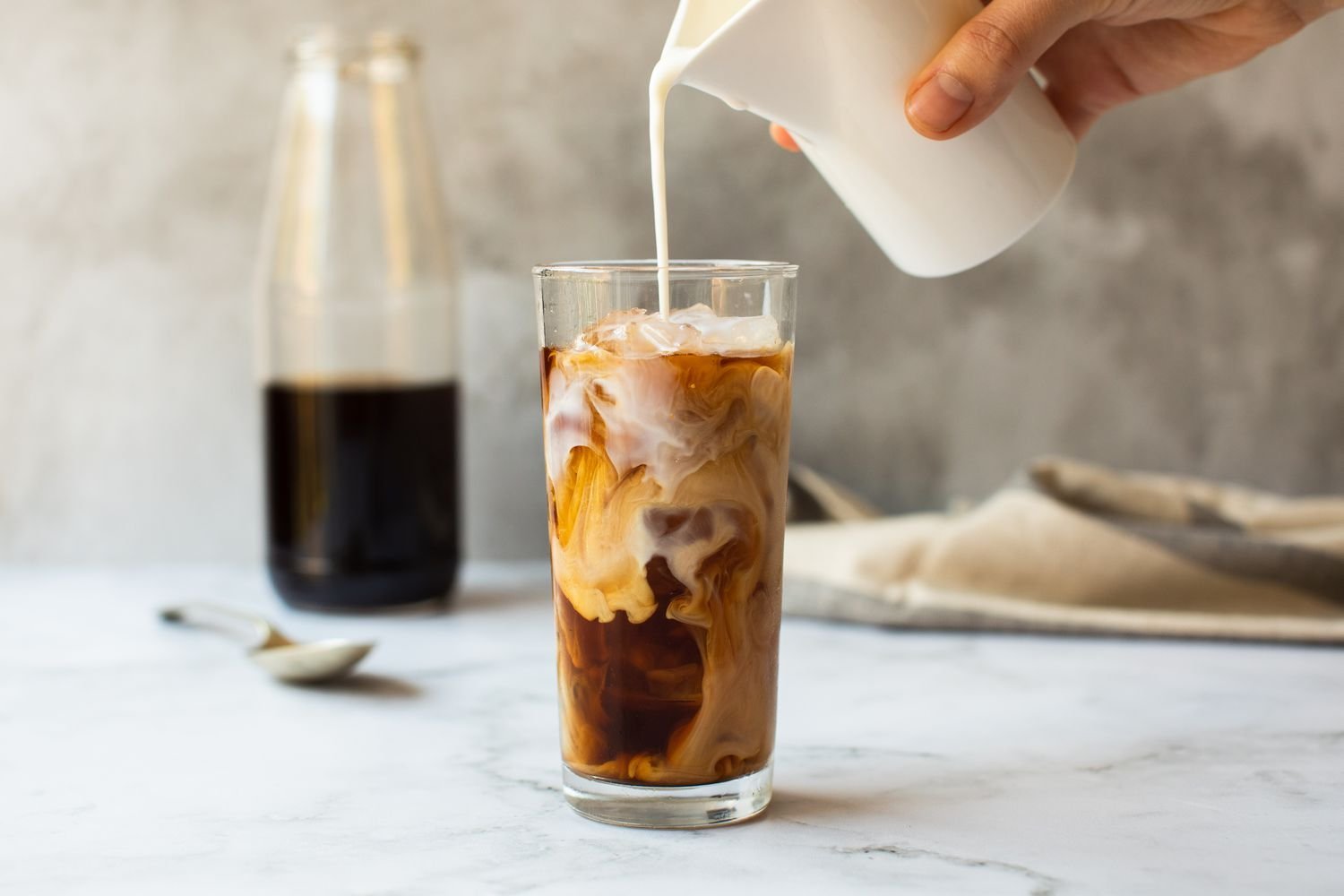
Measure coffee-to-water by weight for consistency. Use a 1:8 ratio for a strong concentrate. If you prefer a lighter brew, dilute your finished concentrate with an equal part of water or milk.
Frequently asked questions

Can I use hot water to speed up the process?
No, using hot water creates a different chemical profile that isn’t cold brew. Hot water pulls out tannins and acids, ruining the smooth, low-acid texture.
Is it safe to leave coffee out for 24 hours?
Once you filter the coffee, move it immediately to your refrigerator.
How long does cold brew last in the fridge?
Cold brew concentrate lasts for up to 14 days when stored in a sealed container at 40°F or below.
Why is my cold brew cloudy?
Cloudiness happens if the filter is too porous or sediment enters the container. Use a fresh paper filter to catch the very fine coffee dust.
Does the type of bean matter?
The bean type dictates the flavor profile, with darker roasts providing chocolatey notes and lighter roasts offering fruit-forward flavors. Experiment with single-origin beans to find your preference.
Can I use a French press to make it?
A French press is an excellent tool because the built-in mesh filter makes straining simple.
Conclusion
Once you’ve strained your batch, store it in the fridge so it’s ready whenever you need a quick caffeine fix. Don’t be afraid to experiment with different bean roasts to find your favorite flavor profile. You’ll find that it’s a refreshing way to enjoy your daily cup all summer long.