
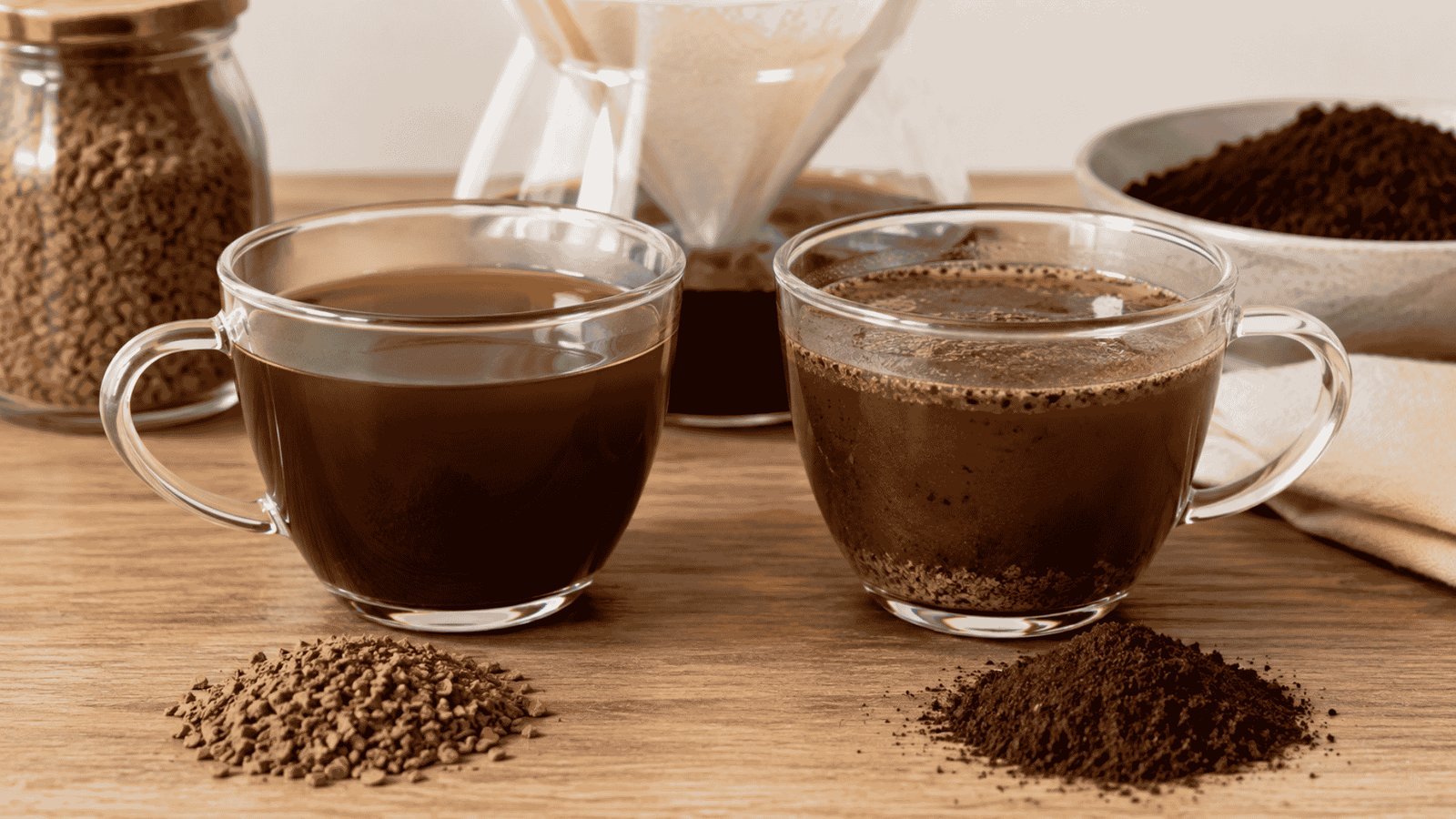
Ground coffee doesn’t dissolve because it’s made of insoluble plant fibers that don’t break down in water. While water extracts flavor, oils, and caffeine from the beans, the cellulose and lignin structures remain solid. You’re essentially brewing a tea from wood-like material rather than mixing a soluble powder.
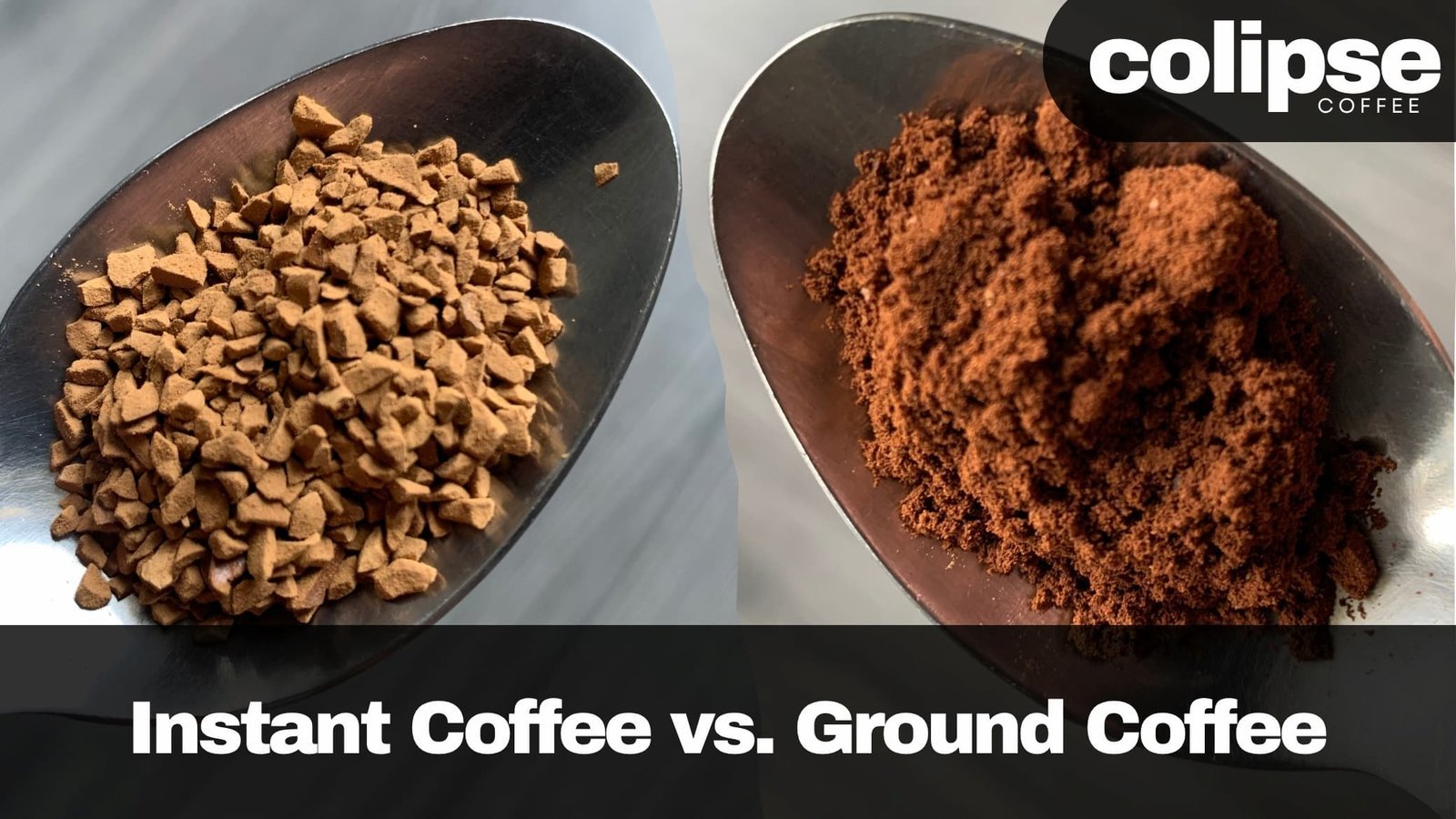
Coffee grounds versus soluble granules
| Cause | How common | How to confirm it | Fix it yourself? |
|---|---|---|---|
| Normal fiber content | Very common | Check the package label | No |
| Using wrong product | Common | Look for “instant” label | Yes |
| Brewing method error | Regular | Inspect your filter | Yes |
| Coarse grind size | Occasional | Feel the texture | Yes |
| Water temperature low | Rare | Use a thermometer | Yes |
| Equipment malfunction | Very rare | Check pump pressure | No |
The nature of roasted coffee beans
Ground coffee isn’t designed to dissolve, as it consists of insoluble cellulose that forms the structural skeleton of the coffee bean. When you pour hot water over grounds, the water acts as a solvent to extract soluble oils and acids, but it can’t dissolve the solid fiber itself. This is why you must use a filter or a press to separate the liquid coffee from the solid grounds before drinking. If you try to consume the grounds directly, they will remain gritty and solid regardless of how long they sit in your mug. The FoodSafety.gov cold food storage charts provide guidance on storing coffee-based beverages safely, but the solid grounds themselves will never break down into a liquid state regardless of storage conditions.
Confusion with instant coffee products
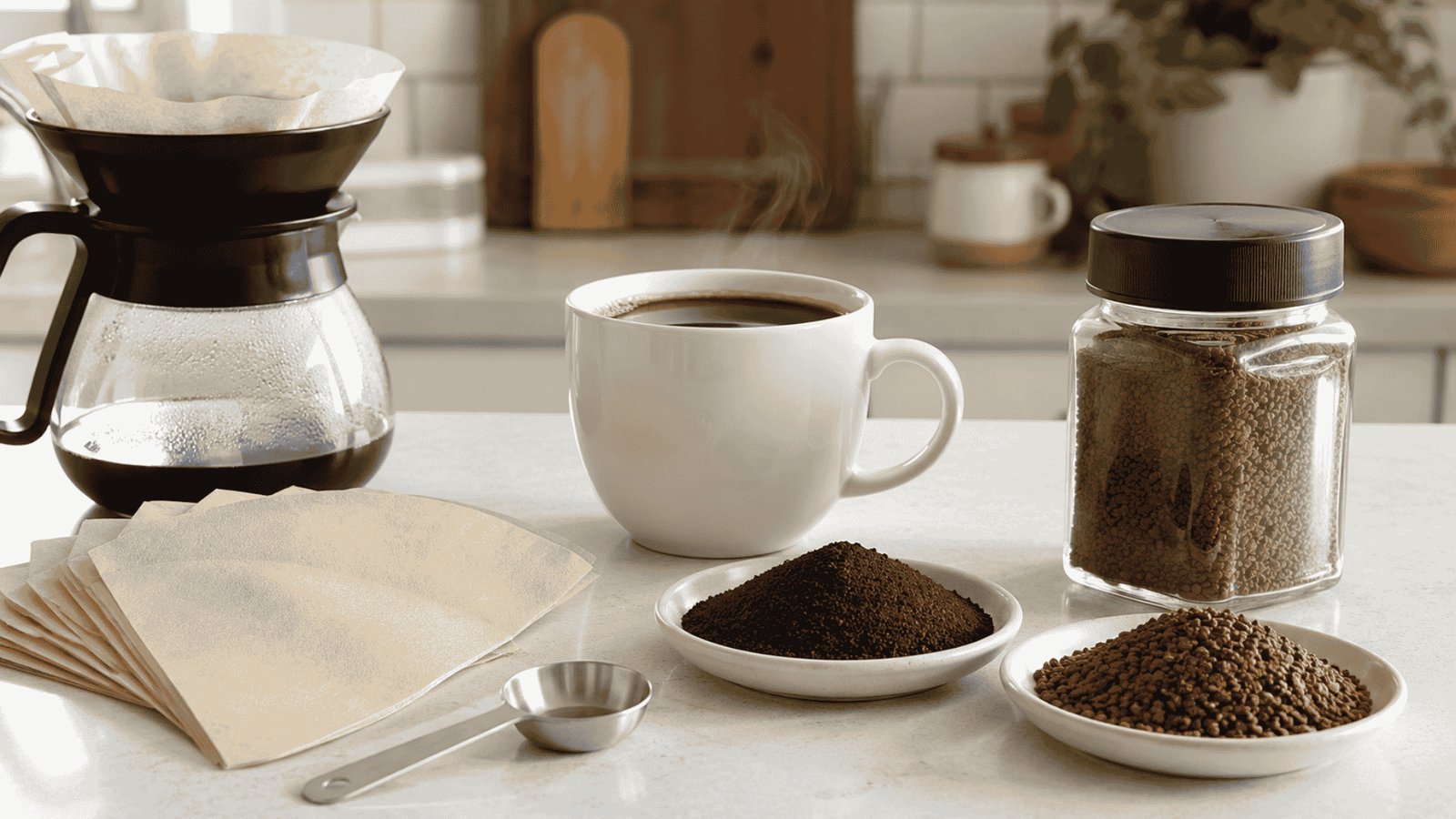
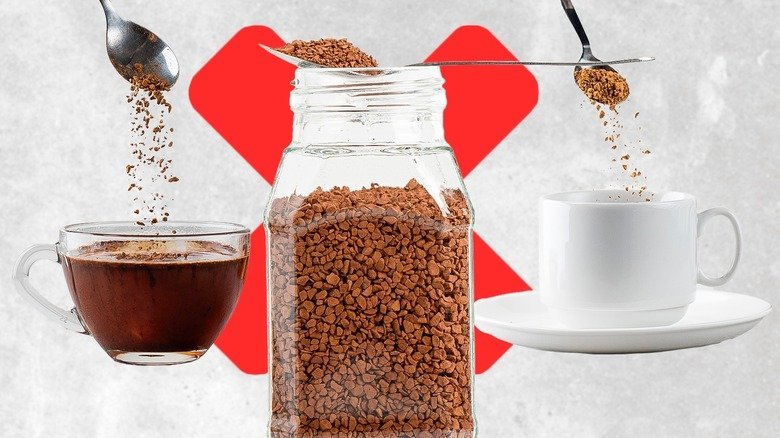
Many people confuse standard ground coffee with instant coffee, which is a processed product that does dissolve completely. Instant coffee is made by brewing coffee and then drying it into small, soluble crystals through spray-drying or freeze-drying. If you bought a bag labeled “ground coffee” or “whole bean,” you have the raw material that requires filtration. If you want a drink that dissolves entirely in your cup, you must purchase a product specifically labeled as instant coffee. This is a common mistake that leads people to believe their brewing equipment is failing to “mix” the coffee properly, when in fact the coffee is performing exactly as it should.
Improper filtration and grind size
Using a grind size that’s too coarse for your specific brewing device can lead to more sediment in your cup, which feels like the coffee isn’t dissolving. If you use a French press grind in a drip coffee machine, small particles will bypass the filter and settle at the bottom of your mug. This isn’t a failure to dissolve; it’s a mechanical issue where the filter isn’t fine enough to catch the small bits. If you prefer a cleaner cup with no solids, switch to a finer grind or ensure your paper filter is properly seated. A trade-off exists here: finer grinds extract more flavor quickly but require tighter filtration, while coarser grinds are easier to clean but produce more sediment.
Rare mechanical issues and extraction limits
In very rare cases, a brewing machine might fail to pump water at the correct temperature or pressure, which prevents proper flavor extraction from the grounds. If the water remains cool, the grounds will feel even more solid and the resulting coffee will taste thin or sour. This varies by model — check the label for the recommended brewing temperature, which is usually between 195°F and 205°F for optimal extraction. If your machine isn’t heating the water, you should stop using it and contact the manufacturer. This isn’t a task for a home user; opening the machine housing can void your warranty or lead to electrical injury. If your coffee is consistently gritty or weak, professional repair or replacement is usually required.
Can I make ground coffee dissolve by boiling it?
No, boiling the grounds won’t make them dissolve. You’ll only extract more bitter compounds and tannins, which makes the coffee taste harsh while the solid fibers remain in the bottom of your pot.
Why is my coffee gritty at the bottom?
It’s gritty because small particles are passing through your filter. You can fix this by using a higher-quality paper filter or adjusting your grinder to a slightly finer setting to reduce “fines.”
Is it safe to eat coffee grounds?
Yes, it’s safe to eat small amounts of coffee grounds, though they’re difficult to digest and have a very rough texture. They’re effectively insoluble fiber that passes through your system.
How long should coffee stay in the water?
For a French press, four minutes is the standard time for full flavor extraction. Using a different method, like a pour-over, usually takes two to three minutes depending on your flow rate.
Does instant coffee have less caffeine?
No, instant coffee generally contains the same amount of caffeine as brewed coffee, though the exact amount per serving varies based on the brand and the strength of the coffee you make.
What if my machine stops pumping water?
If the machine stops, it’s likely a clogged pump or a failed heating element. You should check the manual for descaling instructions, but if that fails, contact the manufacturer’s support line.
The sediment you see in your cup is a normal part of the brewing process when using ground beans. As long as you’re using a filter appropriate for your machine, you’re getting the best result possible from your coffee.