
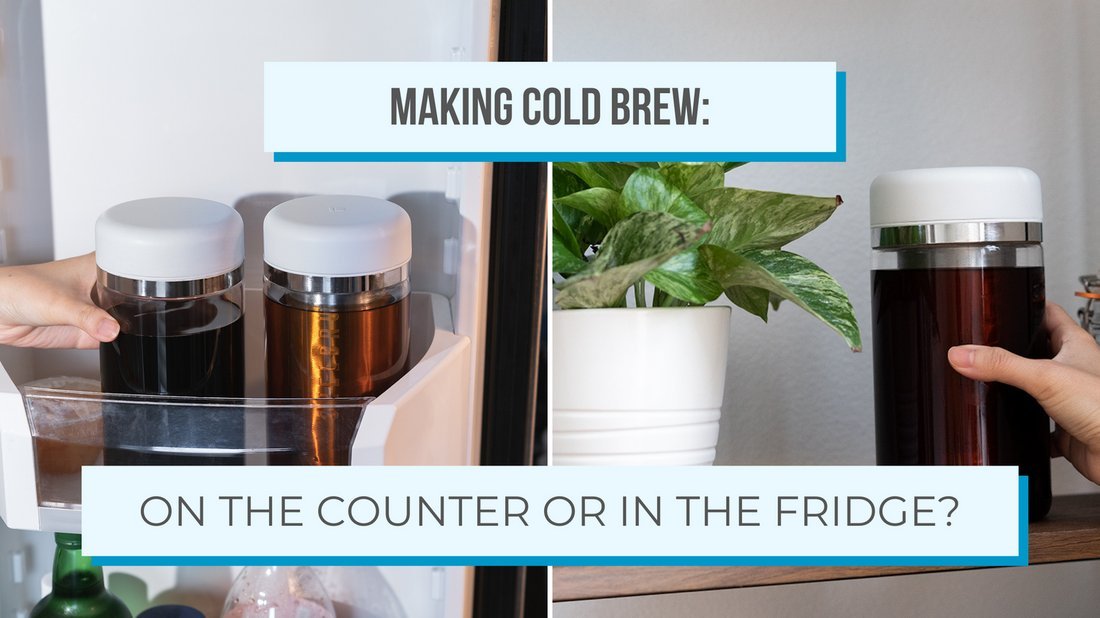
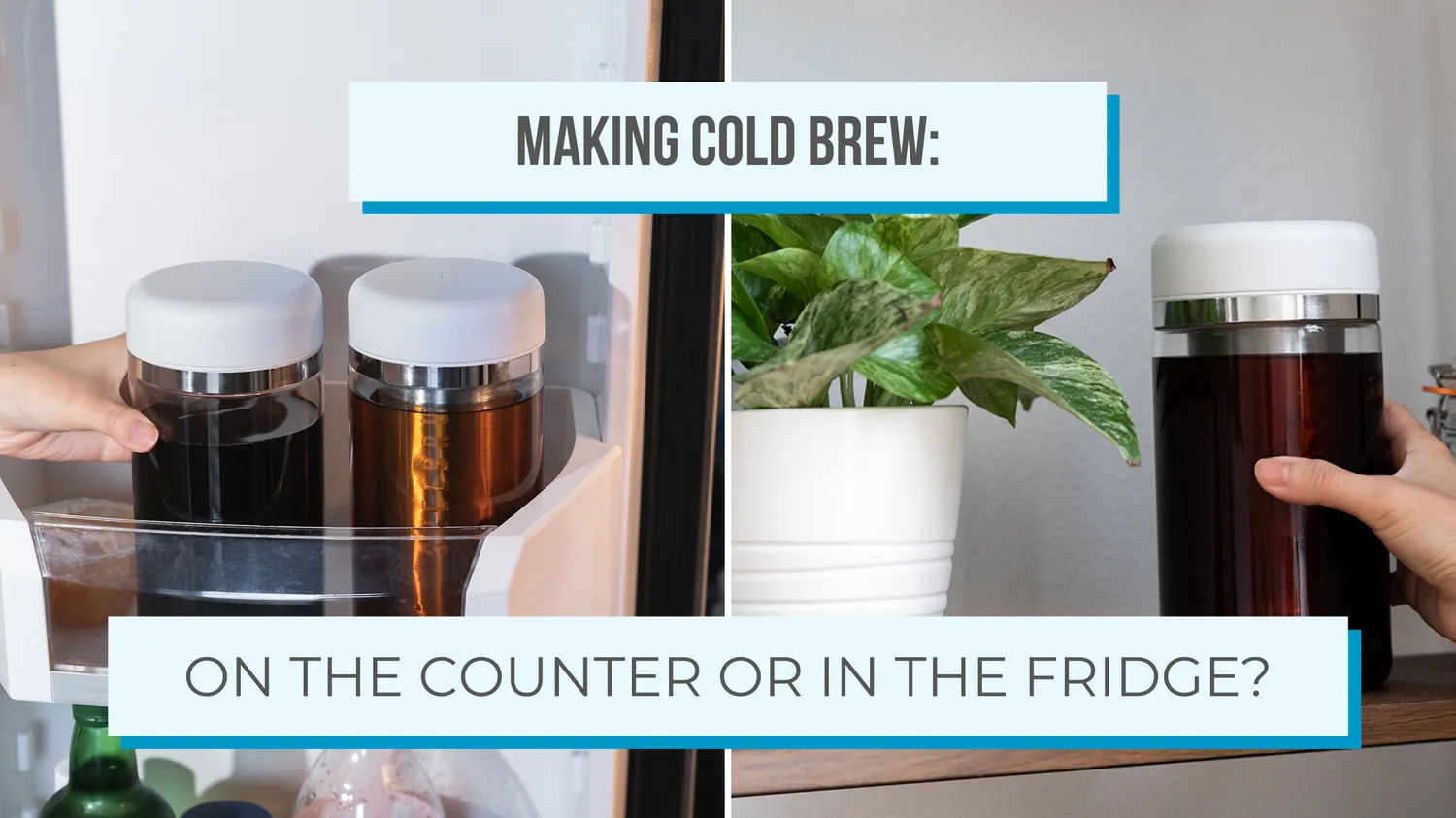
Yes, you can brew cold brew on the counter safely. The risk isn’t room temperature itself but leaving wet grounds out longer than 24 hours. Start your timer now and move the jar to the fridge once steeping ends.
When counter brewing works for cold brew
Your setup determines whether the counter is safe or risky for this method.
| Your situation | Answer | Why |
|---|---|---|
| Steeping 12–24 hours at room temp | Yes | Extraction finishes before spoilage begins |
| Steeping over 24 hours unrefrigerated | No | Pathogens grow in wet grounds past one day |
| Kitchen above 75°F (24°C) | Shorten time | Heat speeds extraction and bacterial growth |
| Using pre-ground coffee | Avoid counter | More surface area increases contamination risk |
| Brewing with chicory or spices | Fridge only | Organic additives introduce extra microbial load |
| Sealed mason jar with fresh beans | Yes | Clean vessel limits initial bacterial count |
| Re-steeping used grounds | Never | Wet spent grounds are already contaminated |
What controls safe steeping time
Time and temperature together decide if counter brewing stays safe. Room temperature extraction typically takes 12 to 24 hours because cooler water pulls flavor slowly without heat’s杀菌 effect. The USDA notes that perishable foods shouldn’t sit in the danger zone between 40°F and 140°F for more than two hours, but whole bean coffee in clean water behaves differently than milk or meat (USDA food safety basics).
Coffee’s natural acidity and caffeine inhibit some pathogens, yet they don’t sterilize wet grounds. If your kitchen stays below 75°F and you use fresh whole beans, 18 hours is a reliable target. Above that temperature, cut steeping to 14 hours or move to the fridge.
If your brew smells sour or looks cloudy before 24 hours pass, discard it; if it tastes smooth and clean at 18 hours, strain and refrigerate immediately.
Steps for safe counter cold brew
Follow these steps to keep room-temperature brewing within safe limits.
- Grind fresh beans coarse. Use 1 cup beans to 4 cups water. Coarse grinds reduce silt and slow over-extraction at warm temperatures.
- Sanitize your jar. Wash with hot soapy water and rinse well. A clean vessel prevents introducing bacteria that thrive at room temperature.
- Combine and stir gently. Add water to grounds and stir until saturated. Dry pockets extract unevenly and create weak spots where microbes start.
- Cover loosely and set timer. Use cheesecloth or a loose lid to allow gas escape. Mark 18 hours from now; don’t guess elapsed time later.
- Strain at the deadline. Filter through paper or fine mesh when timer ends. Leaving grounds in past 24 hours risks spoilage regardless of taste.
- Refrigerate concentrate immediately. Store in a sealed bottle below 40°F. Cold halts any remaining microbial activity and preserves flavor.
Skipping the timer check
Guessing steep time instead of setting an alarm costs you either flavor or safety. At room temperature, every hour past 24 increases spoilage risk while adding bitterness, not strength. People who eyeball it often end up dumping a full batch after noticing off smells too late. Set a phone alarm for 18 hours when you mix the grounds and water. This single action separates a smooth concentrate from wasted coffee and potential illness.
When to stop DIY cold brew
- Brew smells fermented or alcoholic before 24 hours, indicating active spoilage requiring disposal.
- Visible mold appears on surface or jar rim, meaning contamination has spread beyond salvage.
- Stomach upset follows consumption, suggesting pathogen exposure needing medical evaluation.
- Kitchen consistently exceeds 80°F (27°C), making safe timing unpredictable without lab testing.
- Adding dairy or sweeteners before straining, which creates high-risk conditions only commercial kitchens manage safely.
These signs mean home brewing has crossed into unsafe territory. Discard the batch and consult a food safety professional or switch to refrigerator-only methods.
Frequently asked questions
Can I brew cold brew overnight on the counter?
Yes, 12–18 hours overnight is ideal for counter brewing. This window extracts full flavor before spoilage risk rises significantly after 24 hours at room temperature.
Why does my counter cold brew taste sour?
Sourness usually means under-extraction or early fermentation. If it happens before 18 hours, your grind may be too coarse or water too cold; after 24 hours, discard it as spoiled.
How long does counter cold brew last in the fridge?
Strained concentrate keeps 7–10 days refrigerated below 40°F. Diluted brew lasts 3–4 days. Always smell before drinking; sour or fizzy notes mean it’s gone bad.
Is it safe to add sugar before counter steeping?
No, sugar feeds bacteria and yeast during warm steeping. Sweeten only after straining and chilling to avoid creating a fermentation hazard in your jar.
Does grind size affect counter brewing safety?
Yes, finer grinds extract faster but also increase surface area for microbial growth. Stick to coarse grind for counter brewing to balance extraction speed with safety margins.
What happens if I leave it out 30 hours?
Discard it. Wet coffee grounds exceed safe exposure limits after 24 hours at room temperature, regardless of how it smells or tastes.
Can I reuse grounds for a second counter batch?
Never reuse spent grounds at room temperature. They’re already saturated with microbes from the first brew and will spoil faster with weaker extraction.
Next steps for counter cold brew
Set your 18-hour timer and sanitize your jar before grinding. Expect smooth, low-acid concentrate ready to dilute and chill once strained at the deadline. If the brew develops any sour, alcoholic, or fizzy notes before that timer ends, pour it out and switch to refrigerator brewing.