
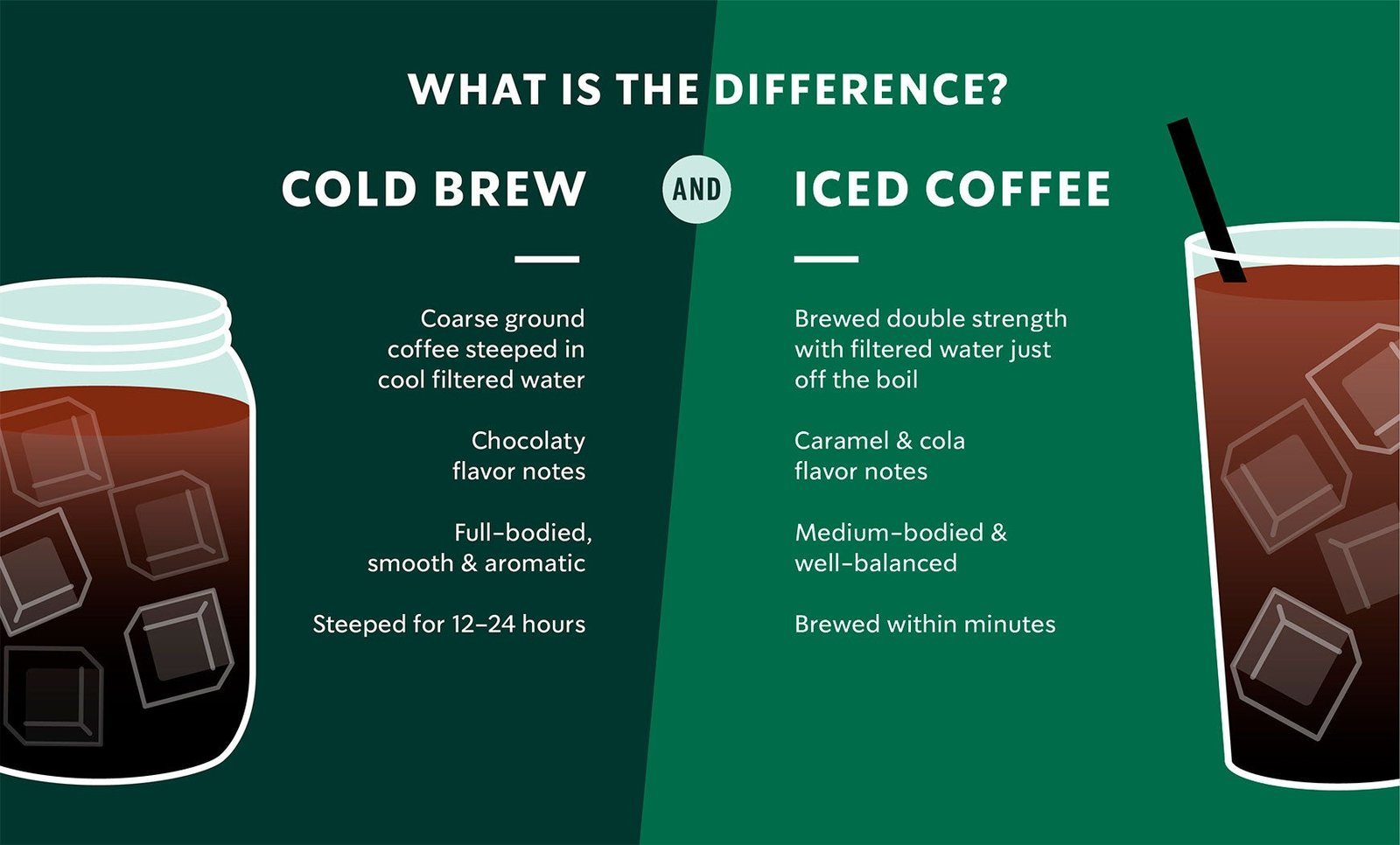
Cold brew is different from regular coffee because it uses time instead of heat to extract flavor, which results in a lower acidity and a smoother taste. Regular coffee uses hot water to speed up extraction, while cold brew steeps grounds in room-temperature or cold water for 12 to 24 hours.
Understanding the brewing process differences
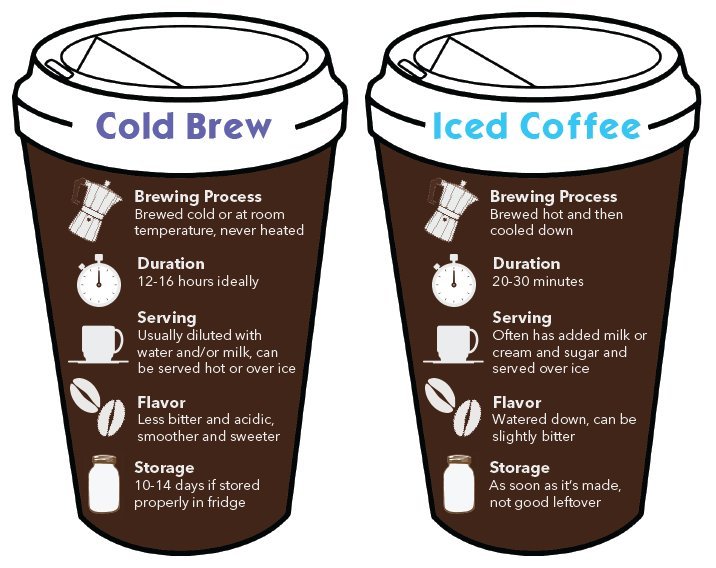
Cold brew relies on a long steeping time to pull compounds from the coffee beans, whereas hot coffee uses high temperatures to accelerate the process. Because heat breaks down oils and acids differently, the final cup profiles vary significantly.
- Extraction method: Cold brew uses immersion in cold water; regular coffee uses hot water percolation or pressure.
- Acidity levels: Cold brew is typically less acidic, which can be easier on the stomach for some people.
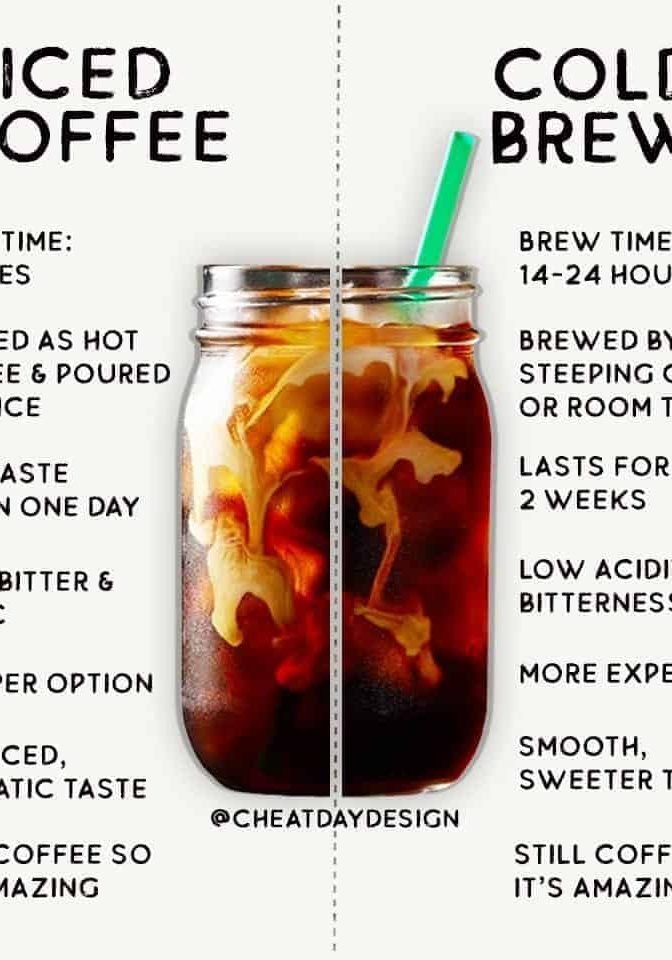
- Time required: Cold brew needs 12 to 24 hours of steeping; hot coffee is ready in minutes.
- Flavor profile: Cold brew often tastes sweeter and smoother; hot coffee has more complex, volatile aromatics.
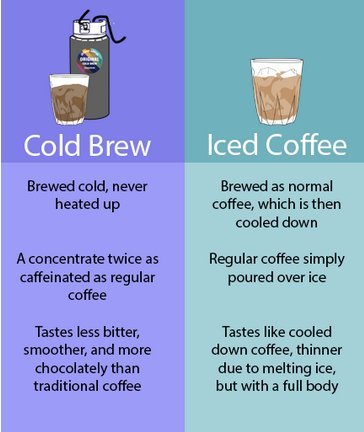
- Concentration: Cold brew is usually made as a concentrate that you dilute with water or milk before drinking.
Why the taste and chemistry vary
The main reason for the difference in taste is the temperature of the water used during the extraction phase. When you use hot water, as in a standard drip machine, the heat quickly breaks down the coffee beans and releases different oils and acids. This high-temperature process creates the bright, sharp, and complex flavors many people associate with traditional coffee.
Conversely, cold water doesn’t extract these volatile compounds as effectively. The National Coffee Association notes that brewing methods influence the final chemical composition of your drink. Because the water stays cold throughout the 12 to 24-hour steeping period, the process leaves behind many of the bitter compounds and acidic oils that heat would otherwise dissolve. This is why cold brew tends to taste naturally sweeter and less biting than coffee brewed with hot water. If you want a bold, aromatic cup, use heat; if you prefer a smooth, mellow drink, use a cold extraction.
Comparing brewing methods
| Method | Water Temp | Time | Typical Result |
|---|---|---|---|
| Cold Brew | Cold | 12-24 hours | Smooth, low acid |
| Drip Coffee | 195-205°F | 5 minutes | Balanced, aromatic |
| French Press | 200°F | 4 minutes | Full-bodied, bold |
| Espresso | 200°F | 30 seconds | Intense, concentrated |
How to make cold brew at home
- Measure 1 cup of coarsely ground coffee beans for every 4 cups of filtered, room-temperature water.
- Combine the coffee and water in a large glass jar or pitcher, stirring gently to ensure all grounds are wet.
- Cover the container and let it sit on your kitchen counter or in the fridge for 12 to 18 hours.
- Line a fine-mesh sieve with a paper coffee filter or cheesecloth and place it over a clean pitcher.
- Pour the mixture slowly through the filter to remove all the grounds, ensuring no sediment remains in your liquid.
- Store the resulting concentrate in a sealed bottle in the refrigerator, where it stays fresh for up to 14 days.
- Dilute the concentrate by mixing one part coffee with one part water or milk before serving over ice.
The mistakes that ruin your brew
- Using fine grounds instead of coarse ones makes the coffee muddy and nearly impossible to filter correctly.
- Steeping for longer than 24 hours can lead to a woody or unpleasant bitter taste in your concentrate.
- Failing to filter the coffee twice often leaves behind fine sediment that makes the drink feel gritty.
- Using tap water with a strong chlorine taste directly impacts the flavor of the final, delicate cold brew.
Frequently asked questions
Does cold brew have more caffeine than regular coffee?
Cold brew often has more caffeine because it uses a higher ratio of coffee grounds to water than standard drip coffee. If you use a 1:4 ratio for concentrate, the final diluted cup will generally contain more caffeine than a standard 1:16 ratio hot coffee.
Is cold brew safer to drink than hot coffee?
Cold brew isn’t safer than hot coffee, as both methods carry similar risks regarding hygiene and storage. You must keep your coffee concentrate refrigerated and consume it within the recommended window to prevent bacterial growth, just as you would with any other perishable food item.
Can I heat up cold brew?
You can heat up cold brew, but it will lose its signature smooth profile and may taste slightly different. If you prefer a hot drink, it’s usually better to brew with hot water initially to preserve the specific oils and aromatics that define a hot cup.
Why is my cold brew bitter?
Bitter cold brew usually happens because you used a grind that was too fine or you steeped it for too long. If your batch tastes harsh, reduce your steeping time by 2 hours in the next batch or use a coarser setting on your coffee grinder.
Does the bean roast matter for cold brew?
The bean roast matters because light roasts maintain more distinct origin flavors, while dark roasts provide a chocolatey, heavy body. If you want a traditional, smooth, and chocolate-like cold brew, choose a medium-dark or dark roast bean for your batch.
Can I use a regular coffee machine for cold brew?
You can’t use a standard drip coffee machine for cold brew because those machines require heat to pump water through the grounds. Cold brew requires a long, static immersion process that standard automatic machines aren’t designed to perform safely or effectively.
Conclusion
The quality of your final drink depends heavily on the freshness of your coffee beans and the purity of your water. If your coffee tastes flat or sour, check your grind size first, as this is the most common variable that changes the extraction rate. Adjust your grind to be slightly coarser if the coffee feels too bitter, or finer if it tastes weak and watery.