
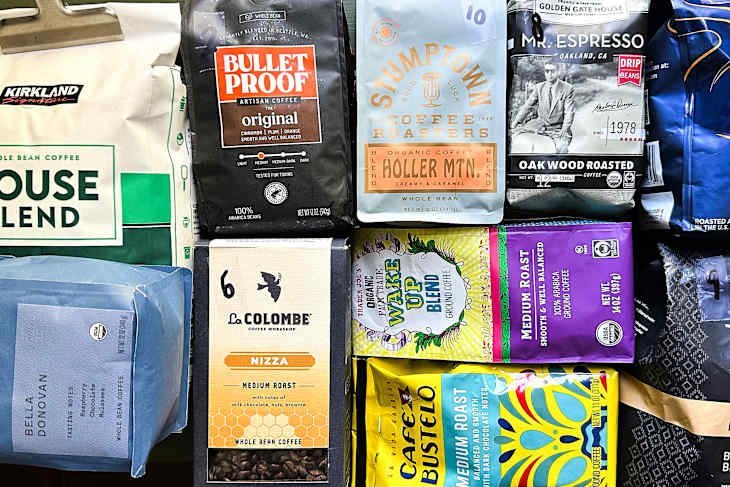
A washed Colombia Supremo is widely considered the best medium roast coffee bean for most daily drinkers.
What Is the Best Medium Roast Coffee Bean for You?

Medium roast beans balance bright origin acids and rich roaster sugars without turning oily. They work across almost every brew method, but bean origin controls what ends up in your cup. Choosing the right one comes down to matching bean density and processing to your taste.
- A washed Colombia Supremo brewed at a 1:16 ratio gives sweet red apple and caramel flavors without harsh bitterness.
- High-altitude Ethiopian Yirgacheffe medium roasts yield floral jasmine and peach notes, but they turn sharp if under-extracted.
- A natural-process Brazil Cerrado provides a heavy, chocolate-peanut profile that cuts through milk better than fruity African coffees.
- Whole beans degas carbon dioxide for 7 to 10 days after roasting, reaching peak flavor between day 14 and day 30.
- Fresh medium roast beans typically have a matte surface, though some origins or processing methods may show oil sooner than others.
- True medium roasts finish just after the first crack, dropping from the roaster drum around 410°F to 425°F (210°C to 218°C).
Why Bean Density and Heat Create Balance
A true medium roast hits a specific physical milestone inside the roaster. The roast finishes after the “first crack”—the sound of moisture expanding and bursting the bean cell walls—but stops well before the “second crack.” Dropping the batch at internal bean temperatures between 410°F and 428°F preserves the organic acids created at high farm elevations.
When Bean Choice Changes
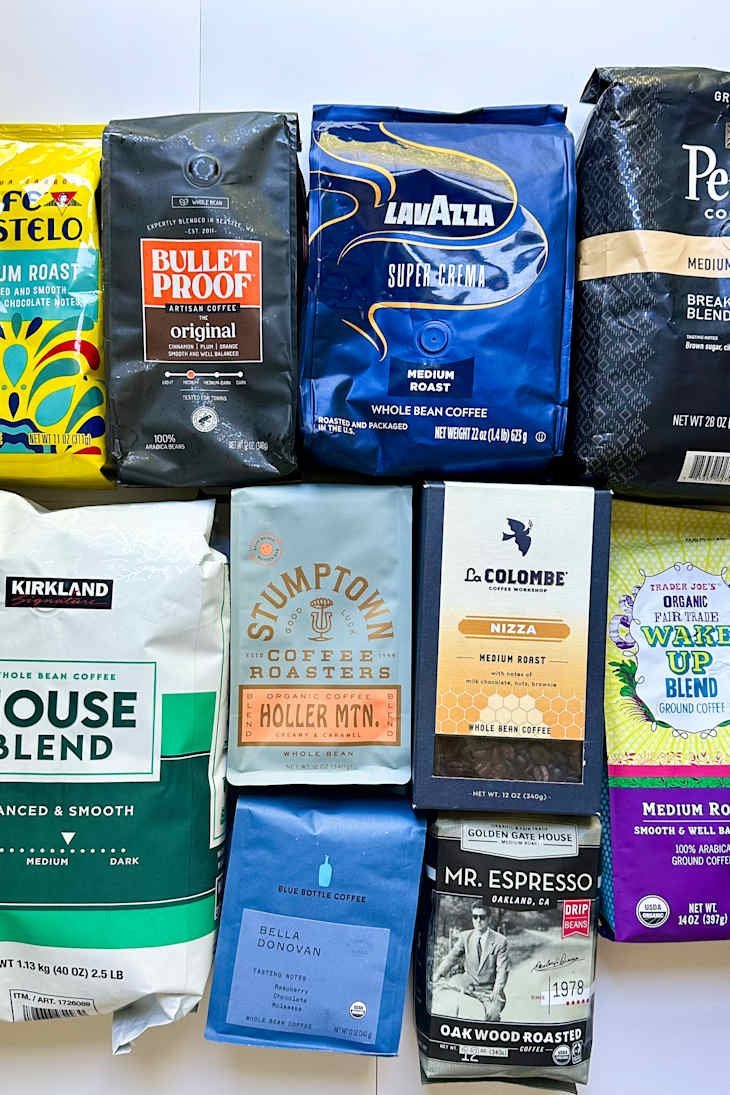
Your brewing gear, milk preferences, and taste tolerance completely change which medium roast bean works best for you. A bean that tastes sweet as black coffee can taste thin when mixed with milk.
| Situation | What changes | What to do instead |
|---|---|---|
| Adding whole milk | Milk masks subtle fruit notes | Pick an earthy Sumatra or Brazil bean |
| Using an espresso machine | High pressure amplifies sharp acids | Choose a medium blend with lower acidity |
| French press brewing | Metal filters let silt through | Use dense Central American washed beans |
| Water below 195°F | Under-extraction causes sour flavors | Select a slightly darker medium-dark roast |
| Sensitive stomach | Natural chlorogenic acids cause distress | Brew cold brew with low-acid beans |
| Using an automatic drip machine | Fast flow limits extraction contact | Grind a medium-density Colombian bean finer |
How to Brew Medium Roast Beans
Brewing a balanced cup requires proper extraction. Follow this pour-over method using a standard flat-bottom dripper or cone to get sweet flavors without harsh bitterness.
- Weigh out 20 grams of whole medium roast beans on a digital scale for a single 10-ounce mug of coffee.
- Grind the beans to a medium-coarse texture that looks like sea salt, avoiding powdery dust that clogs filters.
- Rinse your paper filter with 4 ounces of hot water to wash away paper taste, then dump the rinse water.
- Heat clean, filtered water to 200°F (93°C); if boiling, take the kettle off the stove for 40 seconds.
- Pour 60 grams of hot water evenly over the dry coffee bed, soaking all grounds completely within 15 seconds.
- Wait 45 seconds while the coffee bubbles and blooms, which releases trapped carbon dioxide gas from the roast.
- Pour the remaining 260 grams of water in slow, smooth circles, finishing your pour by the two-minute mark.
- Let the water draw completely down through the bed; the total brew time should hit 3 minutes to 3 minutes 30 seconds.
Mistakes That Ruin the Brew
Grinding coffee weeks in advance exposes the bean fragments to air, destroying the aroma within 30 minutes.
- Buying beans without a specific roast date leaves you guessing, which often leads to brewing stale, papery-tasting coffee.
- Brewing with boiling water can lead to over-extraction, which pulls bitter, astringent compounds into your cup.
- Storing beans in clear glass jars lets ultraviolet light break down delicate flavor oils, turning sweet beans rancid.
- Guessing coffee-to-water ratios with tablespoons causes random extraction swings, making one cup sour and the next bitter.
Frequently asked questions
Can medium roast coffee work in espresso machines?
Yes. Medium roasts make great espresso, but they require a finer grind and hotter water around 201°F to extract properly without sourness.
Why does my medium roast taste sour?
Your brew water was likely too cool or your grind was too coarse. Both errors cause under-extraction, which leaves sweet sugars behind and pulls only sharp acids.
How long do medium roast beans stay fresh?
About 30 days from the roast date. Keep them sealed in an airtight bag with a one-way degassing valve away from direct sunlight and heat.
Is medium roast coffee less acidic than light roast?
Yes. Roasting longer breaks down natural chlorogenic acids, so a medium roast has noticeably less bite and perceived sharpness than a light roast.
What happens if I store beans in the freezer?
Moisture can condense on frozen beans when the bag is opened, which may affect flavor if the beans are repeatedly thawed and refrozen.
Does water temperature really matter for medium roasts?
Yes. Water below 195°F fails to dissolve caramelized sugars, while water above 205°F dissolves bitter plant fibers that ruin the clean taste.
Is medium roast higher in caffeine than dark roast?
Yes, by a tiny margin per bean. Darker roasts lose mass and expand during roasting, but caffeine content changes very little when measured by weight.
Medium roast, in short
The sweet spot for medium roasts depends on how you take your cup. If you drink it black, choose a washed Colombian or Central American bean to get bright fruit and caramel sweetness. If you pour heavy milk or cream, pick a natural Brazil or Sumatra bean that won’t get lost in the cup. This balance varies by roaster—check the bag’s flavor notes and roast date before you buy.