
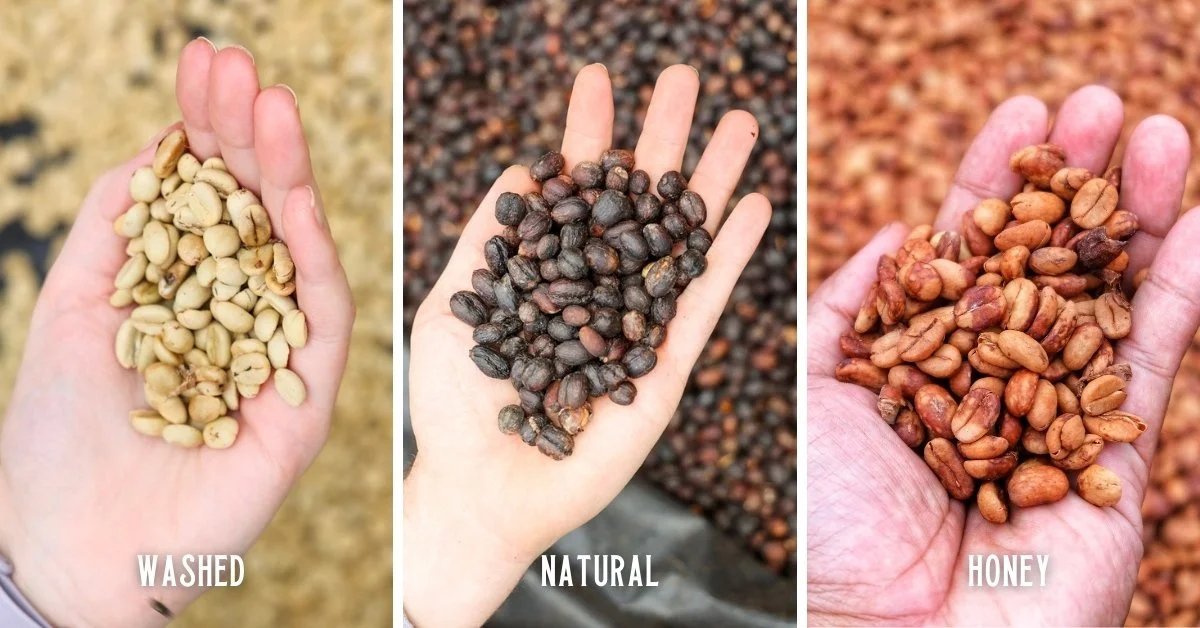
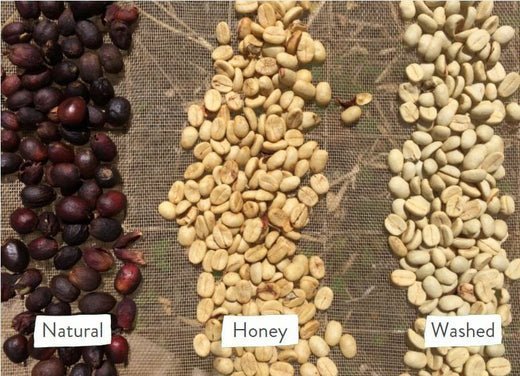
The difference between washed and natural coffee beans comes down to when the fruit is removed: washed coffee has its fruit taken off before drying, while natural coffee dries with the whole fruit intact around the seed.
Key facts about coffee processing
Coffee processing changes how your morning cup tastes, smells, and feels. The method also changes how roasters and baristas handle the green bean.
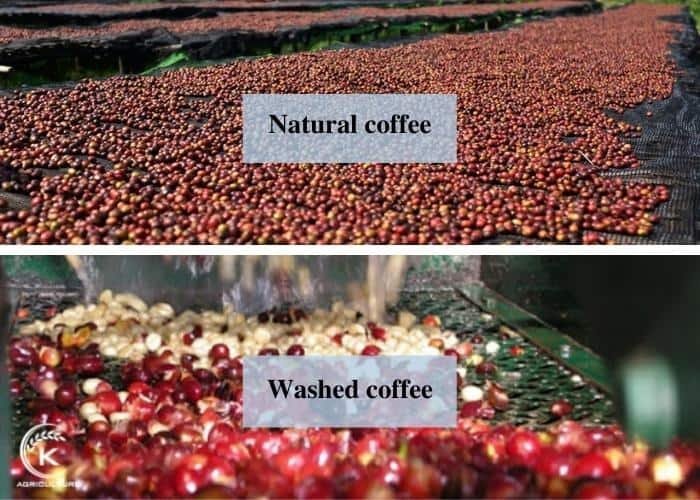
- Washed coffee dries as a bare seed after machines strip the outer skin and water tanks ferment away the sticky fruit mucilage.
- Natural coffee dries as a whole cherry on raised beds or brick patios for 15 to 30 days depending on local humidity.
- A washed cup tastes bright, light-bodied, clean, and highlights the soil, plant variety, and growing altitude.
- A natural cup tastes heavy, sweet, and intensely fruity with notes like dried blueberry, strawberry, or wine.
- The trade-off is clear: washed beans offer crisp clarity, but natural beans bring bigger body and lower perceived acidity.
- If you prefer dark roasts with cream, don’t buy delicate washed coffees; if you want wild fruit flavors, pick natural beans instead.
Why processing changes coffee flavor
The mechanical separation of the coffee cherry changes how sugars enter the seed. Inside every ripe coffee fruit, a sticky layer called mucilage covers the two seeds. In the washed method, depulping machines tear off the outer skin right after harvest. The seeds soak in clean water tanks where microbes break down the mucilage, which is then rinsed away completely before drying.
Natural processing keeps that sugary flesh intact during the entire drying stage. Wild yeasts and bacteria ferment the fruit while it sits under the sun.
This biochemical process alters the green bean’s final cell structure. According to research on post-harvest processing from the Food and Agriculture Organization, water availability, drying speeds, and ambient humidity dictate which microbial pathways activate during drying. This dynamic explains why natural coffees consistently develop heavier oils and rich fermented notes.
Processing methods and taste variations

A single harvest can yield wildly different results depending on weather, farming traditions, and local water supplies. This varies by farm — check the roaster’s bag label for specific processing details.
| Situation | What changes | What to do instead |
|---|---|---|
| High humidity or rain | Naturals rot on beds | Wash and mechanically dry seeds |
| Water shortages in region | Washed mills can’t operate | Use dry natural processing |
| Dark roasting profile | Natural fruit burns easily | Pick washed beans for roasts |
| Espresso milk drinks | Washed acidity cuts sharply | Use sweet naturals for balance |
How to brew both styles
Brewing these two styles requires different recipes because the beans extract at different rates. Follow these steps to dial in a standard 12-ounce pour-over mug using 20 grams of coffee.
- Weigh out 20 grams of whole-bean coffee on a digital gram scale for an exact 1:16 brew ratio.
- Check the label for the processing style to set your hand grinder or electric burr grinder properly.
- Grind washed beans to a medium consistency; grind natural beans 2 clicks coarser to avoid bitter over-extraction.
- Heat 320 grams of water to 205°F for washed beans, or 198°F for more delicate naturals.
- Rinse your paper filter with hot water to remove paper dust, then dump the rinse water completely.
- Pour 50 grams of water over the grounds and wait 45 seconds to let trapped gases escape.
- Pour the remaining 270 grams of water in slow concentric circles until the scale reads 320 grams total.
- Check that the bed drains flat within 3 minutes and 30 seconds for a balanced, clean cup.
Processing mistakes that ruin flavor
Farming errors and poor brewing can destroy the natural strengths of either process. When handling fails, coffee rapidly loses its distinct character.
- Over-fermenting natural cherries on drying patios creates an unpleasant vinegar or rotten fruit taste.
- Rushing the washed drying stage leaves excess moisture, which causes mold growth inside shipping containers.
- Grinding natural beans too fine clogs pour-over filters and produces an astringent, dry finish on the tongue.
- Roasting natural coffees with too much initial heat burns surface sugars and costs you the delicate fruit aroma.
Frequently asked questions
Can natural coffee have more caffeine than washed?
No, processing method doesn’t change the chemical caffeine content inside the coffee seed. Plant genetics, growing elevation, and total bean weight determine caffeine levels. The drying style changes flavor compounds, fruit sugars, and body without altering caffeine.
Why is washed coffee often more expensive?
Washed coffee requires expensive mechanical depulpers, large fermentation tanks, clean water systems, and waste treatment ponds. Natural coffee requires simpler infrastructure like drying beds, though it requires more labor to turn cherries by hand under the sun.
How long does natural coffee stay fresh?
The higher sugar and oil content on the bean surface causes naturals to oxidize slightly faster than dense washed beans.
Is washed coffee more acidic to your stomach?
What happens if coffee cherries get wet during natural drying?
Rain ruins natural coffee by promoting mold, mildew, and uncontrolled rot on the drying patios. Farmers must rake the drying cherries into mounds and cover them with waterproof tarps whenever rain clouds appear.
Does washed coffee work well for cold brew?
No, washed coffee often tastes thin and unpleasantly sour when brewed cold. Cold brew extracts sweetness and heavy body best, so natural beans yield a richer concentrate with notes of chocolate and sweet berries.
Is honey coffee the same as natural coffee?
No, honey processing removes the outer skin but leaves some sticky mucilage on the seed during drying. Natural coffee leaves the entire fruit skin intact, giving it a heavier fermented flavor than honey-processed lots.
Difference between, in short
Choosing between washed and natural beans comes down to what flavors you enjoy most in your morning mug. Pick washed coffee when you want a crisp, clean cup with citrus notes, and choose natural beans when you crave bold sweetness and jammy fruit flavors.