
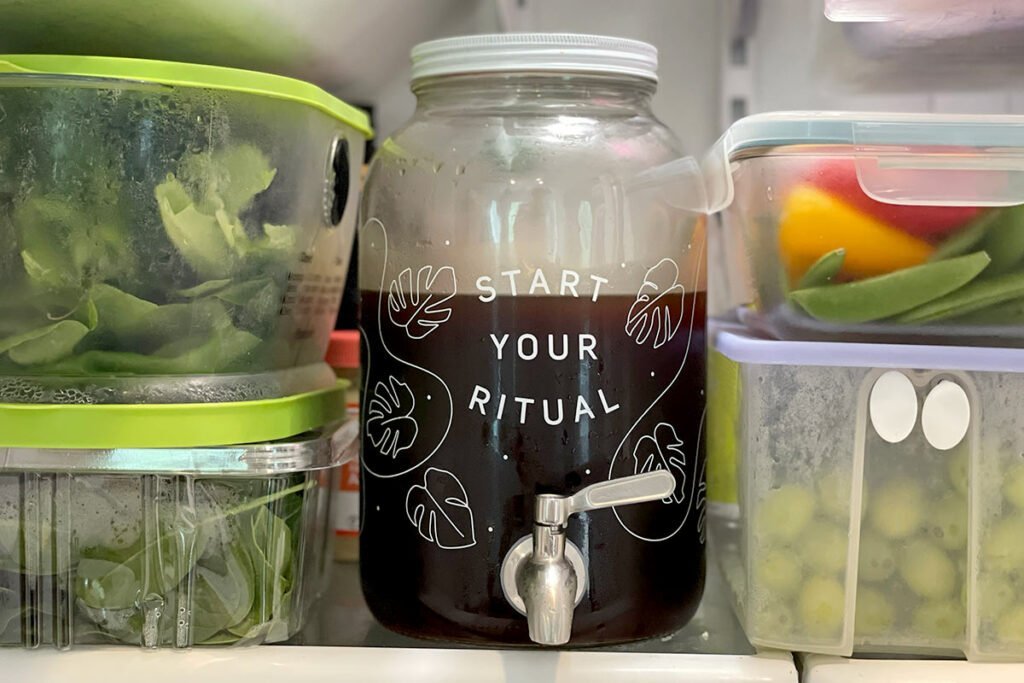
Yes, you can cold brew coffee in the fridge. The lower temperature simply slows extraction, so you’ll need 18 to 24 hours instead of the usual 12 at room temperature. Start your batch tonight if you want it ready by tomorrow evening.
Fridge vs counter cold brew
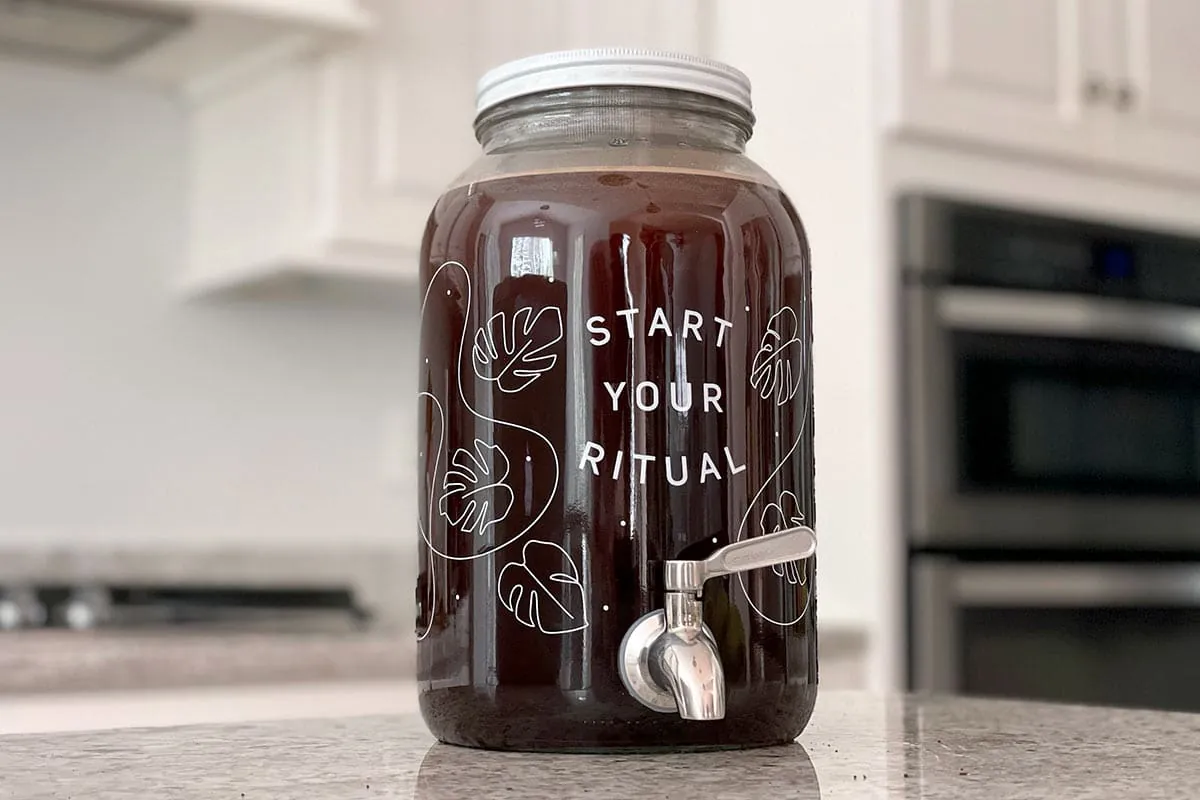
Your brewing location changes the time required, not the safety or basic method. The table below shows when the fridge is the better choice and when the counter works faster.
| Your situation | Answer | Why |
|---|---|---|
| Standard coarse grind | Yes, 18–24 hours | Cold air slows extraction significantly |
| Fine or medium grind | Yes, reduce steep time | Standard fridge times over-extract finer grinds |
| Brewing over 24 hours | Yes, fridge only | Prevents spoilage past one day |
| Need coffee in 12 hours | No, use counter | Fridge won’t finish in time |
| Hot kitchen above 75°F | Yes, always | Heat speeds spoilage on counter |
| Making concentrate | Either works | Dilution masks minor flavor differences |
| Light roast beans | Counter preferred | Fridge may under-extract delicate notes |
Temperature controls extraction speed
Water temperature decides how fast flavor compounds dissolve from the grounds. The National Coffee Association states that colder water requires longer contact time because chemical reactions slow as heat drops. Your fridge sits around 38°F, while room temperature averages 68°F to 72°F.
This thirty-degree gap doubles the steeping window. At room temperature, 12 to 16 hours extracts full flavor without bitterness. In the fridge, that same extraction needs 18 to 24 hours to reach equivalent strength.
Grind size shifts this timeline too. Coarse grounds expose less surface area, which pairs well with long fridge steeps. Finer grinds extract faster but turn harsh if left too long in cold conditions. If your kitchen stays cool and you’re brewing under 18 hours, use the counter; if you need longer steeps or live somewhere warm, choose the fridge.
Steps for fridge brewing
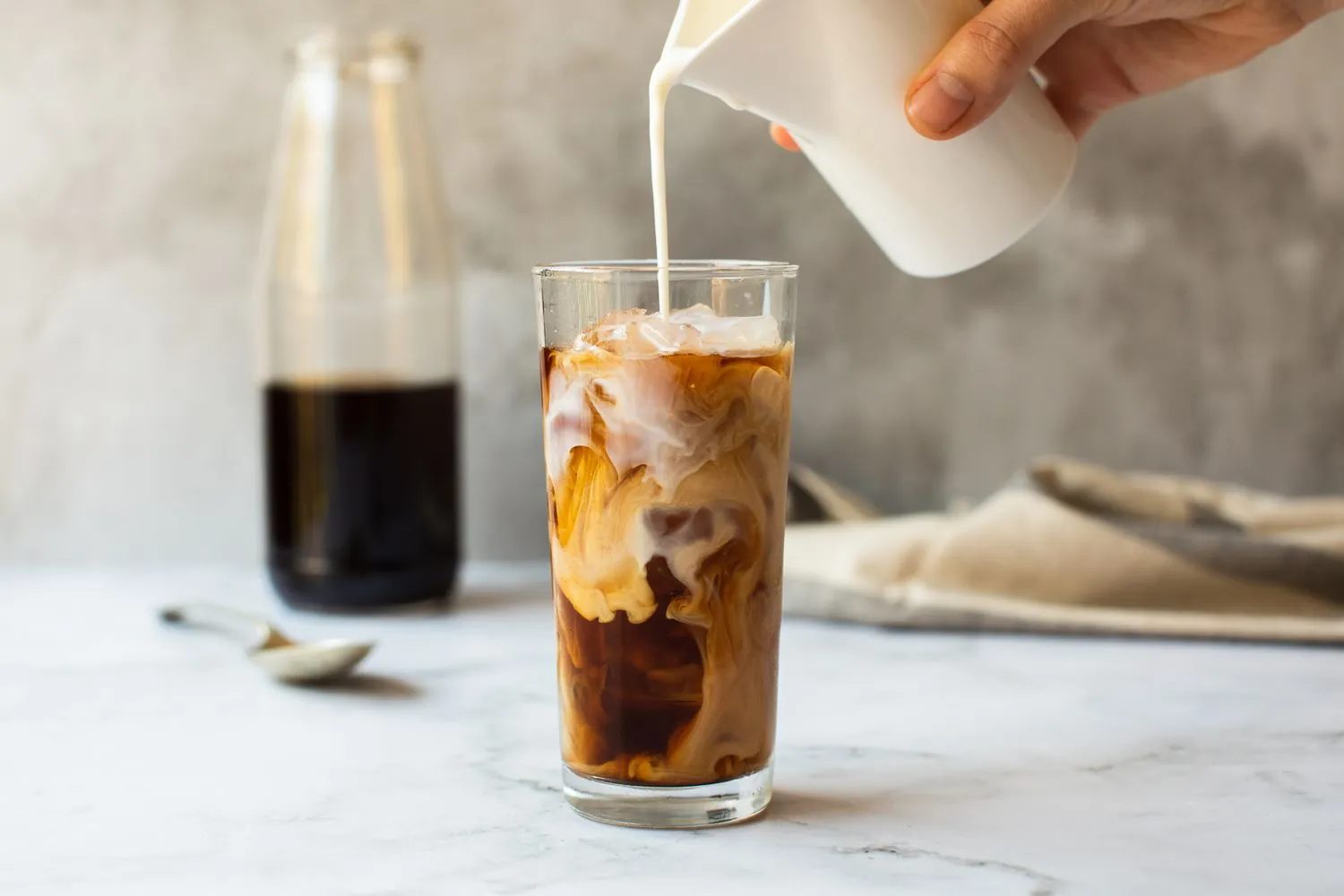
Follow these steps to get smooth concentrate without weak or sour results. Each assumes a standard 1:8 coffee-to-water ratio by weight using coarsely ground beans.
- Weigh coffee and water. Use 100 grams of coarse grounds per 800 grams of filtered water. This ratio produces concentrate you’ll dilute later; adjust proportionally for larger batches.
- Combine and saturate. Add grounds to your vessel first, then pour water slowly while stirring. Stir until no dry pockets remain, which ensures even extraction throughout the steep.
- Seal and refrigerate immediately. Cover tightly and place on a middle shelf where temperature stays consistent. Avoid the door, where warming cycles interrupt extraction.
- Steep 18 to 24 hours. Check at 18 hours by tasting a spoonful; it should taste strong but smooth. If it’s weak or sour, return it for up to six more hours.
- Strain through paper or cloth. Pour through a filter-lined sieve into a clean container. Paper removes fines that cause grittiness; metal mesh alone leaves sediment behind.
- Store sealed and chilled. Keep concentrate refrigerated and covered. It stays fresh for seven to ten days when stored properly at or below 40°F.
Skipping the grind adjustment
Using a fine or medium grind in the fridge for 18 to 24 hours causes over-extraction. Cold temperatures don’t prevent bitter compounds from dissolving; they just delay it. After 20 hours, fine grounds release harsh tannins that no amount of dilution fixes.
This mistake costs you an entire batch and the time spent waiting. The fix takes seconds: set your grinder to the coarsest setting, resembling sea salt. If you only have pre-ground coffee meant for drip machines, reduce fridge steeping to 14 to 16 hours and expect a slightly rougher cup. Always match grind size to steep duration before starting.
When to stop DIY troubleshooting
- Brew smells sour or fermented after straining, indicating bacterial growth requiring disposal.
- Concentrate tastes consistently weak despite correct ratios, suggesting equipment calibration issues.
- Mold appears on liquid surface, meaning storage temperature exceeded safe limits.
- Refrigerator reads above 40°F on a thermometer, creating food safety risks.
- You experience gastrointestinal symptoms after drinking, pointing to contamination needing medical attention.
If any sign appears, discard the batch and verify your refrigerator’s actual temperature with an appliance thermometer before attempting another brew. Persistent failures suggest consulting a barista or food safety specialist rather than repeating the same process.
Frequently asked questions
Can I use tap water for fridge cold brew?
Yes, if your tap water tastes good plain. Chlorine or mineral-heavy water creates off-flavors that cold brewing amplifies rather than hides. Use filtered water if your tap has noticeable taste or odor.
How long does fridge cold brew last?
Seven to ten days when stored sealed below 40°F. Flavor degrades gradually after day five, becoming flatter and less vibrant. Discard immediately if you detect sourness, cloudiness, or mold.
Is fridge cold brew weaker than counter?
Not necessarily, but it can be if steeped under 18 hours. Match the longer time to achieve equal extraction. Taste at 18 hours and extend up to 24 if needed.
Why does my fridge brew taste sour?
Under-extraction from insufficient steeping causes sourness. Return it to the fridge for two to four more hours and retest. If sourness persists after 24 hours, your grind may be too coarse.
Does fridge brewing reduce caffeine content?
No, caffeine extracts fully regardless of temperature given adequate time. Total caffeine depends on coffee-to-water ratio and bean variety, not brewing location. Extended fridge steeps extract comparable amounts to shorter counter ones.
Can I add milk directly to the brewing jar?
Brew with water only, then add milk when serving. Plant-based milks carry similar spoilage risks during long contact.
What happens if I steep longer than 24 hours?
Bitterness increases noticeably past 24 hours in the fridge. Woody or astringent notes develop as undesirable compounds dissolve. Strain promptly once flavor peaks rather than assuming longer equals better.
Next steps for fridge brewing
Start your first batch tonight using coarse grounds and filtered water, then taste at 18 hours to judge extraction. Expect smooth concentrate that dilutes cleanly with water or milk when properly brewed. Stop and check your refrigerator’s temperature if any batch develops sour or fermented odors before the expected timeframe.