
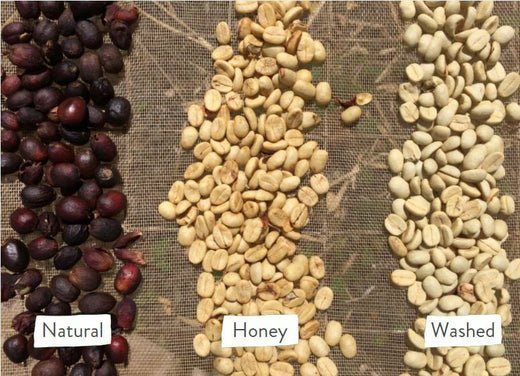
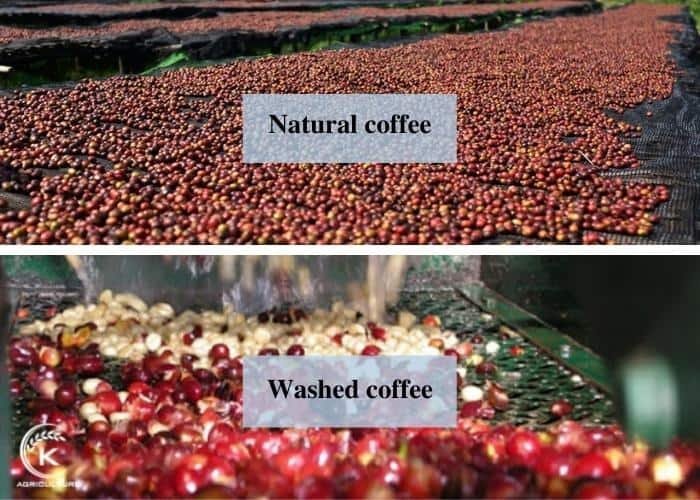
The main difference between washed and natural coffee is how the fruit flesh is removed from the bean before drying. Washed coffee uses water to remove all fruit before drying, while natural coffee dries the bean inside the entire cherry.
Choosing between washed and natural coffee
Photo: www.viennacoffeecompany.com on Google
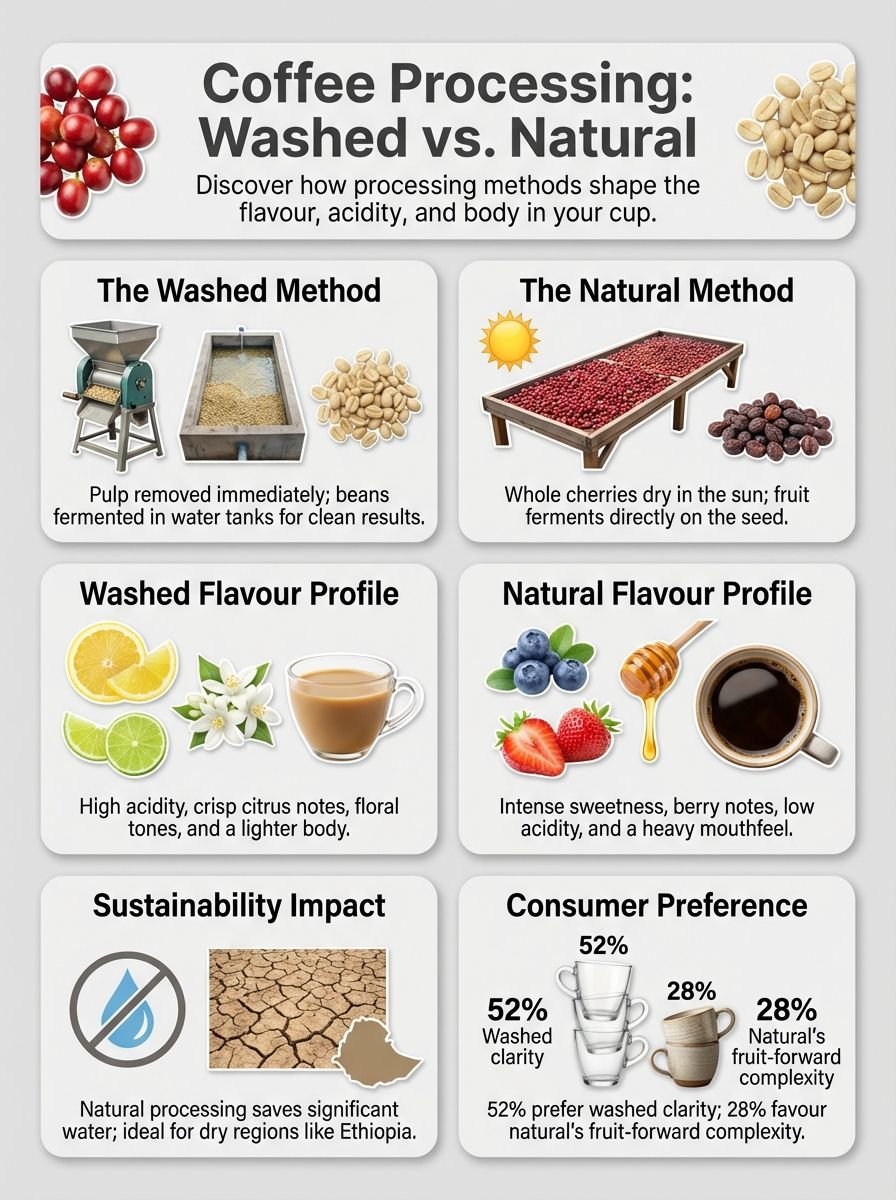
- Washed coffee, also called wet-processed, results in a clean, acidic, and consistent cup.
- Natural coffee, or dry-processed, features heavy body, sweetness, and distinct fruit-forward notes.
- If you prefer a bright, tea-like clarity in your mug, choose a washed coffee bean.
- If you enjoy a syrupy texture and intense berry flavors, look for natural process labels.
- Natural beans require careful turning on drying beds to prevent fermentation or mold growth.
Why processing changes the flavor
The processing method changes the flavor because it dictates how much sugar from the coffee cherry pulp is absorbed by the seed during drying. In the washed process, the skin and pulp are mechanically removed immediately after harvest. The beans then soak in water tanks to remove the sticky mucilage layer, which leaves the seed clean. This method highlights the intrinsic flavor of the coffee variety and the soil it grew in, creating a balanced, bright cup.
In the natural process, the entire cherry remains intact while it dries in the sun. As the cherry dries, the seeds absorb the sugars and acids from the fermenting fruit pulp, which adds heavy body and intense sweetness. This process is common in regions with limited water access, such as parts of Ethiopia or Brazil.
When the answer is different
| Situation | What changes | What to do instead |
|---|---|---|
| Honey process | Pulp stays | Sticky drying phase |
| Anaerobic | Oxygen removed | Sealed tank fermentation |
| High humidity | Drying time | Use mechanical dryers |
| Small batch | Labor intensity | Hand sort cherries |
How to brew your beans properly
- Use a scale to weigh 18 grams of coffee beans for every 300 milliliters of water, regardless of the processing method you choose.
- Grind your natural process beans slightly coarser than washed beans, as the natural processing can sometimes create more “fines” that clog your filter.
- Heat your filtered water to 200°F for medium roasts; if your beans are a lighter roast, increase the water temperature to 205°F.
- Pour 50 milliliters of water over the grounds to let the coffee bloom for 30 seconds, which releases trapped carbon dioxide gas.
- Pour the remaining water slowly in a circular motion, keeping the stream steady until your scale reads the final 300-milliliter target weight.
- Check the total brew time; if it takes longer than 3 minutes, your grind is too fine and you should adjust it coarser.
The mistakes that ruin it
- Storing beans in clear glass jars exposes them to light and oxygen, which causes the delicate fruit oils to go rancid.
- Using boiling water can lead to over-extraction, which may result in a bitter taste that masks the coffee’s natural sweetness.
- Ignoring the roast date on the bag means you might be brewing stale coffee that has lost its complex aromatic compounds.
- Failing to rinse your paper filter with hot water leaves a papery, cardboard-like flavor in your final cup of coffee.
Frequently asked questions
Can I tell the difference just by looking at the beans?
Yes, you can often see the difference because natural processed beans usually look darker, have a slightly wrinkled surface, and may retain bits of dried fruit debris, whereas washed beans appear uniform, smooth, and greenish-blue in their raw state.
Is one process safer than the other?
Yes, washed coffee is generally considered more consistent because the removal of the fruit reduces the risk of mold growth during the drying phase, though both are perfectly safe when processed by reputable farms following standard moisture control protocols.
How long does natural coffee stay fresh?
Natural coffee typically stays fresh for about four weeks after the roast date if kept in an airtight, opaque container away from heat, though it may lose its most vibrant fruit notes faster than a washed coffee would.
Does the process affect the caffeine content?
No, the processing method doesn’t change the caffeine content, as caffeine levels are determined by the coffee species, such as Arabica versus Robusta, and the growing conditions rather than how the fruit is removed from the seed.
Is natural coffee always sweeter?
Yes, natural coffee is almost always sweeter because the bean spends weeks absorbing sugars from the drying fruit, which creates a syrupy mouthfeel that’s very difficult to replicate using the cleaner, water-focused washed processing method.
Why is washed coffee more expensive?
The choice between these two styles depends entirely on your personal palate. If you enjoy a clean, crisp cup that showcases the origin’s unique character, buy washed. If you prefer a bold, fruity, and heavy-bodied drink, natural is the better choice for you.
Difference between, in short
Choosing between these methods really comes down to your personal taste. If you prefer a clean, bright cup, go for washed; if you love bold, fruity notes, pick natural. Next time you’re at a local cafe, don’t be afraid to ask the barista which process they’re serving—you’ll find your favorite soon.